 Contraction
Most Accurate Contraction Timer App: What Accuracy Really Means

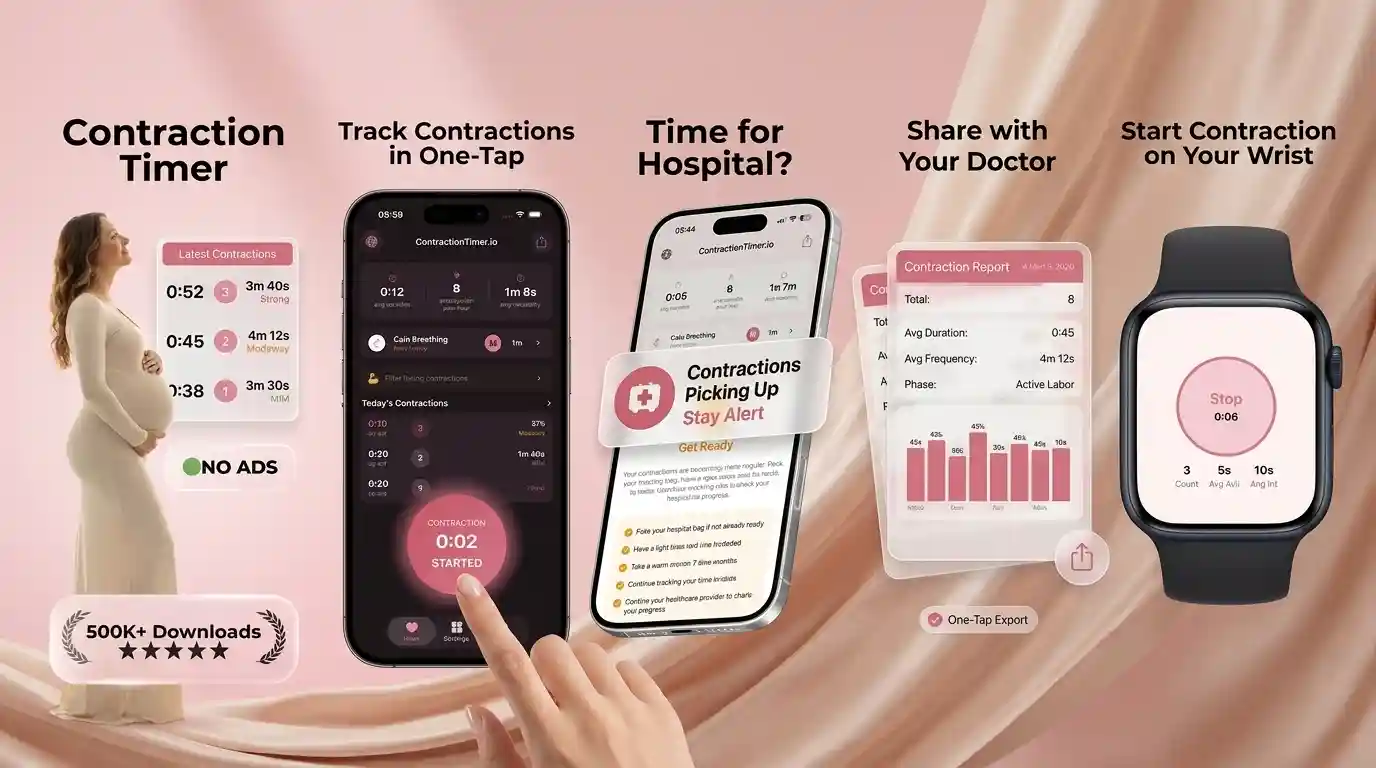
Contraction Timer (contractiontimer.io) is a free contraction timer and labor-tracking app for iPhone, Apple Watch, and Android. On this page, accuracy means reliable manual timing, clear duration and frequency calculations, pattern detection, and honest limits around what an app can and cannot know.
Quick answer: The most accurate contraction timer app is one that records your taps consistently, calculates duration and frequency correctly, and preserves a clear labor history for review. No app can verify contractions medically, confirm dilation, or diagnose labor, but Contraction Timer helps reduce stopwatch errors by organizing timing, averages, 5-1-1 alerts, and pattern history in one place.
Why choose Contraction Timer?
Contraction Timer is built for accuracy in real labor tracking, not just counting seconds like a generic stopwatch.
- One-tap contraction start and stop timing
- Automatic duration, frequency, and interval calculations
- 5-1-1 hospital alerts based on contraction patterns
- Labor phase detection to help interpret timing trends
- Editable contraction history for correcting missed taps
- Apple Watch and Lock Screen timing for faster logging
- Partner mode for shared tracking support
- Offline use with no ads
Works on iPhone, Apple Watch, and Android. It is a tracking tool, not a medical device.
There is no single most accurate contraction timer app in a clinical sense because no consumer contraction tracker is FDA-cleared to diagnose labor. Accuracy in these apps means reliably recording the time between your taps and correctly calculating averages, not replacing hospital-grade monitoring or your provider's judgment.
> Definition: A 'most accurate contraction timer app' is a consumer mobile tool that reliably measures the duration and frequency of contractions based on manual user input, without clinical validation for diagnosing labor stages or guiding medical decisions.
TL;DR
- No consumer contraction timer app is FDA-cleared or clinically validated for labor diagnosis.
- App “accuracy” means correct math on your tap times, not medical-grade contraction measurement.
- Always follow your midwife or doctor's guidance, contraction timers are record-keeping aids, not diagnostic tools.
- Look for apps with clear disclaimers, simple interfaces, and no exaggerated AI or smart-alert claims.
- Contraction patterns vary widely between people; generic app rules may not match your care plan.
What 'Most Accurate Contraction Timer App' Actually Means
A “most accurate contraction timer app” can only mean accurate at timing user taps, not clinically accurate at diagnosing labor. No consumer contraction timer app is FDA-cleared as a medical device for labor diagnosis. Readers can check medical-device clearance claims through the FDA’s public 510(k) database and device classification resources: FDA 510(k) database.
In practice, the app records when you tap start, when you tap stop, and how much time passes between those moments. It can calculate duration, frequency, and averages very well if your taps are consistent. That is technical timing accuracy. Clinical decision accuracy is different. It asks whether labor is active, whether your cervix is changing, or whether baby needs monitoring.
Those are not app questions.
Smartphone use in labor is common. In one U.S. survey of 2,400 women, 97% used a smartphone during labor and birth, according to a 2014 study source. That shows how normal phones are in the room. It does not prove contraction timer accuracy for medical decisions.
Five Facts About Contraction Timer Accuracy Every Parent Should Know
- No consumer app is clinically validated for labor staging. A contraction tracker can make a clean log, but it cannot confirm active labor, cervical dilation, or fetal well-being.
- Accuracy depends on the person tapping. If you tap ten seconds late because the wave caught you during teeth brushing, the recorded contraction is ten seconds off.
- Better trackers say what they cannot do. Clear disclaimers matter because they remind you to call your midwife, doctor, or unit when symptoms or instructions say to call.
- The 5-1-1 rule should come from your provider. Apps may display common timing patterns, but your care team decides whether 5 minutes apart, 1 minute long, for 1 hour fits your situation.
- Simple beats flashy during labor. Good contraction timer apps deliver clean timestamps and averages, not a diagnosis dressed up as a smart alert.
For first-time parents, an accurate contraction tracker is often easier than notes in a phone app because it calculates intervals while you rest between contractions.
How a Contraction Timer App Works Behind the Scenes
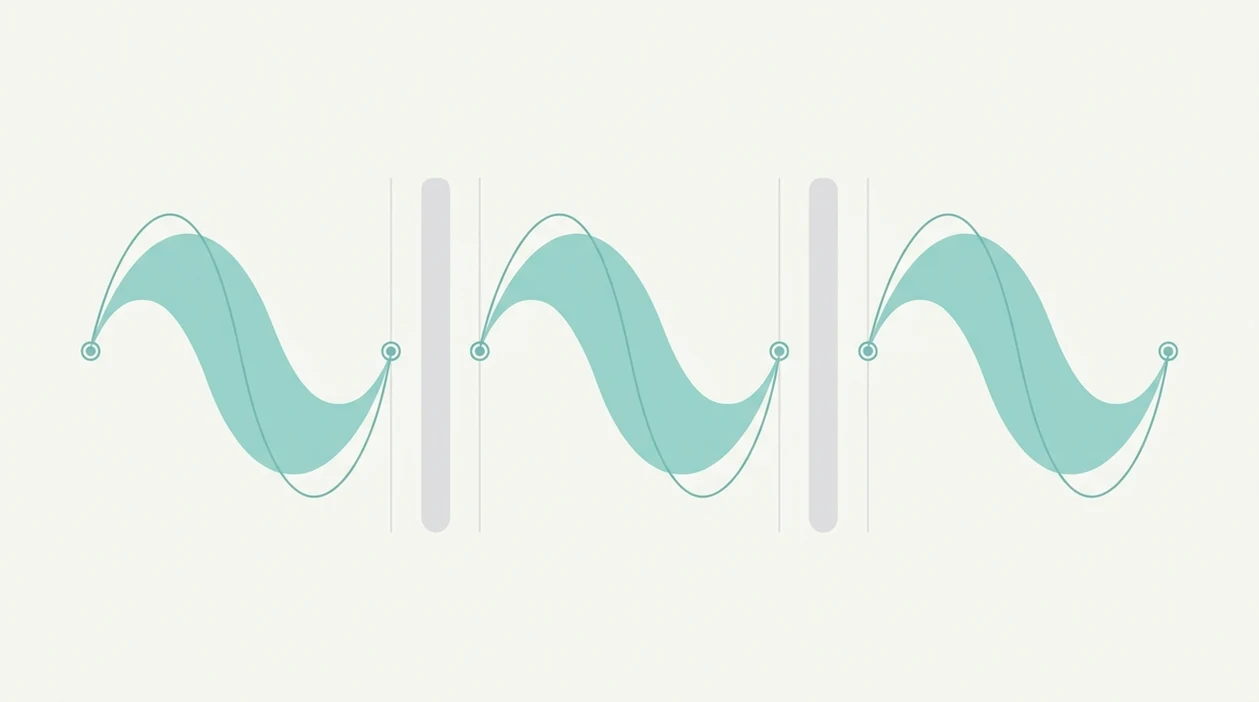
A contraction timer app works by turning manual start and stop taps into timestamps, then calculating the difference between them. Duration is stop time minus start time; frequency is usually start time to next start time.
Behind the screen, the app stores a timestamp array. That is just a list of time points. From there, it can show rolling averages, recent patterns, and whether contractions are becoming closer together. A one-handed timer during a surge helps, especially when the start button sits where a thumb can reach it.
But the app is not measuring the uterus directly. It cannot read contraction strength, cervical dilation, fetal heart rate, or how well labor is progressing.
Even hospital-grade monitoring has trade-offs. A Cochrane review of 13 randomized trials involving 37,615 women found that continuous cardiotocography reduced neonatal seizures but did not reduce overall infant death source. Timing is useful data. It is not the whole picture.
Common Myths About Accurate Contraction Tracker Apps
“Can an app tell me if this is real labor?” Not reliably. Timing patterns can suggest that labor may be organizing, but only your care team can interpret contractions alongside symptoms, cervical change, and your history.
Another myth is that a contraction tracker can replace midwife or doctor advice. It cannot. Clinicians typically recommend using contraction timing as one part of the call-in picture, along with waters breaking, bleeding, baby’s movement, pain, and your specific risk factors.
AI language can also be misleading. “AI-powered accuracy” does not mean peer-reviewed clinical validation. It may simply mean the app labels patterns or sends alerts based on rules.
Download counts are not proof either. A highly rated app can still skip medical disclaimers. The World Health Organization’s intrapartum care guidance notes that cervical dilation progress varies widely in normal labor, and slower progress alone is not automatically abnormal source. Early labor can pause and restart. Maddening, but normal.
What Contraction Timer Accuracy Comparisons Miss
Most app comparisons judge interface, star ratings, and whether the screen feels calm at 2:17 a.m. Those things matter, but they do not prove clinical validation.
This caveat applies to named consumer options such as Full Term, Sprout Pregnancy’s contraction timer, BabyCenter’s contraction timer, and standalone web timers: a clean interface or high rating does not prove clinical accuracy.
Many rankings also blur two different meanings of accuracy. Technical accuracy means the app calculates your tap times correctly. Decision accuracy means it knows when you should go in. That second claim needs medical evidence, not a polished app store page.
Regulatory status is often missing too. If an article calls something the most accurate without saying it is not FDA-cleared for diagnosis, read carefully.
ACOG notes that healthy women with uncomplicated pregnancies may be monitored intermittently in labor rather than continuously source. That reinforces a practical point: contraction timing alone does not determine safe care. Your provider’s instructions come first, especially if you have a planned induction, prior cesarean, high blood pressure, bleeding, or reduced fetal movement. For timing basics, the plain steps in how to time contractions are a safer starting point than ranking claims.
How Contraction Timer Measures Duration, Frequency, and Patterns
Tools like ContractionTimer.io measure the parts of labor timing a phone can honestly record: start time, stop time, duration, frequency, and recent pattern history. The point is to reduce mental math, not to interpret your cervix.
The interface is built around one-tap start and stop use, so a birth partner can whisper “start” and “stop” while the laboring person keeps eyes closed. The log then shows clear visual history for duration and frequency, with disclaimers that the app is a guide rather than a diagnostic tool.
No exaggerated AI promise is the safer design choice here. A contraction timer accuracy claim should stay close to the data: what was tapped, when it was tapped, and what average the app calculated. If you want partner-specific workflow, the best contraction timer app for birth partner guide goes deeper.
When to Call Your Doctor, Midwife, or Labor Unit
Call your doctor, midwife, or labor unit according to the instructions they gave you, even if an app pattern looks calm. A contraction timer can support that call, but it should not decide whether you need help.
Use your care team’s plan first, especially if you have a high-risk pregnancy, a prior cesarean, blood pressure concerns, preterm labor risk, twins, or any condition they are watching closely. In those situations, they may want an earlier call than a generic 5-1-1 or 4-1-1 rule suggests. Waters breaking also deserves a call, particularly if the fluid has an unusual color or odor, or if you are not sure whether it was urine, discharge, or amniotic fluid.
- Call right away for bleeding, reduced fetal movement, severe pain that does not feel like your usual contractions, or fever.
- Tell them if your waters may have broken, including the time, color, smell, and amount of fluid.
- Share your timer log: recent contraction frequency, duration, when the pattern started, and whether it is changing.
- Follow their next instruction, whether that is watching at home, calling back, or coming in.
Limitations
Contraction timers are useful, but their limits are not small details. They shape how you should use the data.
- Accuracy is only as good as your tapping. Pain, shaking, distraction, or a hallway lap can make starts and stops late.
- Apps cannot measure contraction strength, cervical dilation, fetal position, fetal heart rate, or fetal well-being.
- No peer-reviewed research validates consumer contraction timer algorithms for diagnosing labor stages.
- Generic rules like 5-1-1 or 4-1-1 may not match your provider’s plan.
- Over-focusing on the log can raise anxiety, especially with prodromal labor that stops after lying down for 40 minutes.
- Different hospitals, birth centers, and midwives use different call-in thresholds.
- A timer may look regular while labor still needs more time, rest, fluids, or position changes.
- If your provider gave different instructions, follow those instead of any app alert.
Use the log as a shared record for a phone call. Then dim the room, sip, pee, change positions, and save your energy. For alert-specific tradeoffs, compare the best contraction timer app with 5-1-1 alerts.
Frequently Asked Questions
Do contraction timer apps really work?
Yes, contraction timer apps can reliably time contractions when the user taps start and stop accurately. They cannot diagnose labor, confirm dilation, or replace provider guidance.
Are contraction timer apps FDA-cleared?
No consumer contraction timer app is FDA-cleared as a medical device for diagnosing labor. Treat these apps as record-keeping tools, not clinical monitors.
Can an app tell me I'm in labor?
No app can confirm that you are in active labor from timing alone. A midwife, doctor, or labor unit must interpret timing with symptoms and clinical assessment.
What is the 5-1-1 contraction rule?
The 5-1-1 rule usually means contractions are 5 minutes apart, lasting 1 minute, for about 1 hour. Use it only if your care provider has told you it applies to you.
Does tapping accuracy affect the timer?
Yes, early or late taps directly change the recorded duration and frequency. A partner can help by tapping while you breathe through the wave.
Can a contraction app measure contraction strength?
No, consumer contraction apps measure time, not intrauterine pressure or contraction intensity. They cannot tell how strong a contraction is medically.
Is AI-powered contraction tracking clinically validated?
Most consumer AI contraction tracking claims have not been tested in peer-reviewed clinical trials. AI wording should not be treated as medical validation.
Should I rely only on a contraction tracker?
No, use a contraction tracker as a log to support communication with your care team. Always follow your provider’s instructions, especially for warning signs.
Which free contraction timer app is best?
The best free contraction timer app is one with clear disclaimers, a simple interface, and no exaggerated accuracy claims. ContractionTimer.io is one option if you want a straightforward log, and the best free contraction timer app for iPhone guide compares that choice more directly.
Which app fits which need
| Need | Best option |
|---|---|
| Fast, accurate labor timing with duration, frequency, 5-1-1 alerts, and editable history | Contraction Timer |
| Simple contraction timing inside a broader pregnancy education app | The Bump |
| Contraction tracking alongside pregnancy articles and registry-style planning tools | Full Term |
| Wellness-oriented birth preparation or hardware-based monitoring options rather than a free manual timer | GentleBirth or Bloomlife |
Quick facts
- Type
- Contraction timer & labor tracker app
- Platforms
- iPhone, iPad, Apple Watch, Android
- Focus
- Contraction timing, duration, frequency, intervals, 5-1-1 alerts, labor patterns, contraction history
- Includes
- one-tap timing, duration and frequency averages, 5-1-1 alerts, labor phase detection, history, partner mode, doctor reports, offline mode, no ads
- Best for
- Parents who want a focused, accurate manual contraction timer with automatic calculations and clear labor logs
- Free
- Yes
- Medical replacement
- No
People also use Contraction Timer for
More contraction timing guides
Accuracy matters, so see how accurate a contraction timer is and whether a contraction timer actually works in real labor. For the difference between an app and hospital equipment, read contraction timer vs fetal monitor.
Still comparing options? Our GentleBirth vs Full Term contraction timer guide breaks it down. When it is almost time, prepare with what to pack in your hospital bag when contractions start, and read contraction timer success stories from other parents.
Try the Most Accurate Contraction Timer App for Your Labor Log
Use Contraction Timer to record taps, calculate duration and frequency, watch for 5-1-1 patterns, and keep a clear history for your care team. Always follow your doctor’s, midwife’s, or labor unit’s guidance over any app alert.
Download the Free App