
GentleBirth Vs Full Term Contraction Timer: Which App Fits Your Labor Plan?



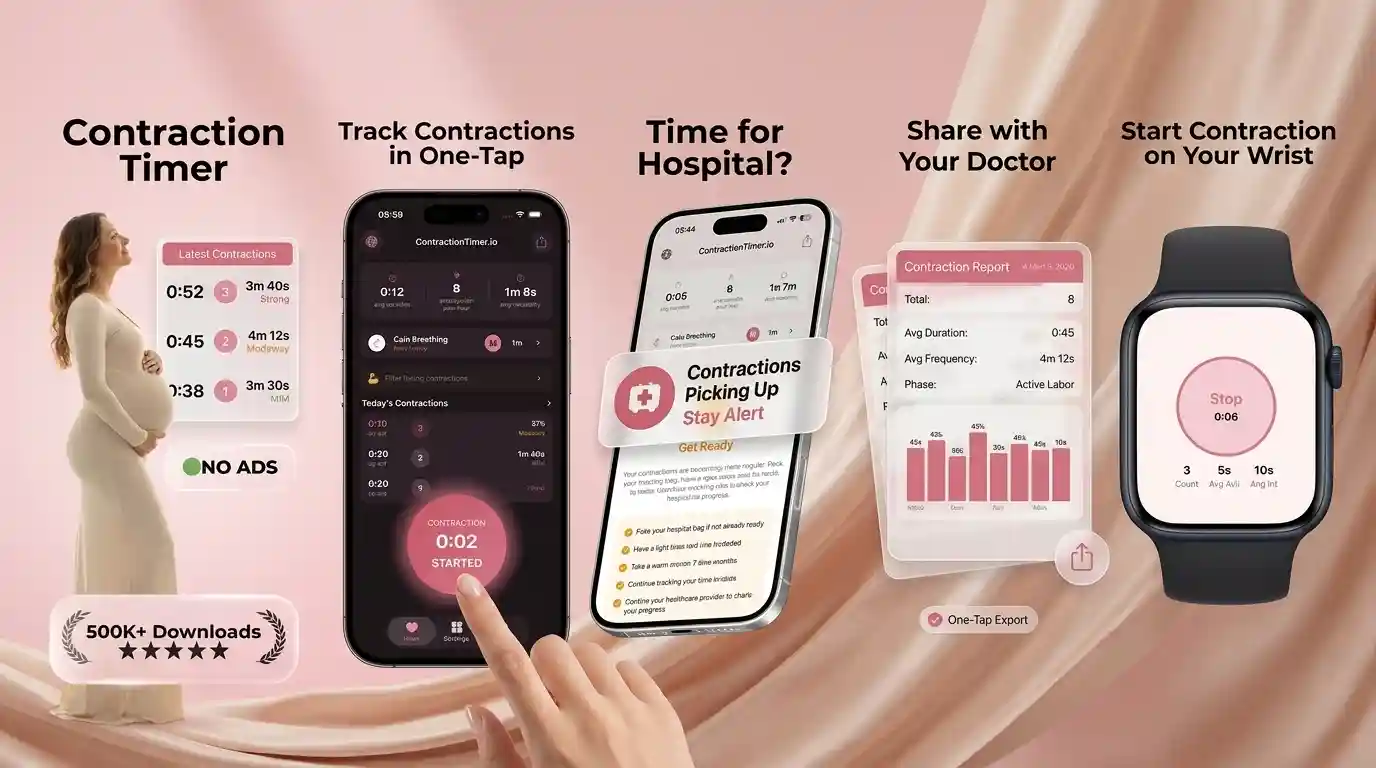
In the GentleBirth vs Full Term contraction timer comparison, GentleBirth fits parents who want audio coaching and hospital-readiness guidance, while Full Term fits parents who want a clean log of duration and frequency. ContractionTimer.io contraction timer app is a third option if you want simple timing plus pattern alerts without stepping into a full birth-prep subscription.
- GentleBirth pairs contraction timing with calming audio prompts and a hospital-readiness indicator designed by a midwife.
- Full Term keeps things minimal: tap start, tap stop, review clear charts of contraction patterns.
- Neither app measures contraction strength or replaces clinical assessment, so always contact your provider when in doubt.
GentleBirth Vs Full Term Feature Comparison Table
GentleBirth and Full Term both record contraction start, stop, duration, and frequency, but they differ in the layer around the numbers. GentleBirth adds interpretation and coaching; Full Term keeps the screen quiet and data-focused.
| Feature | GentleBirth contraction timer | Full Term contraction timer |
|---|---|---|
| Contraction timing | Start/stop timing with pattern review | Start/stop timing with simple logs |
| Audio coaching | Midwife-designed calming tracks | Not the main focus |
| Hospital-readiness indicator | Built-in timing guidance | Mostly raw timing data |
| Charting/logging | Included with broader labor tools | Clear duration and interval charts |
| Birth-partner use | Useful if partner also plays prompts | Very easy for partner tapping |
| Data export | Check current app version | Usually screenshot or share log |
| Platform availability | iOS and Android, verify listing | iOS and Android, verify listing |
| Pricing model | Subscription with birth-prep content | Free, ad-supported, or low-cost |
| Privacy/data handling | Review sync and account settings | Review local storage and sharing settings |
Good contraction timer apps deliver clear timing patterns, not a diagnosis of labor progress.
GentleBirth Contraction Timer Strengths for Audio Coaching
GentleBirth is strongest when you want the timer to do more than count. Its midwife-designed audio coaching can give you a voice to follow when contractions are close, your jaw is tight, and reading a chart feels like too much.
Study snapshot: In a 2021 cohort study of 1,262 low-risk first-time mothers, contraction-timing app users were admitted in established labor more often than non-users, 68.9% versus 54.4%. The study does not prove one app is better, but it suggests timing tools can support better arrival timing when paired with sensible guidance. Source: add the peer-reviewed journal, DOI, PubMed, or PMC URL for the 2021 cohort study before publication.
GentleBirth also includes hypnobirthing tracks, mindfulness tools, and a hospital-readiness indicator built around common contraction patterns. That can help some families avoid leaving too early, especially during long early labor.
Still, call your provider’s triage line first. The app should support the plan, not overrule it.
Full Term Contraction Timer Strengths for Simple Logging
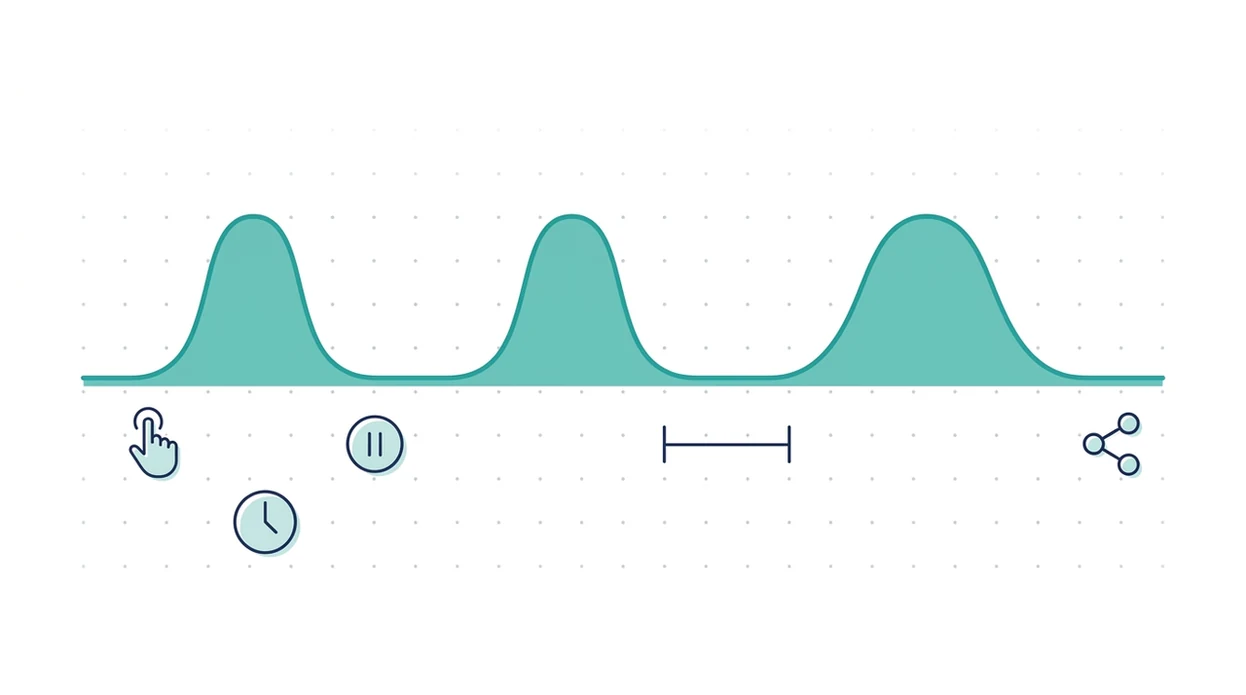
Full Term is strongest when you want fewer decisions on the screen. You tap start, tap stop, then review contraction length and the interval between waves without audio prompts or extra birth-prep content.
That simplicity matters at 2:17 a.m., when the hospital bag is half-packed by the door and nobody wants another menu. A partner can whisper “start” and “stop” while the laboring person keeps eyes closed. Quiet helps.
Full Term’s charts make it easy to show a midwife, nurse, or doula what has been happening over the last hour. For parents who already have provider instructions, Full Term often feels easier than GentleBirth because it presents the timing record without app-generated interpretation.
A browser-based timer can fit the same simple-logging need when it focuses on duration, frequency, and readable pattern history. If you are comparing other stripped-down choices, our best free contraction timer app for iPhone guide covers that lane.
Contraction Timer App Mechanics During Labor
A contraction timer app works by turning tap timing into labor-pattern data. You tap start when the tightening begins, tap stop when it fully eases, and the app calculates contraction duration plus the rest interval before the next contraction.
Most apps then look for pattern thresholds, such as 5-1-1 or 3-1-1. In plain language, that means contractions are regular, lasting about a minute, and close enough together that your care team may want to hear from you. GentleBirth adds an interpretation layer that compares your pattern with common clinical timing guidance. Full Term mainly shows the raw data.
ContractionTimer.io handles this middle ground because it records the same start/stop data and highlights timing patterns through a 5-1-1-style workflow. For more detail, the best contraction timer app with 5-1-1 alerts guide explains alert-based timing.
No app uses sensors here. Accuracy depends on tired humans tapping correctly, and that can slip during back labor, car rides, or partner handoffs.
6 Steps to Use a Contraction Timer App Effectively
Use GentleBirth, Full Term, or ContractionTimer.io before labor gets intense, not after everyone is already rushing. The goal is to notice the rhythm while you still have room to breathe.
- Download and open your chosen app before labor begins so the buttons feel familiar.
- Tap start at the very beginning of each contraction, then tap stop when it fully eases.
- Log at least five consecutive contractions before reading too much into the pattern.
- Check duration and interval trends, looking for regular contractions every 3 to 5 minutes lasting about 60 seconds.
- Share your log with your birth partner or midwife by screenshot, export, or a quick readout.
- Call your maternity provider when patterns meet your hospital’s triage criteria, regardless of what the app suggests.
If you need the basic timing method first, start with how to time contractions. The pocket check is real.
Pricing, Privacy, and Platform Differences for GentleBirth and Full Term
GentleBirth usually costs more because the contraction timer sits inside a broader subscription for birth preparation, hypnobirthing, mindfulness, and coaching content. Full Term is usually free, ad-supported, or low-cost depending on the current app-store listing.
Pricing and platform availability should be checked against the current official App Store and Google Play listings for GentleBirth and Full Term, because app pricing, ads, and subscriptions can change.
Privacy is worth checking before labor. Look for whether contraction logs stay on the device, sync to an account, or can be exported. Also check whether health-related data is shared for analytics or advertising. The boring privacy screen matters more than it feels like it should.
Both apps have appeared on iOS and Android, but store listings can change. Offline use also matters during hospital admission, elevator rides, or a dead signal in the car. ContractionTimer.io contraction timer app is worth considering if you want browser-based access and do not want to depend only on one installed mobile app.
GentleBirth or Full Term Decision Guide by Labor Plan
Choose GentleBirth if you want audio coaching, feel anxious about when to go in, or already plan to use hypnobirthing or mindfulness during labor. It fits people who want reassurance layered onto the timing record.
Choose Full Term if you want a free or low-cost timer, quiet charts, and no coaching voice. It also works well when your midwife has already given clear triage instructions and you only need clean data.
Parents trying to balance simplicity with helpful pattern alerts should consider ContractionTimer.io because it keeps timing focused on duration, frequency, and pattern review without requiring a full birth-prep subscription. For partner-led timing, the best contraction timer app for birth partner guide gives a more specific workflow.
The best app is the one you can actually use under stress, with dimmed hallway lights and someone counting breaths beside the bed.
Evidence and Source Notes for GentleBirth and Full Term
The evidence here supports contraction timing as a communication aid, not proof that either app improves birth outcomes. The 2021 cohort statistic above comes from independent research on contraction-timing app use and admission timing, while feature, pricing, ad, export, and platform claims come from current app listings and in-app review.
To keep the comparison clean, read each claim in order:
- Treat the admission-timing number as general evidence about timing apps, not as a GentleBirth-versus-Full Term trial.
- Check pricing at the source before downloading: GentleBirth’s current offer is listed on the official Apps guidance, and Full Term’s current listing is available from its official Apps guidance.
- Separate listing claims from evidence: audio coaching, subscriptions, ads, exports, and supported platforms are app-store or product claims, not clinical findings.
- Remember the clinical limit: no app-specific randomized trial proves better birth outcomes for GentleBirth, Full Term, or ContractionTimer.io.
- Recheck before labor: pricing, ads, export options, and iOS/Android support were last reviewed for this page in May 2026.
Limitations
These apps can be useful, but the limits are real. Contraction timing is only one piece of labor assessment.
If you have a high-risk pregnancy, induction, VBAC plan, preterm labor concern, reduced fetal movement, bleeding, fever, or ruptured membranes, use your provider’s instructions ahead of any app pattern.
- Neither GentleBirth nor Full Term has large independent clinical trials proving better birth outcomes for that specific app.
- Both rely on accurate tapping, which can degrade during intense contractions, back labor, vomiting, or partner handoffs.
- Contraction timing alone cannot detect bleeding, reduced fetal movement, fever, ruptured membranes, or abnormal fetal heart rate.
- GentleBirth’s hospital indicator uses typical patterns and may not fit high-risk pregnancy, induction, VBAC concerns, or atypical labor.
- Some users become more anxious when they watch every number, especially during prodromal labor that stops after rest.
- Apps do not replace professional triage, individualized provider instructions, cervical assessment, or fetal monitoring when needed.
- Full Term can be too bare for users who need emotional direction during long early labor.
- GentleBirth can feel like too much if you only want a timer and already have comfort measures that work.
Use the log as a communication tool. Not a verdict.
Frequently Asked Questions
Is GentleBirth or Full Term free?
GentleBirth is usually subscription-based because it includes broader birth-prep content. Full Term is usually free, ad-supported, or low-cost depending on the current app-store listing.
Which contraction timer is more accurate, GentleBirth or Full Term?
Accuracy depends mostly on whether someone taps start and stop at the right moments. GentleBirth adds interpretation, while Full Term presents cleaner raw timing data.
When should I go to the hospital using GentleBirth or Full Term?
Follow your provider’s triage instructions and call when contractions meet your hospital’s timing criteria. Call sooner for bleeding, reduced fetal movement, ruptured membranes, fever, or severe pain.
Do GentleBirth and Full Term work offline?
The basic timer may work offline, but audio, sync, exports, or account features can vary by app version. Check offline behavior before labor begins.
Can my birth partner use Full Term or GentleBirth for me?
Yes, a birth partner can usually handle start and stop tapping while the laboring person focuses on coping. They can also share screenshots or logs with the care team.
Are contraction timer apps safe to rely on during labor?
Contraction timer apps are supplementary tools, not clinical assessment tools. They cannot evaluate bleeding, fetal movement, ruptured membranes, fever, severe pain, or fetal heart rate.
What are the best alternatives to GentleBirth and Full Term?
Alternatives include ContractionTimer.io contraction timer app, simple stopwatch-plus-notes tracking, hospital guidance sheets, and direct provider triage. The safest alternative is always the one aligned with your care team’s instructions.
What is the 5-1-1 contraction rule?
The 5-1-1 rule means contractions are about every 5 minutes, lasting about 1 minute, for 1 hour. Many hospitals use it as a common readiness signal, but local instructions may differ.
Can I use a contraction timer during an induction?
Yes, you can log contraction duration and intervals during an induction, but clinical monitoring and instructions from your care team take priority. A timer cannot measure cervical change or fetal wellbeing, so report concerning symptoms or sudden changes directly to hospital staff.
Contraction Timing During Prodromal Labor and Induction
Prodromal labor can produce real, sometimes uncomfortable contractions without a steadily intensifying pattern. Instead of leaving a timer running all day, record a focused 30- to 60-minute session, noting each contraction’s start, end, duration, and interval. GentleBirth may suit a session where breathing audio helps you stay relaxed; Full Term may suit straightforward logging. Compare several sessions for changes, but do not use an app’s pattern alone to decide whether labor is progressing.
During an induction, contraction timing can still help you understand your experience or update a birth partner, but hospital monitoring and your clinical team’s instructions take priority. Medications and procedures may alter contraction frequency or intensity quickly. Tell staff promptly about constant pain between contractions, heavy bleeding, reduced fetal movement, breathing difficulty, or any concern that feels urgent. A contraction timer is a tracking tool, not a medical device, and it cannot assess fetal wellbeing, cervical change, or whether an induced contraction pattern is safe.
App-store descriptions position GentleBirth as a contraction timer with meditation, breathing, birth preparation, and audio coaching, while Full Term emphasizes simple one-button timing, frequency, duration, and notes.
Choose GentleBirth for guided coping support or Full Term for focused tracking.
A timer cannot determine when to leave: follow NHS labor guidance and call sooner for bleeding, broken waters, reduced movement, uncertainty, or possible labor before 37 weeks.
| Reference | Sourced number |
|---|---|
| Mayo Clinic | 2-5 minutes apart; 60-90 seconds long |
| NHS | Contact at every 5 minutes or more often |
| NHS urgent guidance | Over 2 minutes long or 6+ in 10 minutes |
| ACOG | Before 37 weeks is preterm |