
Pregnancy App Privacy: What Contraction Timer Users Need to Know



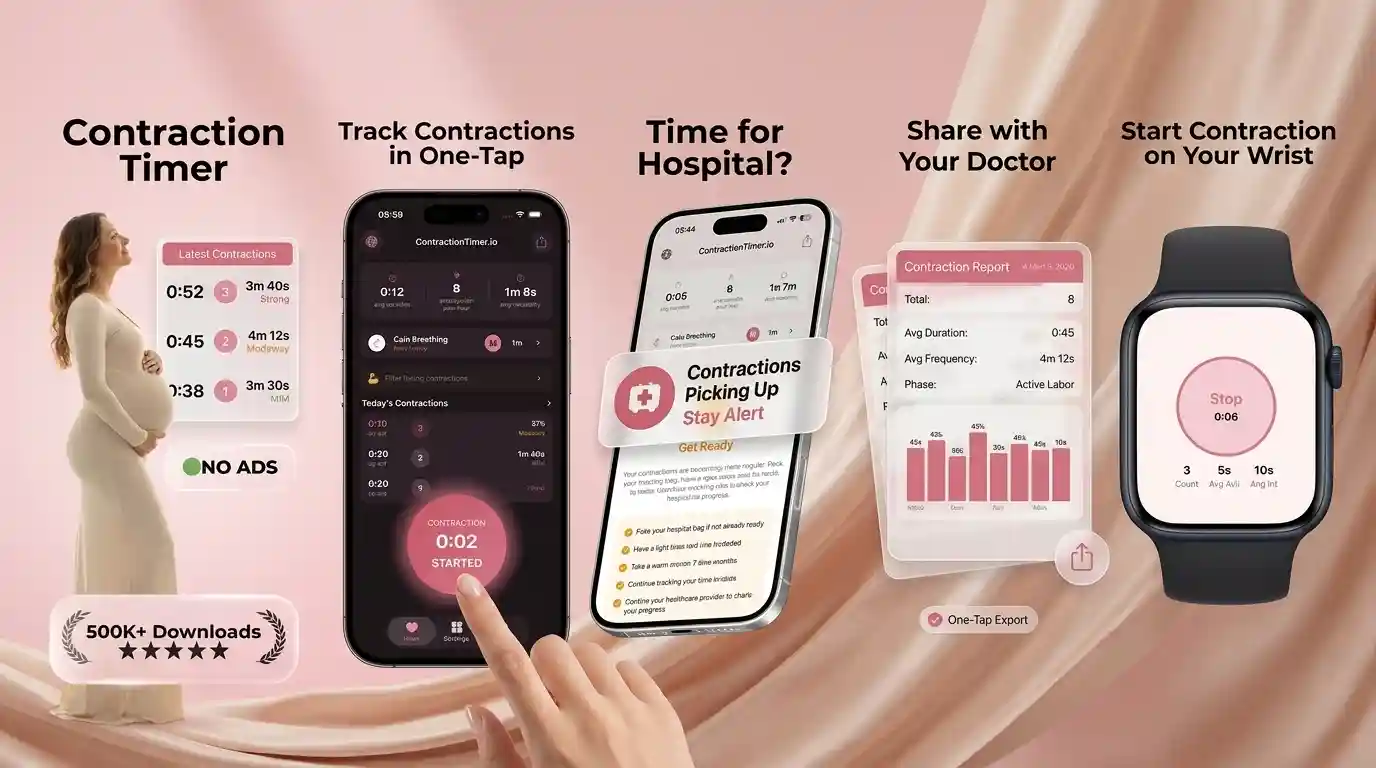
Pregnancy app privacy is a serious concern because most contraction timer and pregnancy-tracking apps are not covered by HIPAA. That means reproductive health data, including contraction logs, due dates, symptoms, device identifiers, and location, may be shared with advertisers, analytics companies, data brokers, or accessed through legal demands.
> Pregnancy app privacy refers to how safely apps that track contractions, pregnancy milestones, or reproductive health collect, store, share, and potentially sell personal and health data, including contraction logs, due dates, symptoms, location, and device identifiers.
TL;DR
- Most pregnancy and contraction timer apps are NOT covered by HIPAA, so hospital-grade privacy rules don't apply.
- Contraction logs combined with IP addresses, device IDs, or location data can reveal pregnancy status and labor timing to third parties.
- You can reduce risk by choosing apps with data minimization, end-to-end encryption, pseudonym support, and regularly deleting old logs.
What Pregnancy App Privacy Actually Covers
Pregnancy app privacy means knowing what reproductive health data an app collects, where it stores it, who can access it, and whether it can be shared beyond the app. For contraction timer users, the sensitive data is not only “health information” in a broad sense. It is a timestamped record of what may be happening in labor.
A contraction timer may collect start times, stop times, duration, frequency, due date, symptoms, notes, location, IP address, device ID, and account details. A screen showing uneven five-minute gaps can feel like a simple labor note. In a database, it can become a timeline of pregnancy status, labor progression, and possible birth outcome.
Data held by your doctor, midwife, hospital, or health plan may fall under medical privacy rules. Data held by a consumer app often does not. That distinction matters at 2:17 a.m., when the hospital bag is half-packed and someone is deciding whether to call the midwife.
5 Facts About Reproductive Health Data and Contraction App Privacy
- Most consumer pregnancy apps are not HIPAA-covered entities. HIPAA usually applies to healthcare providers, health plans, and their business associates, not ordinary apps downloaded from an app store. The U.S. Department of Health and Human Services explains that HIPAA generally applies to covered healthcare providers, health plans, healthcare clearinghouses, and their business associates: HHS HIPAA privacy rules.
- Third-party tracking is common in pregnancy apps. A 2024 study of 20 popular period and pregnancy apps found that 61% of pregnancy apps used third-party tracking, mainly for advertising and analytics. Source: peer-reviewed study of pregnancy-app tracking.
- Mozilla found repeated privacy concerns. In a Mozilla Foundation review of 25 reproductive health apps and wearable devices, 18 raised privacy or security concerns, including vague policies and broad data collection. Source: Mozilla review of reproductive health apps.
- Contraction logs can reveal a precise labor timeline. Duration, frequency, and notes can show when contractions started, when they intensified, and whether labor changed after rest or a hospital visit.
- Users can reduce risk, but not erase it. Pseudonyms, disabled cloud backup, location controls, and regular data deletion can lower exposure. They can't undo data already shared.
Good contraction apps deliver timing clarity, not legal protection or medical diagnosis.
How Pregnancy App Data Collection Works Behind the Scenes
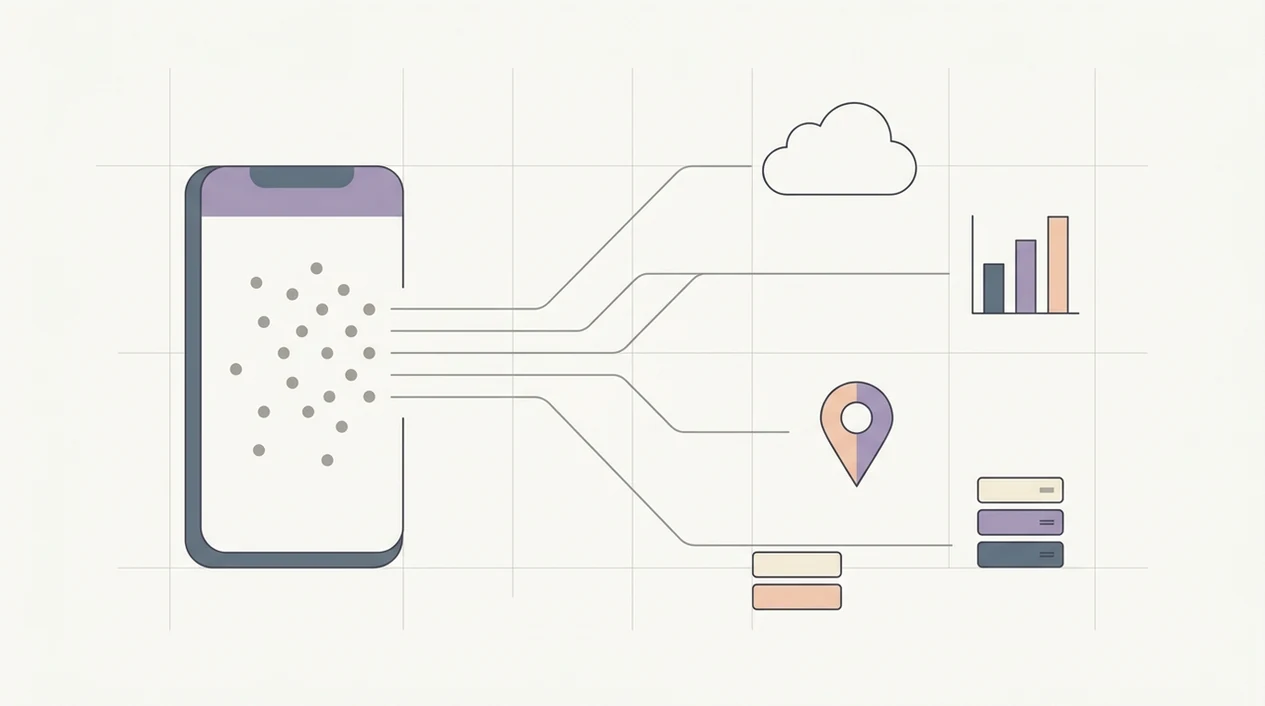
Pregnancy app data collection usually follows a simple path: you enter information, the app stores or processes it, and outside software tools may receive parts of that activity. The technical terms are software development kits and metadata. In plain language, that means helper code inside the app can send details about your device and use patterns.
A contraction log may start with one tap. Then the app may send the entry to its own server, crash-reporting tools, analytics platforms, or ad-related systems. App-held data is what the app directly stores. Data broker-held information is separate, often built from many apps, websites, locations, and device signals.
Third-Party SDKs and Hidden Data Leaks in Contraction Apps
SDKs can create privacy leaks even when an app's public promise sounds careful. An earlier Privacy International investigation found that 61% of apps tested transmitted data to Facebook as soon as users opened the app, before consent. Privacy International published the investigation here: Privacy International report on app data sharing.
The quiet part is the attachment. Device IDs, IP addresses, and location metadata can travel with app events. A birth partner whispering “start” and “stop” may only be trying to help you breathe through the wave, but each tap can still become structured data.
Specific Privacy Guarantees to Look for in a Contraction Timer App
Look for privacy guarantees that say exactly what happens to contraction logs, not broad promises about “protecting your information.” Stronger apps explain whether health data is encrypted, minimized, shared, sold, retained, or deleted.
Specific signs include end-to-end encryption for contraction logs and health data, data minimization, and a clear statement that reproductive health data is not sold or shared with advertisers or data brokers. You should be able to use the app without a real name, personal email, phone number, or precise location.
Policy language matters. “We may share information with partners to improve services” is vague. “We do not share contraction logs, due dates, symptoms, or reproductive health notes with advertising networks” is much clearer.
Tools like ContractionTimer.io should be evaluated the same way as any other pregnancy app: what is collected, what is optional, and what leaves the device. If you're comparing privacy with usability, the contraction timer app should still let you time waves without asking for unnecessary identity details.
What Pregnancy App Privacy Policies Do NOT Protect
A privacy policy is not a shield against every risk. HIPAA does not cover most consumer pregnancy or contraction apps, according to guidance from the U.S. Department of Health and Human Services, unless the app is working for a covered healthcare provider or health plan.
Privacy policies also cannot fully prevent subpoenas, warrants, or data broker access. Law enforcement may seek reproductive health data through legal processes. In some cases, agencies or private parties may purchase related information from brokers instead of requesting it directly from an app.
Law Enforcement Access to Contraction and Pregnancy Logs
Contraction logs can be sensitive because they may show when labor began, whether contractions stopped, and what happened around a specific date. Anonymized data is not always safe, since device IDs, location patterns, and behavior can re-identify a person.
State and country protections vary a lot. They can also change. If contractions come with warning signs, privacy questions should not delay care; pages on heavy bleeding with contractions and urgent symptoms belong in the safety plan too.
Common Myths About Contraction App Privacy and Reproductive Health Data
One common myth is that any app handling health information must follow HIPAA. Most consumer pregnancy apps do not. HIPAA usually protects information held by covered medical entities, not every tool on your phone.
Another myth is that anonymized reproductive data is always safe. In reality, device identifiers, location trails, and timing patterns can make “de-identified” data easier to connect back to a person than most users expect.
A third myth is that “we don't sell data” means nothing sensitive is shared. Apps may still share information with service providers, analytics vendors, cloud hosts, crash tools, or advertising partners under different legal labels.
The last myth is that simple contraction timers are harmless. A contraction counter seems small when you're trying to rest between contractions. But a log tied to an account, IP address, or location can reveal pregnancy status and labor timing.
For labor decisions, timing data is only one piece. The question of whether a timer can interpret labor is covered separately in can contraction timer tell if labor.
How to Protect Your Reproductive Health Data in Any Pregnancy App
The most practical way to protect reproductive health data is to reduce what you share, limit who receives it, and delete what you no longer need. Clinicians typically recommend calling your care team for medical concerns; privacy settings are helpful, but they don't replace medical guidance.
Use this checklist before labor gets intense. It is much harder to read policy language when you're unclenching your jaw at the peak of a contraction.
- Read the privacy policy for specific language about reproductive health data, third-party access, advertising, analytics, and data brokers.
- Use a pseudonym and avoid linking your real email, phone number, full name, or social account.
- Disable location services and turn off cross-app tracking permissions for the pregnancy or contraction app.
- Turn off cloud backup for contraction logs and pregnancy notes if you do not need syncing across devices.
- Export then delete old logs after they are no longer useful for your own records or care conversations.
- Check privacy updates and opt out of new data collection if the app changes its policy.
For a partner-led setup, the contraction timer for birth partner workflow can keep the laboring person focused on breathing instead of phone taps.
When to Seek Medical or Legal Help
Seek medical help right away for bleeding, severe pain, reduced fetal movement, or any symptom that feels urgent. Do not pause emergency care to change app settings, delete logs, or tighten privacy controls.
If you are using a contraction timer, the safest order is care first, privacy cleanup later. Timing can help a clinician understand patterns, but the useful details may differ by pregnancy, gestational age, and your care plan.
- Call your clinician if contractions come with heavy bleeding, severe or unusual pain, decreased movement, fever, dizziness, fluid leakage, or anything your care team told you to treat as urgent.
- Go to emergency care when symptoms feel serious or your clinician, midwife, hospital, or local emergency line tells you to come in.
- Ask your care team which contraction details are worth sharing, such as start time, spacing, duration, intensity, fluid, bleeding, movement, or medication notes.
- Contact a qualified local lawyer if you are worried about reproductive data exposure, subpoenas, cross-state care, or laws in your jurisdiction.
- Use official sources from hospitals, government agencies, courts, bar associations, or legal-aid groups for high-stakes medical or legal decisions.
Limitations
No app, privacy policy, or user setting can guarantee total protection for reproductive health data. That is uncomfortable to say, but it is the honest starting point.
- No app can guarantee absolute protection from subpoenas, warrants, or legal demands targeting reproductive health data.
- Strong encryption can be weakened by third-party SDKs that collect data outside the app's direct control.
- Privacy policies can change after you have already shared data, often with minimal notice.
- Legal protections for reproductive health data vary by state and country, and they can shift with new laws.
- Even privacy-forward apps cannot stop data broker aggregation from other apps, websites, location trails, or device activity.
- A review summarized by Privacy International found that 72% of pregnancy apps examined did not cite medical literature, raising broader quality and governance concerns.
- Deleting an app from your phone does not always delete account data stored on servers.
ContractionTimer.io contraction timer app can be part of a calm tracking routine, but users still need to read privacy settings and follow their clinician's instructions. The contraction timer medical disclaimer explains that timing tools do not diagnose labor or replace care.
Frequently Asked Questions
Are pregnancy apps covered by HIPAA?
Most consumer pregnancy and contraction apps are not covered by HIPAA. HIPAA usually applies when health data is held by a covered healthcare provider, health plan, or business associate.
Can contraction timer data be subpoenaed?
Yes, contraction timer data can potentially be accessed through subpoenas, warrants, or other legal processes. Risk depends on the app, the data stored, and the laws in the relevant jurisdiction.
Is anonymized pregnancy data truly safe?
Anonymized pregnancy data is not always safe. Device IDs, location patterns, timestamps, and behavior can sometimes re-identify reproductive health data.
Do contraction apps share data with advertisers?
Some contraction and pregnancy apps share data through third-party SDKs, analytics tools, or advertising networks. A privacy policy should say whether contraction logs, due dates, symptoms, or identifiers are shared.
What does “we don't sell data” actually mean?
“We don't sell data” usually means the app claims not to exchange data for money. It may still share data with service providers, analytics partners, cloud vendors, or advertising tools.
Which pregnancy apps have the best privacy?
The best privacy signs are data minimization, strong encryption, no advertising data sharing, pseudonym support, and clear deletion controls. Evaluate features and policy language rather than relying on app store ratings.
Can my employer see my pregnancy app data?
An employer usually cannot directly see pregnancy app data unless you share it or connect it through a workplace program. Data broker purchases or wellness integrations could theoretically expose pregnancy status.
Should I delete my contraction logs after birth?
Yes, consider exporting any records you need and deleting old contraction logs after birth. Keeping less reproductive health data lowers long-term exposure if an account, server, or vendor is later compromised.
Does location tracking matter in pregnancy apps?
Yes, location tracking matters because it can connect pregnancy app use with clinics, hospitals, pharmacies, or home addresses. Location data combined with contraction logs can reveal sensitive reproductive health information.
Can pregnancy apps change their privacy policy?
Yes, pregnancy apps can change their privacy policy, often with limited user notice. Previously collected data may be affected depending on the policy terms and applicable law.
Does deleting a pregnancy app delete its data from cloud backups?
Not always. App data, screenshots, exports, or notification history may remain in device backups or synced storage until that backup is replaced or manually deleted; check both the app’s deletion options and your Apple or Google backup settings.
How Cloud Backups and Shared Devices Affect Contraction Data Privacy
Deleting a pregnancy app does not necessarily remove every copy of its data. Contraction logs, screenshots, exported files, notification previews, and app data may remain in an iCloud or Google device backup, a photo library, a file-storage account, or another synced device. Backup handling varies by operating system and app: some app data is excluded, while other data may be restored when you replace or reset your phone.
Check 4 places before assuming a log is gone: the app’s deletion controls, device backup settings, synced photo and file storage, and recently deleted folders. Also review tablets, watches, or computers connected to the same account. On a shared phone or family account, disable lock-screen notification previews and use a device passcode or biometric lock. If you need records for clinical care, save only the relevant dates and contraction details, then ask your healthcare professional how they prefer to receive them. Cloud backups improve recovery, but they also create additional copies that require separate deletion and access controls.
If you are wondering, “is contraction data private,” the answer depends on the app’s policies, permissions, storage practices, and data-sharing choices. Review privacy terms before recording labor details, and limit unnecessary account or location access.
Likewise, “are contraction timer apps hipaa protected” has no universal yes-or-no answer. HIPAA often applies only when an app handles information for a covered healthcare provider or partner. Contraction Timer IO users should understand the applicable privacy policy and avoid sharing sensitive logs unless necessary.
Numbers from clinical sources
| Topic | What sources say | Source |
|---|---|---|
| ACOG due-date calculation uses Naegele’s rule (280 days from last menstrual period). | The American College of Obstetricians and Gynecologists defines the estimated due date by convention as 280 days after the first day of the last menstrual period (Naegele’s rule), assuming a 28‑day cycle with ovulation a | American College of Obstetricians and Gynecologists (ACOG), Committee Opinion Methods for Estimating the Due Date (2017) |
Privacy and timing notes
Pregnancy apps may collect identifiers, reproductive histories, IP addresses, device data and contraction logs through analytics or advertising tools. A 2026 audit found that all 14 sampled baby-tracking apps shared data with third parties, sometimes including due dates and pregnancy-loss information. Review permissions and consent prompts, and never use a timer instead of professional advice: NHS guidance says to call if you think labour has begun or are worried.
- 5 minutes apart, 60 seconds: common NHS contact pattern
- Over 2 minutes: urgent contact for any contraction
- 6+ in 10 minutes: urgent contact
- Under 37 weeks: urgent contact if labour is suspected