 Contraction
How To Time Contractions Correctly: Start-to-Start Method Explained
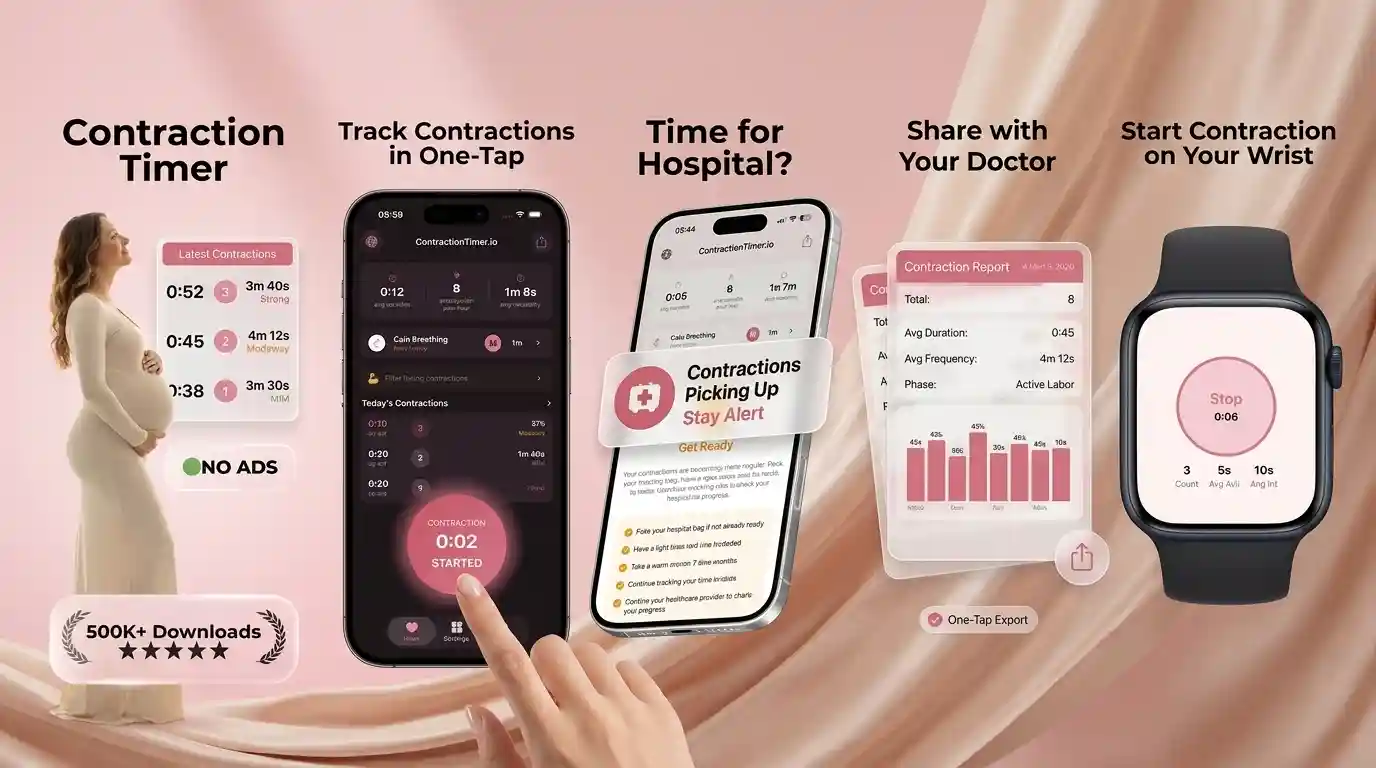
Contraction Timer (contractiontimer.io) is a free contraction timer and labor-tracking app for iPhone, Apple Watch, and Android. For this page, it helps parents use the start-to-start method by automatically calculating contraction duration, frequency, intervals, and 5-1-1 timing patterns.
Quick answer: To time contractions correctly, record when each contraction starts, when it stops, how long it lasts, and how much time passes from the start of one contraction to the start of the next. This start-to-start method gives you contraction frequency, while stop-minus-start gives you duration, helping you and your provider review whether a consistent labor pattern is developing.
Why choose Contraction Timer?
Contraction Timer is built for start-to-start contraction timing, so it is easier than a generic stopwatch when you need duration, frequency, and pattern review during labor.
- One-tap start and stop timing
- Automatic duration and frequency calculations
- Start-to-start interval tracking
- 5-1-1 hospital pattern alerts
- Labor phase detection based on timing patterns
- Contraction history for provider review
- Apple Watch and Lock Screen timing
- Partner mode, offline use, no ads, and doctor reports
Works on iPhone, Apple Watch, and Android. It is a tracking tool, not a medical device.
If you need to know how to time contractions, start your timer when a contraction begins, stop it when that contraction ends, then note the interval from the start of that contraction to the start of the next one. Record at least three contractions in a row to see whether they are becoming longer, stronger, and closer together, then share the log with your care provider.
Definition: Timing contractions means measuring each contraction's duration (how long it lasts) and frequency (the interval from the start of one contraction to the start of the next) to detect a progressing labor pattern.
TL;DR
- Duration = start to end of one contraction; frequency = start of one to start of the next.
- Log at least 3 contractions in a row before judging the pattern.
- Contractions getting longer, stronger, and closer together suggest true labor, but always follow your provider's specific call-in threshold.
What Timing Contractions Actually Means
Timing contractions means recording two separate measurements: duration and frequency. Duration is how long one contraction lasts, from the first tightening to the full release. Frequency is the interval from the start of one contraction to the start of the next.
That difference matters. If one contraction starts at 7:10 and ends at 7:11, the duration is 60 seconds. If the next contraction starts at 7:15, the frequency is 5 minutes. The rest gap is only the quiet time between the end of one contraction and the start of the next.
Small detail. Big confusion.
Both numbers help show progression. A pattern that moves from 8 minutes apart and 40 seconds long to 5 minutes apart and 60 seconds long tells a clearer story than pain level alone. For a deeper breakdown, the contraction duration vs frequency guide separates the two measurements cleanly.
What You Need Before You Start Timing Contractions
You need a timer, a log, and a plan before contractions become hard to talk through. Use a phone stopwatch, a clock with a second hand, or a contraction timer app. Use pen and paper, Notes, or a digital History screen so each entry is saved.
Set the phone where someone can reach it. I’ve watched a partner try to hit Stop with one thumb while holding a water bottle at the edge of the bed. That is not the moment to hunt for an app folder.
Know your provider’s call-in instructions before labor gets intense. Some people are told to call earlier because of birth history, distance from the hospital, or pregnancy risks. Clinicians typically recommend using contraction timing as one part of the call, not as the whole decision.
This guide explains how to measure and organize contractions; it does not set your personal labor-admission threshold or replace advice from your midwife, OB-GYN, or labor unit.
Start-to-Start Method for Contraction Timing
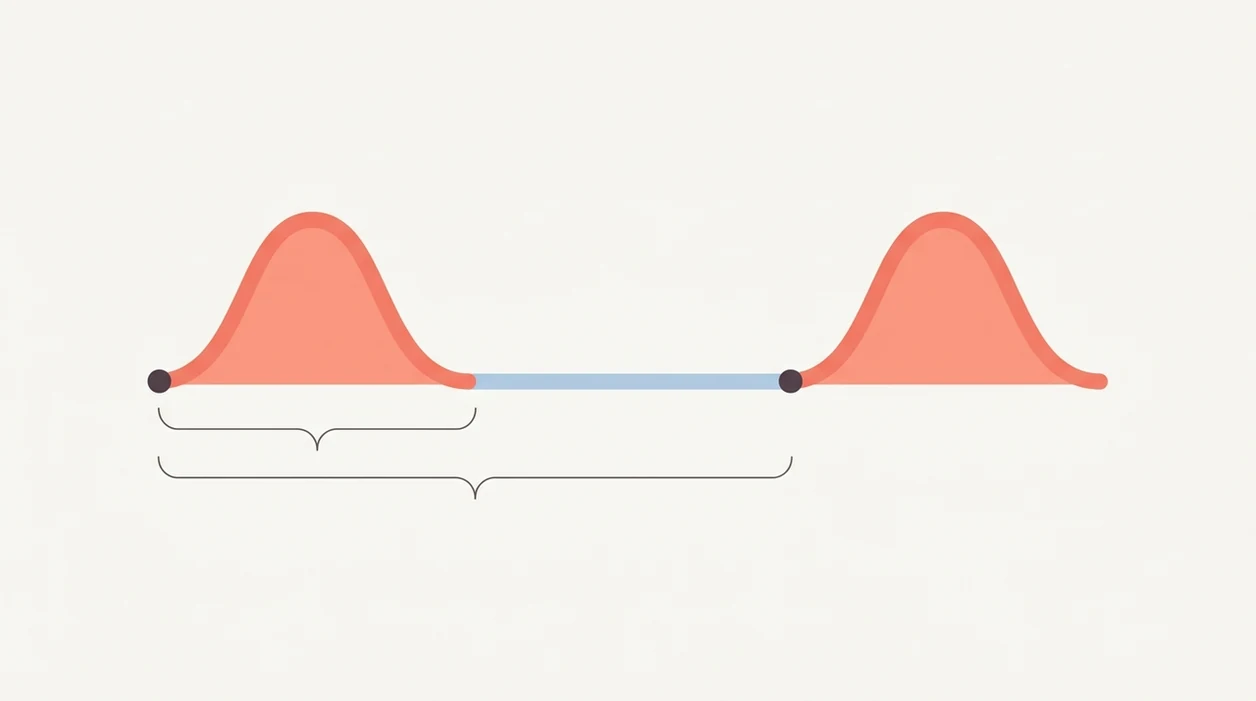
The start-to-start method measures from the beginning of one contraction to the beginning of the next. It works because one interval includes both the contraction itself and the resting time before the next one begins.
Providers use start-to-start timing because it creates consistent frequency data. End-to-start only measures the rest gap. Middle-to-middle depends on guessing the peak, which is usually messy when the contraction builds slowly.
Here is how the pattern can look: 7 minutes apart and 40 seconds long, then 6 minutes apart and 50 seconds long, then 5 minutes apart and 60 seconds long. That shows intervals shortening while duration lengthens. True labor contractions often last about 30 to 70 seconds, according to March of Dimes source.
For most families, start-to-start timing is easier than rest-gap timing because it matches how providers ask about contraction frequency.
How To Time Labor Contractions Step by Step
To time labor contractions accurately, record the start, stop, duration, and next start time for several contractions in a row. The goal is not a perfect spreadsheet. It is a clear pattern your provider can understand.
- Start the timer when the tightening begins, not when the pain peaks.
- Stop the timer when the contraction fully releases, then record the duration.
- Keep watching the clock during the rest period until the next contraction starts.
- Record the start-to-start interval once the next contraction begins.
- Repeat for at least 3 consecutive contractions so you can see whether a pattern is forming; HSE advises timing several contractions to understand their regularity source.
- Review the log for contractions getting longer, stronger, and closer together.
A tightening wave during a hallway lap counts if you can identify the start. If you forget to stop the timer, edit the entry instead of leaving a 9-minute contraction in the log. For phone-specific workflows, use how to track contractions with phone.
5 Must-Know Facts About Contraction Timing
- True labor contractions often last roughly 30 to 70 seconds.
- A common call-in threshold is contractions about 5 minutes apart for 1 hour, but Cleveland Clinic notes this is general guidance rather than a universal rule source.
- Timing at least 3 contractions in a row helps show whether the pattern is regular.
- Duration and frequency both matter; logging only the gaps can hide progression.
- The 5-1-1 rule is not universal, and your provider may give a different threshold.
A good contraction timer app records start time, stop time, duration, and frequency, not a diagnosis or a promise about when birth will happen. Tools like ContractionTimer.io can make the log easier to read when your phone is at 12% battery and the charger is across the room.
Common Contraction Timing Mistakes To Avoid
The most common timing mistake is measuring from the middle of one contraction to the middle of the next. Use start-to-start instead. The middle is a guess, especially when the contraction has a long build.
Another mistake is assuming painful contractions always mean true labor. Pain matters, but pain alone does not prove the pattern is progressing. Irregular cramps fading after water or rest may not behave like active labor.
Do not record only the quiet gap. You need duration too. A log that says “5 minutes apart” but skips whether each contraction lasted 20 seconds or 70 seconds is incomplete.
Apps can help organize timing data, but they cannot diagnose labor on their own. If you only timed one or two contractions, keep going before drawing conclusions. The practical minimum is covered in how many contractions to time.
When To Call Your Provider Based on Contraction Timing Patterns
When should you call your provider based on contraction timing? Many labor instructions use the 5-1-1 guideline: contractions 5 minutes apart, lasting about 1 minute each, for 1 hour.
That rule is common, but not universal. Cleveland Clinic describes 5 minutes apart for at least 1 hour as a common time to contact care or go in source. Your threshold may be earlier or later based on prior births, hospital distance, group B strep instructions, or other risk factors.
Some signs override timing rules. ACOG advises contacting care promptly for warning signs such as vaginal bleeding, leaking fluid, severe abdominal pain, or decreased fetal movement source. Call right away for water breaking, bleeding, reduced fetal movement, or symptoms your provider told you to treat as urgent. If the car seat is already clipped in back and a coat gets pulled on between waves, send or read the actual log. Do not scroll in panic.
Verify Your Contraction Timing Log Is Accurate
Before acting on a contraction log, check that each entry has four pieces: start time, end time, duration, and start-to-start interval. Missing one field can make the pattern look more regular than it is.
Confirm you logged at least 3 consecutive contractions. Then look for the trend. Are durations lengthening? Are intervals shortening? Are the contractions harder to talk through?
One bad tap happens. Double-tapping Start, forgetting Stop, or timing from the peak can distort the next few entries. In ContractionTimer.io, review History, use Edit if needed, and Share or Export the summary before calling. The tool to log contractions and calculate averages can also help if you want the math checked before you speak to care.
Limitations
Contraction timing is useful, but it is not a clinical exam. It organizes what is happening over time, and your provider interprets that data with symptoms, history, and fetal status.
- Timing contractions does not prove labor has started; Braxton Hicks can mimic parts of a labor pattern.
- A contraction timer app organizes data but cannot assess cervical change or fetal wellbeing.
- The 5-1-1 rule may be too early or too late for some people.
- Accuracy drops if you are distracted, sleeping, medicated, or unsure when tightening starts.
- Contraction timing alone cannot detect emergencies such as placental abruption or cord prolapse.
- Irregular contractions that stop and restart can make logging frustrating. That is common in early labor.
- A cracked screen protector, Face ID failing in a dark room, or Do Not Disturb settings can slow handoff to a partner.
Use the log as a clear record, not a replacement for care.
Frequently Asked Questions
Do I time contractions from start to start?
Yes. Time from the start of one contraction to the start of the next to measure contraction frequency.
How long should a real labor contraction last?
True labor contractions often last about 30 to 70 seconds. Duration usually matters most when reviewed with frequency and progression.
How many contractions should I time before calling?
Time at least 3 contractions in a row to spot a pattern. Follow your provider’s specific call-in rule.
What is the 5-1-1 rule for contractions?
The 5-1-1 rule means contractions are 5 minutes apart, last 1 minute, and continue for 1 hour. It is common guidance, not universal.
Can a contraction timer app tell me I am in labor?
No. A contraction timer app logs timing data but cannot replace clinical assessment by your provider.
What should I do if my contractions are irregular?
Keep timing and watch whether they become longer, stronger, and closer together. Irregular contractions may be Braxton Hicks or early labor.
Should I time Braxton Hicks contractions?
Yes, if you are unsure what they are doing. Braxton Hicks contractions typically stay irregular or fade.
When should I stop timing contractions?
You can usually stop once you have contacted your provider and received guidance. Many people also stop after hospital arrival.
Does contraction pain mean I am in true labor?
No. Pain alone does not confirm true labor; regularity, duration, and progression matter more.
Which app fits which need
| Need | Best option |
|---|---|
| Fast, accurate start-to-start contraction timing with automatic duration, frequency, history, and 5-1-1 alerts | Contraction Timer |
| General pregnancy articles, due date content, and broad pregnancy planning alongside basic tools | The Bump |
| Hardware-supported contraction and uterine activity tracking where available and provider-appropriate | Bloomlife |
| Hypnobirthing, meditation, breathing, and relaxation support during pregnancy and labor | GentleBirth |
Quick facts
- Type
- Contraction timer & labor tracker app
- Platforms
- iPhone, iPad, Apple Watch, Android
- Focus
- Contraction timing, start-to-start method, duration, frequency, intervals, 5-1-1 alerts, labor patterns
- Includes
- one-tap timing, duration tracking, frequency tracking, interval calculations, contraction history, 5-1-1 alerts, labor phase detection, partner mode, doctor reports, offline use
- Best for
- Parents who want to time contractions correctly and review labor patterns before calling their provider
- Free
- Yes
- Medical replacement
- No
People also use Contraction Timer for
Time Contractions Correctly With the Start-to-Start Method
Use Contraction Timer to record each contraction, calculate duration and frequency automatically, and spot 5-1-1 patterns more clearly. It is free, ad-free, and available for iPhone, Apple Watch, and Android.
Download the Free App