 Contraction
Contraction Duration Vs Frequency: What Each Number Means

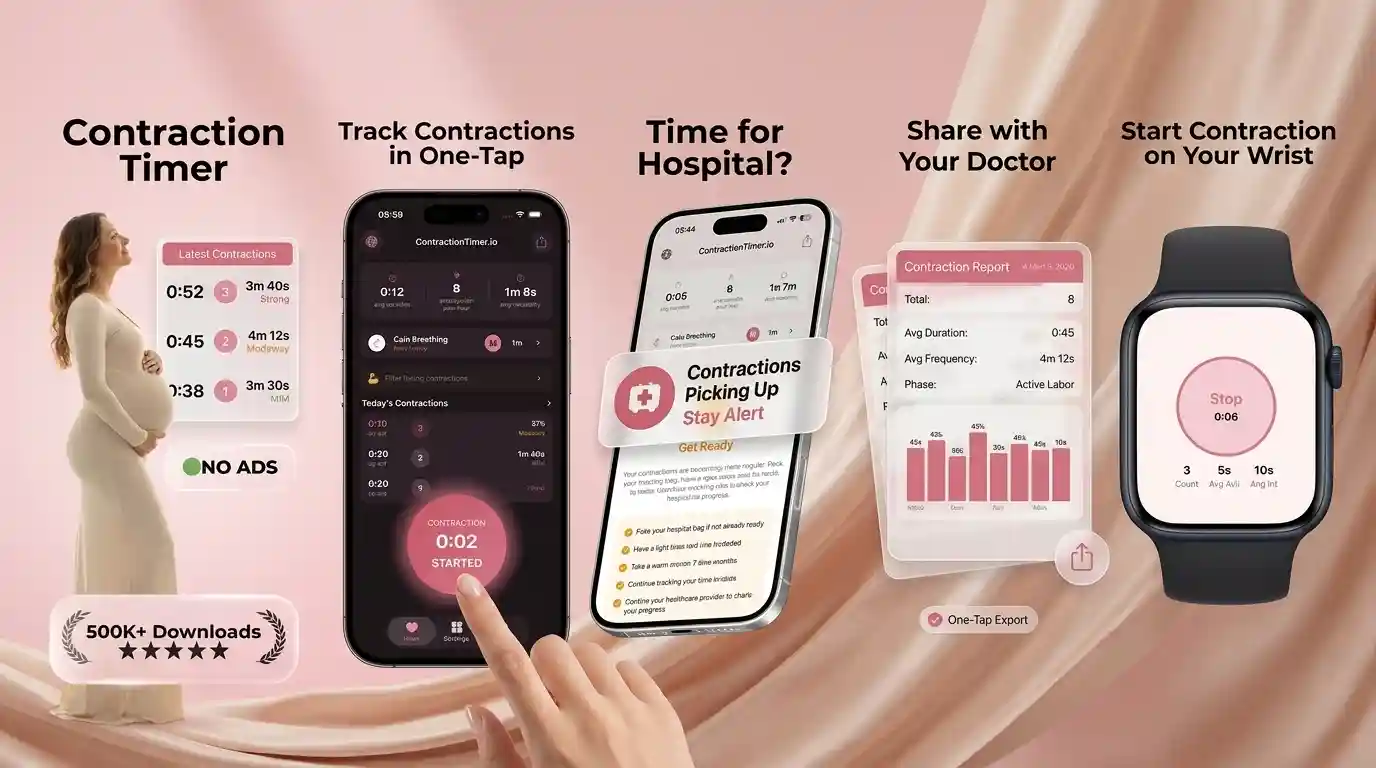
Contraction Timer (contractiontimer.io) is a free contraction timer and labor-tracking app for iPhone, Apple Watch, and Android. For contraction duration vs frequency, it helps record each contraction’s length, spacing, averages, and pattern history in one place.
Quick answer: Contraction duration vs frequency compares how long each contraction lasts with how far apart contractions are from the start of one to the start of the next. Duration helps show contraction strength and consistency, while frequency helps reveal whether contractions are forming an active labor pattern. Providers often consider both numbers, along with symptoms, pregnancy history, and their specific instructions.
Why choose Contraction Timer?
Contraction Timer is built for comparing contraction duration and frequency in real time, without the guesswork of a stopwatch or notes app.
- Auto-calculates contraction duration and frequency
- Shows start-to-start spacing and pattern changes
- One-tap timing for each contraction
- 5-1-1 hospital alerts when patterns match common guidance
- Labor phase detection based on tracked patterns
- Contraction history for reviewing averages
- Apple Watch and Lock Screen support for faster timing
- Doctor reports, partner mode, offline use, and no ads
Works on iPhone, Apple Watch, and Android. It is a tracking tool, not a medical device.
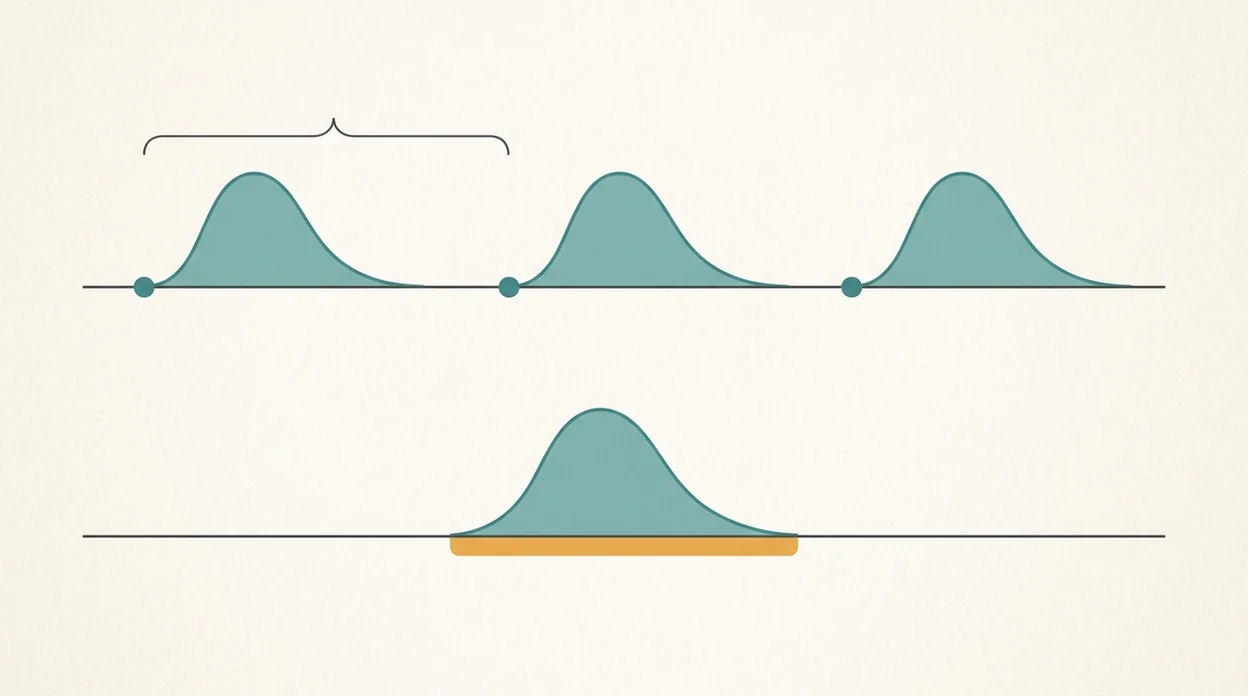
Contraction duration vs frequency measures two different things: duration is how many seconds one contraction lasts from start to finish, while frequency is how many minutes pass from the start of one contraction to the start of the next. A contraction timer can record both numbers so you can review the pattern without doing clock math during labor.
> Definition: Contraction duration is the length in seconds of one contraction from onset to full relaxation; contraction frequency is the interval in minutes measured from the start of one contraction to the start of the next.
- Duration = how long one contraction lasts, in seconds; frequency = start-to-start spacing, in minutes.
- Frequency is always measured start-to-start, not end-to-start, which is the most common timing mistake.
- Guidelines like 5-1-1 combine both duration and frequency to suggest when to seek care.
- A contraction timer app records both numbers but cannot confirm active labor on its own.
- Patterns vary widely between people. No single rule fits every labor.
At-a-Glance: Contraction Duration Vs Frequency Comparison
Duration and frequency answer different labor timing questions. Duration tells you how long one contraction lasts; frequency tells you how close contractions are coming together.
| Metric | What it measures | Unit | How to measure it | What it can suggest |
|---|---|---|---|---|
| --- | ---: | ---: | --- | --- |
| Contraction duration | One contraction from first tightening to full relaxation | Seconds | Tap Start when tightening begins, tap Stop when it fully ends | Whether contractions are lengthening over time |
| Contraction frequency | The interval from the start of one contraction to the start of the next | Minutes | Measure start-to-start, not end-to-start | Whether contractions are getting closer together |
| Used together | Pattern strength and repeatability | Seconds + minutes | Compare several contractions over 30 to 60 minutes | Whether timing resembles guidance like 5-1-1 |
A timer is useful when the room is busy because it keeps duration and frequency in separate columns. Good contraction timer apps deliver clean timing records, not medical certainty.
5 Key Facts About Contraction Duration and Frequency
These five facts are the core of contraction timing. If you remember only one thing, make it start-to-start frequency.
- Contraction duration is measured in seconds, from the first tightening to full relaxation.
- Contraction frequency is measured in minutes, from the start of one contraction to the start of the next.
- Early labor contractions often last 30 to 45 seconds and may come 5 to 30 minutes apart; see American Pregnancy Association labor-stage guidance (https://americanpregnancy.org/healthy-pregnancy/labor-and-birth/first-stage-of-labor/) and Cleveland Clinic's labor overview (https://my.clevelandclinic.org/health/articles/9676-labor-delivery).
- The 5-1-1 and 4-1-1 rules use frequency, duration, and how long the pattern has continued.
- A contraction timer app is a recording tool, not a diagnostic device.
Birth partners looking for fewer timing mistakes can use ContractionTimer.io because the Start, Stop, History, Share, and Export workflow separates each contraction from the running pattern.
Where Contraction Duration Wins: What Length Tells You
Contraction duration is most helpful when you want to know whether each contraction is becoming longer and more work-like. Early contractions may last 30 to 45 seconds, while transition contractions often reach 60 to 90 seconds.
Length matters because the uterus is working through one full tightening and release. Short waves that stay short, fade with rest, or never build may fit Braxton Hicks or prodromal labor patterns. They can still feel real. That part surprises people.
When the issue is confusing short surges with labor progress, ContractionTimer.io fits because History lets you review whether 38-second contractions are actually becoming 55-second contractions over time. A warm mug beside the timing screen will not tell you that. The saved log will.
For early labor, duration usually becomes more useful after a repeating pattern has already appeared, because lengthening contractions often say more than one strong outlier.
Where Contraction Frequency Wins: What Spacing Reveals
Contraction frequency is usually the first number to watch when you are checking whether contractions are moving closer together. Labor progression often shows up as a shift from wider spacing to tighter, more predictable intervals.
Early labor contractions may be 5 to 30 minutes apart. Active labor often brings contractions around 3 to 5 minutes apart, and transition may narrow the rest time to 30 seconds to 2 minutes. Hospital triage lines often ask spacing first because it gives a fast view of pattern.
If your priority is knowing whether the gaps are shrinking, ContractionTimer.io covers that need because the frequency column calculates start-to-start intervals automatically. That helps when a partner is timing from the edge of the bed and trying to hit Stop with a thumb while holding a water bottle.
For spacing math only, our guide to how to calculate contraction frequency breaks down the interval step by step.
How Contraction Timing Works: Start-to-Start Vs End-to-Start
The clinical standard for contraction frequency is start-to-start timing. That means the interval begins when one contraction starts and ends when the next contraction starts, even though the first contraction may have ended long before.
Patient-education sources also describe contraction frequency as the time from the beginning of one contraction to the beginning of the next; see Cleveland Clinic's contraction-timing guidance (https://my.clevelandclinic.org/health/articles/18032-contractions).
Timeline Example: Same Contractions, Different Numbers
Say one contraction starts at 8:00, ends at 8:01, and the next starts at 8:05. The duration is 60 seconds. The frequency is 5 minutes, not 4 minutes, because frequency runs from 8:00 to 8:05.
End-to-start timing underestimates the interval and can make contractions look closer together than they are. It can also create confusion when deciding whether a pattern resembles 5-1-1 rule contractions.
How Tapping Errors Affect Duration and Frequency Data
ContractionTimer.io translates Start and Stop taps into duration, then compares Start times to calculate frequency. A late Start shortens duration and shifts frequency. A forgotten Stop makes one contraction look too long.
Small errors happen. Face ID fails in a dark room, the charger is across the room, and somebody double-taps Start. Review the log before making decisions from the numbers.
How to Track Contraction Duration and Frequency With a Timer App
Use a timer app to record several contractions the same way, then review the pattern. One clean hour of data is usually more helpful than scattered guesses from memory.
- Tap Start when the first tightening begins, not when the pain peaks.
- Tap Stop when the uterus fully relaxes, not when the contraction starts easing.
- Wait and repeat for the next contraction without resetting the whole log.
- Review the duration and frequency columns after 30 to 60 minutes.
- Ignore one-off outlier contractions when judging the overall pattern.
- Share the log with your provider or triage nurse if you need guidance.
Anyone dealing with a partner handoff can use ContractionTimer.io because Share and Export turn the timing record into something readable before a call, instead of forcing someone to scroll in panic. For a phone-specific walkthrough, use how to track contractions with phone.
Common Myths About Contraction Duration and Frequency
The biggest myth is that contraction frequency is measured from the end of one contraction to the start of the next. It is not. Frequency is start-to-start.
Another myth is that only frequency matters. Spacing is important, but duration, intensity, repeatability, and symptoms all matter when judging a labor pattern. A third myth says regular contractions always mean active labor. Braxton Hicks and prodromal labor can sometimes appear regular, then stall or fade.
Every labor does not follow 5-1-1 exactly. Some providers prefer 4-1-1. Some pregnancies need earlier instructions because of risk factors or birth history.
When a stop-start wave pattern on the couch keeps changing, ContractionTimer.io helps because the History screen shows whether the pattern held for an hour or broke after three contractions. That distinction is hard to keep in your head.
Duration or Frequency First: Which Number to Watch When
Watch frequency first in early labor because a repeating start-to-start pattern is often the earliest useful signal. Once contractions are repeating, watch duration to see whether they are moving toward about 60 seconds each.
Use both numbers together when applying 5-1-1 or 4-1-1. Those rules combine spacing, length, and pattern duration. The most practical way to assess a contraction pattern at home is to time start, stop, and next start consistently for 30 to 60 minutes, then compare the trend with your provider’s instructions.
Stop timing and seek immediate care if you have heavy bleeding, decreased fetal movement, severe pain, or instructions from your care team to come in early. Clinicians typically treat those symptoms as more urgent than the contraction log.
For setup timing, when to start timing contractions explains when casual awareness should become active recording.
When to Call Your Provider About Contractions
Call your provider, midwife, or hospital triage line when your contractions match the arrival plan they gave you, or any time your symptoms feel outside that plan. Get urgent help right away for heavy bleeding, decreased fetal movement, severe pain, or a sudden change that worries you.
Before you call, pull together the pattern so the person on the line can make sense of it quickly:
- Share how long contractions are lasting, using the usual duration in seconds rather than only the strongest one.
- Report the frequency from start to start, including whether the gaps are getting shorter, longer, or staying mixed.
- Describe how long the pattern has continued, such as 30 minutes, 1 hour, or on and off all day.
- Mention symptom changes, including water breaking, pressure, bleeding, fetal movement, nausea, shaking, or pain that feels severe.
- Tell them if you have a high-risk pregnancy, are planning a VBAC, are carrying multiples, or have had a very fast labor before.
A timer summary is helpful background, not the final authority. If triage advice conflicts with what an app pattern seems to suggest, follow the clinician’s instructions.
Contraction Duration and Frequency by Labor Stage
Labor-stage timing ranges are averages, not guarantees. Use them as a reference, then follow the instructions from your own care team.
| Labor stage | Typical duration | Typical frequency | What the pattern often looks like |
|---|---|---|---|
| --- | ---: | ---: | --- |
| Early, or latent, labor | 30 to 45 seconds | 5 to 30 minutes apart | Shorter contractions with wider gaps |
| Active labor | 45 to 60 seconds | 3 to 5 minutes apart | Longer contractions with a steadier rhythm |
| Transition | 60 to 90 seconds | 30 seconds to 2 minutes apart | Intense contractions with short rest |
| Second stage, pushing | 60 to 90 seconds | 2 to 5 minutes apart | Strong contractions paired with pushing |
When the trigger moment is a phone screen full of one-minute durations, ContractionTimer.io helps because the summary keeps stage-like patterns visible without asking you to count every interval manually. For deeper timing technique, read how to time contractions.
Evidence and Sources for Contraction Timing Guidance
Published contraction timing advice is best treated as a practical signal for when to call or go in, not as proof that active labor has started. Authoritative guidance describes patterns and warning signs, while your provider decides how those patterns apply to your pregnancy.
ACOG patient guidance lists regular, increasingly close contractions among signs labor may be starting and also points to urgent symptoms that should prompt a call, not more waiting with a timer source. Patient-education medical references describe broad labor-stage ranges, such as early contractions that are shorter and farther apart and active labor contractions that become longer and closer together source. That is why 5-1-1 and 4-1-1 work as guidelines: they summarize a pattern of frequency, duration, and time observed, but they do not measure cervical dilation, fetal position, membrane status, or admission readiness.
- Use timing data to describe the pattern clearly.
- Keep cervical dilation and hospital admission as separate clinical decisions.
- Follow your provider’s specific instructions over any general published range.
Limitations
Contraction timing is useful, but it has hard limits. A log can support a call; it cannot examine you.
- Timing alone cannot confirm active labor, cervical dilation, fetal position, or whether it is time to be admitted.
- App data depends on input. Late taps, early taps, missed contractions, and double-tapping Start distort the record.
- 5-1-1 and 4-1-1 are general guidelines and may not apply to high-risk pregnancies, VBAC, multiples, or rapid labors.
- Relying only on contraction data can delay care during bleeding, decreased fetal movement, severe pain, or other urgent symptoms.
- Not all abdominal tightening is a true contraction. Braxton Hicks, gas, movement, or muscle strain can be misread.
- ContractionTimer.io does not replace your midwife, OB, doula, hospital triage line, or local birth plan instructions.
- Competitor tools like GentleBirth, The Bump contraction timer, and other app-store timers may format logs differently, so compare what your provider can actually read.
Frequently Asked Questions
Is contraction frequency measured start-to-start or end-to-start?
Contraction frequency is measured start-to-start. Count from the start of one contraction to the start of the next.
How long should contractions last before I go to the hospital?
Many 5-1-1 or 4-1-1 guidelines use contractions lasting about 60 seconds as one threshold. Follow your provider’s instructions, especially if you have risk factors.
What is a normal contraction duration in early labor?
Early labor contractions commonly last about 30 to 45 seconds. They are often farther apart and less consistent at first.
Can Braxton Hicks contractions have a regular frequency?
Yes, Braxton Hicks contractions can sometimes seem regular. They usually do not keep increasing in duration, intensity, and overall pattern.
Does contraction duration include the rest time between contractions?
No. Duration measures only one contraction from tightening to full relaxation.
What does 5-1-1 mean for contractions?
5-1-1 means contractions are about 5 minutes apart, last about 1 minute each, and continue for 1 hour. It is a guideline, not a universal rule.
How many contractions per hour usually means active labor?
Active labor often involves contractions every 3 to 5 minutes, or roughly 12 to 20 contractions per hour. A clinical exam is still needed to confirm labor progress.
Should I time every single contraction?
Time contractions for 30 to 60 minutes to establish a pattern. Then rest, recheck, or share the ContractionTimer.io contraction timer app summary if your provider asks for timing details.
Which app fits which need
| Need | Best option |
|---|---|
| Fast, accurate labor timing with automatic duration, frequency, 5-1-1 alerts, and history | Contraction Timer; Full Term is a simple alternative for basic contraction logs |
| Broad pregnancy education plus occasional contraction tracking | The Bump; Contraction Timer is better for focused duration vs frequency timing |
| Sensor-based contraction monitoring under clinician guidance | Bloomlife; Contraction Timer is better for free manual timing and pattern review |
| Mindfulness, breathing, and birth preparation alongside contraction awareness | GentleBirth; Contraction Timer is better for precise contraction duration and frequency tracking |
Quick facts
- Type
- Contraction timer & labor tracker app
- Platforms
- iPhone, iPad, Apple Watch, Android
- Focus
- Contraction duration, contraction frequency, start-to-start timing, 5-1-1 alerts, labor patterns
- Includes
- One-tap timing, duration and frequency averages, contraction history, labor phase detection, 5-1-1 alerts, partner mode, doctor reports, offline use
- Best for
- Tracking how long contractions last and how far apart they are during early and active labor
- Free
- Yes
- Medical replacement
- No
People also use Contraction Timer for
Track Contraction Duration and Frequency Clearly
Use Contraction Timer to time each contraction, compare length and spacing, and review patterns before calling your provider. Free on iPhone, Apple Watch, and Android.
Download the Free App