
How To Calculate Contraction Frequency: Start-to-Start Timing Method





To learn how to calculate contraction frequency, time from the start of one contraction to the start of the next contraction. This is called start-to-start timing. Record the result in minutes, track at least three to five contractions to spot a pattern, and note both frequency and duration so your provider gets the full picture.
This guide is for timing and record-keeping only. It does not diagnose labor, replace fetal monitoring, or override the instructions from your OB-GYN, midwife, hospital, or birth center.
> Definition: Contraction frequency is the elapsed time in minutes measured from the start of one contraction to the start of the next contraction, using the start-to-start method.
- Contraction frequency = start of one contraction → start of the next, measured in minutes
- Always track both frequency and duration. Frequency alone does not confirm active labor
- Average your results over at least 3-5 contractions for a reliable pattern
Contraction Frequency Definition: Start-to-Start Timing Explained
Contraction frequency is the elapsed time in minutes measured from the start of one contraction to the start of the next contraction, using the start-to-start method.
Frequency answers, “How far apart are they?” Duration answers, “How long did one contraction last?” Rest time is the quiet gap after one contraction ends and before the next begins. Those three numbers are related, but they are not the same.
Frequency is usually written in minutes, such as “7 minutes apart.” Duration is usually written in seconds, such as “55 seconds long.” If you measure from the end of one contraction to the start of the next, you are measuring rest time, not frequency.
That mistake is common at home. It often happens when someone taps Stop, relaxes, then starts counting from that relief point instead of the first tightening.
For a deeper side-by-side explanation, the contraction duration vs frequency guide separates the two terms cleanly.
5 Must-Know Facts About Contraction Frequency Calculation
- Start-to-start is the correct method. Count from the beginning of one contraction to the beginning of the next contraction.
- Frequency is measured in minutes. Duration is measured in seconds, so a log might show contractions 6 minutes apart and 60 seconds long.
- Frequency and duration should be tracked together. A provider usually needs both numbers to understand the pattern.
- A contraction timer app should label start-to-start results clearly. Good labor timing tools show “minutes apart,” not just a list of taps.
- Frequency alone does not diagnose labor. Pattern, intensity, progression, medical history, and your provider’s instructions all matter.
A useful contraction app records starts, stops, and history, not a promise about when birth will happen.
The practical check is simple: if the log cannot show start time, stop time, duration, and minutes apart at a glance, it is easy to misread the pattern when contractions intensify.
How Contraction Frequency Timing Works Behind the Scenes
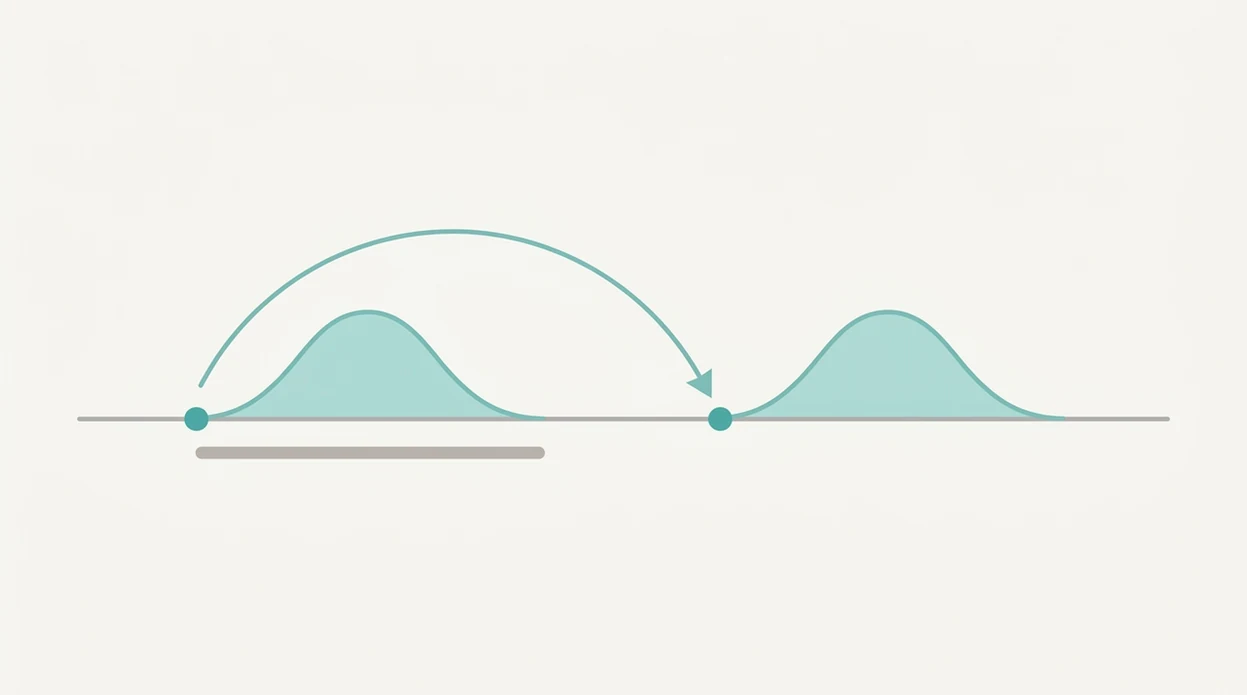
Start-to-start timing works because it captures one full contraction cycle: the contraction itself plus the rest before the next one begins. Clinically, this gives a cleaner pattern than rest time alone. The light technical term is uterine activity pattern. In plain language, it means how often contractions repeat over time.
Clinical references commonly define uterine tachysystole as more than 5 contractions in 10 minutes, averaged over a 30-minute window, which is why providers look at patterns instead of one isolated interval (ACOG: ACOG labor guidance). Active-labor contraction spacing is often discussed in the context of contractions becoming longer, stronger, and closer together; ACOG also notes that true labor contractions continue and intensify over time ().
Clinicians typically recommend looking at the pattern over time, not reacting to a single contraction reading. One 4-minute gap can happen after changing position, getting in the shower, or missing the first tightening.
The most common medically supported way to calculate contraction frequency is start-to-start timing combined with averaging several consecutive contractions.
Averaging matters because labor is not a metronome. The yoga ball may squeak, the phone may lock, and one entry may be off by 20 seconds.
Requirements Before You Start Timing Contractions
Before you start, choose a reliable timer and a simple way to record entries. A phone clock, stopwatch, notepad, or contraction timer app can work if you can use it quickly under pressure.
You need three labels in your head before the first entry: frequency, duration, and rest time. Frequency is start to start. Duration is start to end. Rest time is end to next start.
Plan to time at least 3-5 consecutive contractions. One or two entries can feel urgent, but they do not show much of a pattern.
Set up the phone before it gets intense. Check battery, turn on enough screen brightness, and decide who taps Start and Stop. If you are unsure when to begin logging, read when to start timing contractions before contractions become close together.
How To Use Start-to-Start Timing To Calculate Contraction Frequency
Use start-to-start timing by recording the beginning of one contraction, then the beginning of the next. Keep duration in the same log so your provider does not have to guess.
- Note the exact time when a contraction begins. Tap Start or write down the time at the first tightening.
- Record when that contraction ends. This gives you the duration of that contraction.
- Note the exact time the next contraction begins. This second start time completes the frequency measurement.
- Subtract the first start time from the second start time. The result is contraction frequency.
- Repeat for at least 3-5 contractions. Add the frequency results and divide by the number of intervals.
- Share the average frequency and duration with your provider. Say both numbers clearly.
For many birth partners, a timer is easier than mental math because the log stays visible when the room gets busy. Tools like ContractionTimer.io can help keep Start, Stop, History, and Share in one place.
Contraction Frequency Formula With a Worked Example
The contraction frequency formula is:
Frequency = Start Time of Contraction B − Start Time of Contraction A
Example: if one contraction starts at 2:00 PM and the next starts at 2:07 PM, the frequency is 7 minutes. If that first contraction lasts 60 seconds, the duration is 60 seconds, not 7 minutes.
Now average several entries:
| Contraction starts | Next contraction starts | Frequency |
|---|---|---|
| --- | ---: | ---: |
| 2:00 PM | 2:07 PM | 7 minutes |
| 2:07 PM | 2:13 PM | 6 minutes |
| 2:13 PM | 2:18 PM | 5 minutes |
Average frequency = 7 + 6 + 5, divided by 3. That equals 6 minutes apart.
The rest interval is frequency minus duration. If frequency is 6 minutes and duration is 60 seconds, the rest time is about 5 minutes.
Common Myths About Contraction Frequency Timing
One common myth is that frequency means how long a contraction lasts. That is duration. Frequency is how far apart contractions are from start to start.
Another myth is that you should measure from the end of one contraction to the start of the next. That gives you rest time and makes contractions look farther apart than they are.
A third myth is that one or two timed contractions are enough to judge labor. They are not. A pattern needs several entries, especially when contractions stop and start on the couch or change after walking.
Apps can help with timing, but they cannot replace medical advice. A contraction timer app should organize the numbers, not clinically tell you when the baby is coming.
If you want the full timing workflow, how to time contractions covers Start, Stop, and pattern review step by step.
Common Mistakes When Calculating Contraction Frequency
Most timing mistakes come from mixing up labels. The most common one is recording the rest period as frequency. If the contraction ended at 3:10 and the next began at 3:15, that 5-minute gap is rest time.
Other errors are more practical:
- Forgetting to log duration alongside frequency
- Timing only one or two contractions before judging the pattern
- Mixing up minutes and seconds in the log
- Starting the timer at the pain peak instead of the first tightening
- Forgetting to tap Stop after the contraction fades
- Not noting intensity changes, position changes, or fluid concerns
A partner may be holding a water bottle, sitting on the edge of the bed, and trying to hit Stop with one thumb. Build in a quick review after every few entries.
Verification: How To Confirm Your Contraction Frequency Is Accurate
You can check contraction frequency by reviewing whether each start-to-start interval is longer than the contraction duration. If a contraction lasts 70 seconds, the frequency cannot logically be 45 seconds.
Compare your average with common rules such as 5-1-1 or 3-1-1, but treat those as guidance. Provider instructions come first. The 5-1-1 rule contractions guide explains how that pattern is usually used.
Have a birth partner verify one or two entries independently. This helps catch double-tapping Start, missing Stop, or logging from memory after the wave passes.
If you use an app, open History and scan the rows. ContractionTimer.io contraction timer app entries should make it easy to compare duration, frequency, and notes before you call. Export the timing record if scrolling feels chaotic.
When To Call Your Provider About Contractions
Call your provider whenever their instructions say to call, even if your contractions do not match a timing rule yet. Timing data can help the conversation, but it should never delay medical contact when something feels wrong.
Frequency alone cannot prove active labor or prove that everything is safe. Call or go in right away for heavy bleeding, decreased fetal movement, severe or constant pain, fever, a bad headache, vision changes, shortness of breath, a seizure, or fluid leaking or gushing from the vagina. ACOG lists signs such as ruptured membranes, bleeding, and decreased fetal movement as reasons to contact your clinician promptly: ACOG: How to Tell When Labor Begins.
When you call, make the numbers easy to understand:
- Share how many minutes apart contractions are, using start-to-start timing.
- Report how long they last in seconds.
- Describe how long the pattern has continued and whether it is getting stronger.
- Mention your pregnancy week, fetal movement, fluid, bleeding, and any medical instructions you were given.
- Follow the next step your provider gives, even if it differs from a general rule.
Limitations
Contraction frequency is useful, but it has clear limits. It describes timing. It does not confirm labor status by itself.
- Frequency alone does not confirm active labor or predict delivery timing.
- Memory-based timing is often inaccurate, especially with irregular or close contractions.
- Consumer apps cannot measure contraction strength like clinical monitoring can.
- Normal contraction patterns vary by person, pregnancy, and clinical context.
- Simple rules like 5-1-1 or 3-1-1 should not replace your provider’s instructions.
- Bleeding, reduced fetal movement, severe pain, fever, leaking fluid, or concern that something feels wrong needs urgent evaluation regardless of frequency; ACOG advises contacting your clinician promptly for signs such as ruptured membranes, bleeding, or decreased fetal movement ().
- Phone problems matter. A 12% battery, Face ID failing in a dark room, or the charger across the room can break the log.
- A clean timing record may still miss important symptoms unless you add notes.
For birth partners, start-to-start timing is often easier than mental counting because the method gives one repeatable action: mark the beginning of each contraction.
Frequently Asked Questions
What is the 3-1-1 rule for contractions?
The 3-1-1 rule means contractions are about 3 minutes apart, last about 1 minute, and continue for 1 hour. It uses contraction frequency plus duration and pattern.
Is frequency start to start or end to start?
Contraction frequency is measured start to start. End to start measures the rest interval, not frequency.
How do I count contractions on a strip?
On a fetal monitoring strip, count from the beginning of one contraction rise to the beginning of the next rise. That start-to-start spacing is the contraction frequency.
What is normal contraction frequency in labor?
Normal labor is often described as 5 or fewer contractions in 10 minutes, averaged over 30 minutes. Active labor is commonly associated with contractions about 2 to 3 minutes apart.
Does a contraction timer replace medical advice?
No. A timer describes contraction timing, but it does not confirm labor status or replace clinical evaluation.
How many contractions should I time?
Time at least 3-5 consecutive contractions before relying on an average. Longer logs are often clearer when contractions are irregular.
What is the difference between frequency and duration?
Frequency is the time from the start of one contraction to the start of the next, measured in minutes. Duration is how long one contraction lasts, measured in seconds.
When should I go to the hospital?
Many people are told to use patterns like 5-1-1 or 3-1-1, but your provider’s instructions take priority. Go in or call urgently for warning signs regardless of contraction frequency.
What does 4 contractions in 10 minutes mean?
It means four contraction starts were observed during one defined 10-minute period. It does not necessarily mean they were evenly spaced, so record the start-to-start intervals and duration of each contraction as well.
Contractions per 10 Minutes vs. Minutes Apart
Contraction patterns may be described either as start-to-start frequency or as the number of contractions in a 10-minute window. These measurements are related but not identical. “Every 3 minutes” describes the time between consecutive starts, while “4 contractions in 10 minutes” counts how many contraction starts occur during a defined 10-minute period.
For example, contractions starting at 2:01, 2:04, 2:07, and 2:09 equal 4 contractions in the 2:00-2:10 window. Their start-to-start intervals are 3 minutes, 3 minutes, and 2 minutes, giving an average frequency of 2 minutes 40 seconds. With irregular contractions, report both the individual intervals and the count per 10 minutes rather than treating them as perfectly regular. If sharing the count with your care team, state the exact observation window and whether a contraction was already underway when the window began.
A contraction frequency calculator measures the time from the start of one contraction to the start of the next. Remember that contraction duration vs frequency describes two different measurements: duration is how long each contraction lasts, while frequency is how often contractions begin.
Use a tool to log contractions and calculate averages so you can see if contractions are getting closer over time. A contraction timer log can help you review changes, and a tool that can export contraction history makes it easier to share accurate timing details with your care team.
Numbers from clinical sources
| Topic | What sources say | Source |
|---|---|---|
| Clinical 5‑1‑1 rule for when to seek hospital or unit advice in labor. | Many US and UK hospital and maternity services advise first‑time parents to seek hospital or midwife assessment when contractions are about every 5 minutes, last around 1 minute each, and this pattern has continued for r | Kaiser Permanente When to go to the hospital; UCLA Health Stages of Labor - When Labor Starts; NHS Signs that labour has begun (2020-2023) |
| Early (latent) vs established (active) labour contraction patterns (NHS). | NHS information explains that early or latent labour can last many hours or even days, with irregular, milder contractions, whereas established labour is defined by cervical dilation of about 4 cm or more with stronger, | NHS The stages of labour and birth; NHS Signs that labour has begun (2020-2025) |
Calculate contraction frequency from the start of one contraction to the start of the next. Measure duration separately, from the start to the finish of the same contraction.
True labor contractions typically become regular and closer together over time. Contact your maternity unit if contractions are regular and every 5 minutes or more often, and seek urgent advice for warning signs listed in the NHS labor guidance.
| Measure | Sourced range |
|---|---|
| Typical duration | 60-90 seconds |
| Active-labor frequency | Every 2-5 minutes |
| Urgent advice | 6+ contractions in 10 minutes |
| Urgent advice | Any contraction over 2 minutes |