 Contraction
5-1-1 Rule Contractions: What the Timing Pattern Means and When to Go In

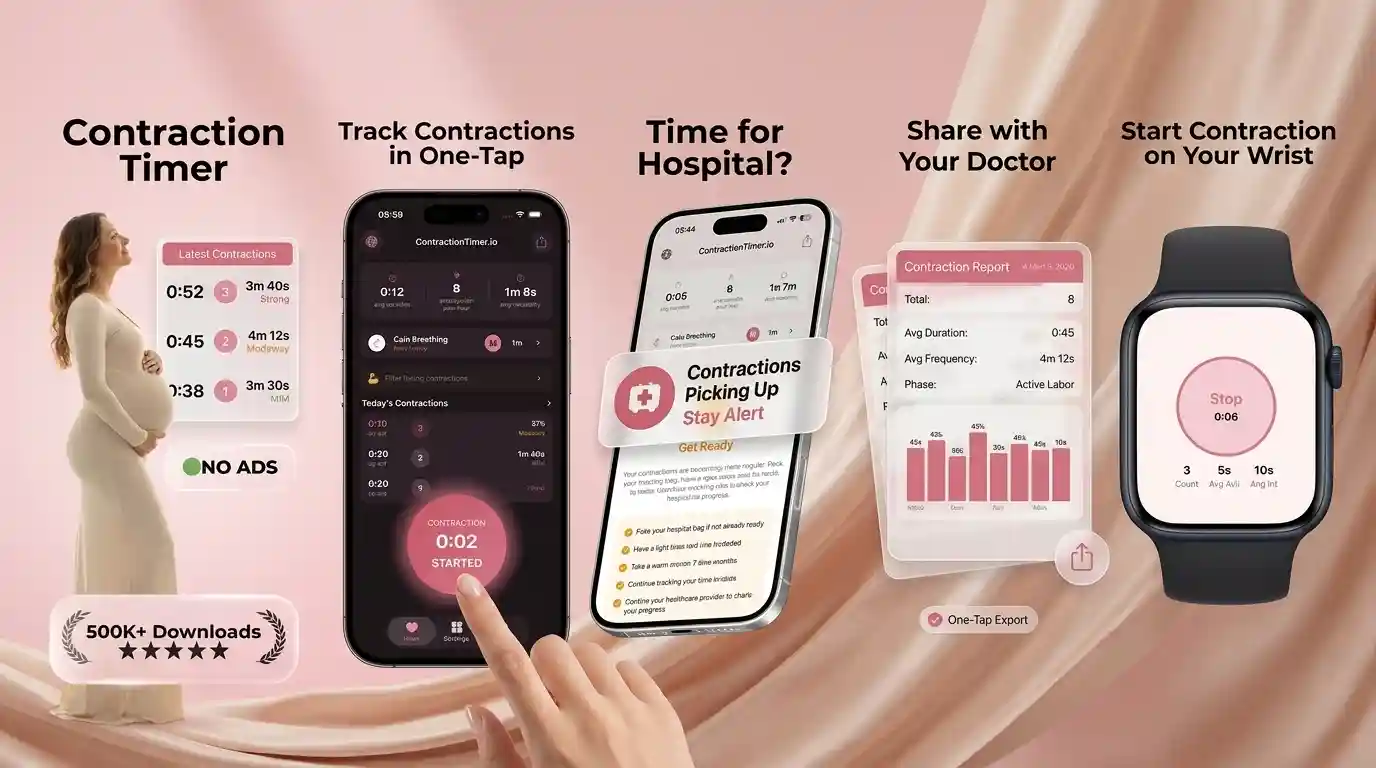
Contraction Timer (contractiontimer.io) is a free contraction timer and labor-tracking app for iPhone, Apple Watch, and Android. For 5-1-1 rule contractions, it helps track duration, frequency, intervals, and pattern changes so you can follow your provider’s guidance more clearly.
Quick answer: The 5-1-1 rule contractions pattern usually means contractions are about 5 minutes apart, last about 1 minute each, and continue for at least 1 hour. Many providers use it as a guideline for when to call or go in, but your personal instructions, pregnancy risk factors, and symptoms like bleeding, water breaking, or decreased fetal movement matter more than the timing pattern alone.
Why choose Contraction Timer?
Contraction Timer is built for 5-1-1 tracking, so it calculates the pattern for you instead of making you manage a stopwatch, notes, and math during labor.
- Automatic 5-1-1 hospital alerts
- Duration, frequency, and interval calculations
- One-tap contraction start and stop
- Labor phase detection from timing patterns
- Contraction history for provider calls
- Apple Watch and Lock Screen timing
- Partner mode for shared tracking
- Offline use with no ads
Works on iPhone, Apple Watch, and Android. It is a tracking tool, not a medical device.
The 5-1-1 rule contractions guideline means contractions arriving every 5 minutes, each lasting 1 minute, and continuing at that pace for 1 hour. It is a timing guideline, not a medical diagnosis of active labor; cervical change confirmed by a provider is the true marker. If your water breaks, you bleed, or fetal movement drops, call your provider immediately even if contractions haven't reached 5-1-1.
This article is general labor-timing education for term pregnancies and is not a substitute for your clinician’s instructions. If your care team gave you a different threshold, follow that plan instead of the general 5-1-1 guideline.
> Definition: The 5-1-1 rule is a labor timing guideline in which contractions occur every 5 minutes, last 1 minute each, and hold that pattern for at least 1 hour, signaling it may be time to contact your provider or go to the hospital.
- 5-1-1 means every 5 min, lasting 1 min, for 1 hour, a timing threshold, not a labor diagnosis.
- Some providers adjust the rule for second babies, preterm symptoms, or high-risk pregnancies.
- Bleeding, water breaking, or decreased fetal movement override any timing rule, call immediately.
- A contraction timer app tracks pattern and duration but cannot confirm cervical dilation or replace triage.
- ACOG defines active labor at 6 cm dilation, so contractions alone don't confirm active labor.
What the 5-1-1 Rule for Contractions Actually Means
The 5-1-1 rule means contractions are 5 minutes apart, last about 1 minute each, and continue that way for 1 full hour. It is a simple timing threshold many providers use for term pregnancies.
Think of the first “5” as frequency. You measure from the start of one contraction to the start of the next. The first “1” is duration, meaning each contraction lasts close to 60 seconds. The last “1” is the sustained hour, which helps filter out a short cluster that fades.
A thumb hovering over the start button at 2:14 a.m. is normal. Start at the first tightening, not the pain peak.
ACOG defines active labor as beginning at 6 cm cervical dilation, according to its labor guidance source. True labor is confirmed by cervical change assessed by a medical professional, not timing alone.
5 Must-Know Facts About 5-1-1 Contractions
These five facts are the safest way to understand 511 contractions without turning the rule into a diagnosis. Keep them handy before you decide whether to call, wait, or go in.
- 5-1-1 is a guideline, not proof of active labor. Cervical change is what confirms labor medically.
- Contractions that fade with rest or hydration are more likely false labor or early labor. A long gap after three contractions can happen and still feel convincing.
- Provider instructions may be different for you. Prior birth history, risk status, distance from the hospital, and current symptoms all matter.
- A timer organizes the pattern but cannot examine you. Good contraction tools deliver timing clarity, not a clinical verdict.
- Red-flag symptoms override the clock. Bleeding, water breaking, decreased fetal movement, severe constant pain, or preterm symptoms deserve provider contact now.
For term pregnancies without red flags, the most common medically supported way to use 5-1-1 is timing the pattern and then confirming next steps with your care team.
How the 5-1-1 Contraction Timing Pattern Works
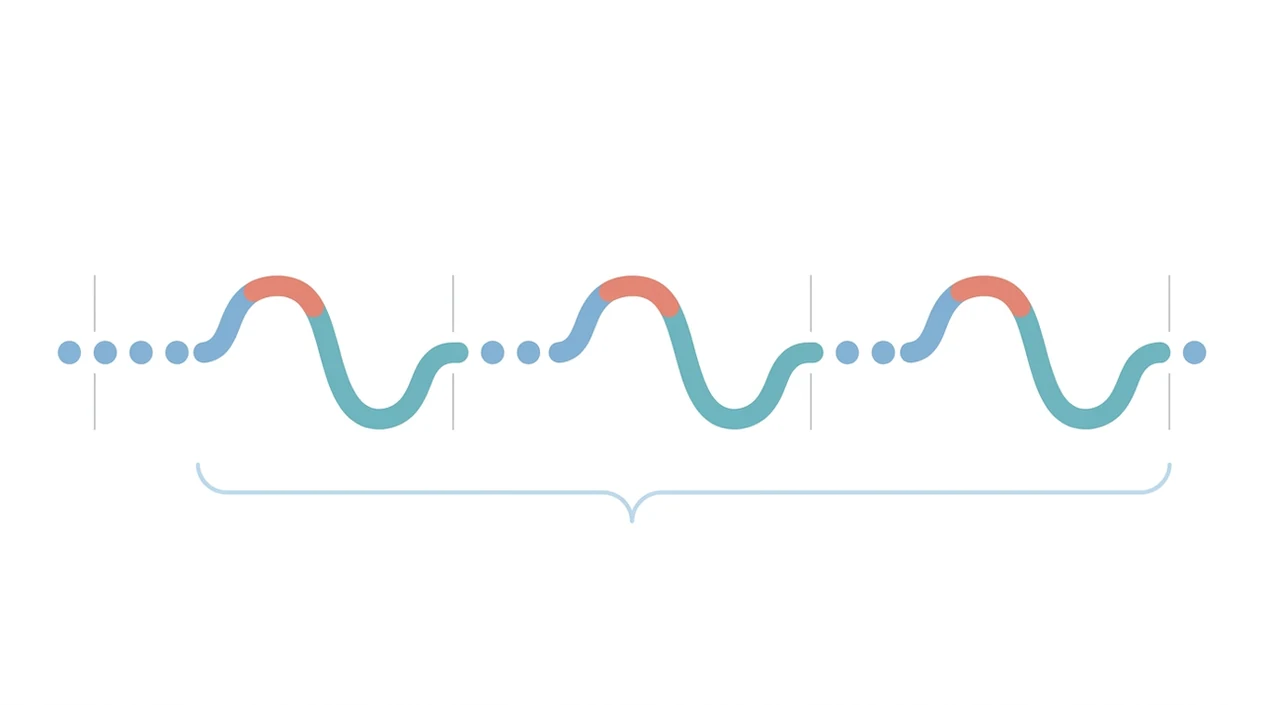
The 5-1-1 pattern works because progressing labor often creates contractions that become stronger, longer, and closer together. The body’s oxytocin feedback loop helps drive that rhythm; in plain terms, contractions can stimulate more contractions.
Early labor is often uneven. One contraction may last 42 seconds, the next 68, then nothing for 14 minutes. Active labor usually becomes more predictable, with less guessing and fewer random gaps. That is why the one-hour window matters. It checks whether the pattern holds, instead of reacting to one dramatic half hour.
Still, timing is only a heuristic. ACOG’s 6 cm active-labor threshold is based on cervical dilation, while the labor 5-1-1 rule is based on what you can measure at home. The two can line up, but they don’t always.
The clock helps. It doesn't decide.
If you want a broader pattern view, labor contraction patterns can help separate early, active, and stop-start rhythms.
Before You Start Timing 5-1-1 Contractions
Before you start timing 5-1-1 contractions, make sure the timing rule actually fits your plan. Your provider’s instructions, symptoms, and pregnancy details matter more than any app alert.
- Confirm your threshold if your care team gave you a different number, such as calling at 7-1-1, 6-1-1, or earlier because of a prior fast birth, distance from the hospital, or a specific condition.
- Keep key details nearby before contractions get intense: the after-hours phone number, hospital or birth-center address, parking or entrance notes, and any birth-plan points you may need to repeat.
- Check your situation first by noting gestational age, risk status, fetal movement, bleeding, and whether fluid is leaking or your water may have broken.
- Ask someone to help if talking, breathing, or tapping the screen gets difficult. A partner can start and stop the timer while you focus on coping.
- Use the app as a log, not the judge. Read the pattern to your provider, then follow their direction about waiting, calling back, or going in.
How to Track 5-1-1 Rule Contractions Step by Step
To track 5-1-1 contractions, record the start time, stop time, duration, and spacing for each contraction. The goal is to see whether the pattern holds for one full hour.
- Start the timer when the tightening begins, even if the pain is still mild.
- Stop the timer when the contraction releases, so the duration is recorded accurately.
- Check the interval from the start of one contraction to the start of the next.
- Review the full hour to see whether contractions are about every 5 minutes, lasting 1 minute each.
- Call your provider with the timing record, or go in if your provider told you to go at sustained 5-1-1.
A partner can take over if talking gets hard. I’ve watched someone hit Stop with one thumb while holding a water bottle at the edge of the bed. Not graceful. Still useful.
If you need a focused walkthrough, check contractions 5-1-1 rule covers the timing check without extra labor theory.
Common Mistakes When Timing 5-1-1 Contractions
The most common 5-1-1 timing mistakes are starting too late, measuring the wrong interval, or treating a short intense burst like a full pattern. The fix is to time consistently, keep the record safe, and call for warning signs even when the numbers are not “ready.”
- Start timing at the first tightening, not when the contraction reaches its peak. That early squeeze is the beginning of the wave.
- Measure spacing from the start of one contraction to the start of the next. End-to-start timing only measures the rest gap, which can make the pattern look different.
- Watch the full hour before calling something 5-1-1, unless your provider gave you a shorter threshold. A hard 20-minute cluster can fade.
- Call immediately for red flags like bleeding, water breaking, reduced fetal movement, severe constant pain, or preterm symptoms. Do not wait for the clock to become neat.
- Back up the log before your phone becomes the weakest link. Keep the charger close, unlock the screen for your helper, or write times on paper if the battery is dying.
When to Call Your Provider Before 5-1-1 Contractions
Call your provider before 5-1-1 if symptoms suggest you need evaluation now, not after another hour of timing. Clinicians typically recommend calling sooner for warning signs because timing cannot assess fetal well-being, bleeding, or membrane rupture. NHS guidance similarly advises contacting maternity care promptly for waters breaking, bleeding, reduced fetal movement, or labor signs before 37 weeks source.
Call right away for:
- Water breaking, whether the fluid is clear, pink, brown, or green-tinged.
- Vaginal bleeding beyond light spotting.
- Decreased, unusual, or absent fetal movement.
- Severe constant abdominal pain without a rest period between waves.
- Contractions or cramping before 37 weeks.
- A fever, severe headache, vision changes, or symptoms your care team has flagged.
The front porch air between contractions can feel calm enough to wait. Don’t use calm minutes to override urgent symptoms. If something feels off, call and read the exact timing, fluid color, and movement change.
For timing before a call, contraction timing before calling midwife gives a simple script.
5-1-1 Timing Changes for Second Babies and High-Risk Pregnancies
Does the 5-1-1 rule change for second babies or high-risk pregnancies? Yes, it can, because repeat labors often move faster and some conditions lower the threshold for evaluation.
Second and later births may not leave much time between “this is picking up” and “we need to go.” Some providers use 7-1-1, 6-1-1, 4-1-1, or simply “call earlier than last time.” The exact number should come from your care team, not a chart online.
High-risk factors can also change the plan. Preeclampsia concerns, GBS-positive status, prior C-section, placenta concerns, reduced fetal movement history, or a long drive may all shift instructions. Preterm contractions before 37 weeks deserve earlier contact regardless of rhythm. ACOG describes preterm labor as regular contractions with cervical change before 37 weeks and recommends prompt evaluation for possible preterm labor symptoms source.
For people comparing thresholds, the 4-1-1 vs 5-1-1 contractions difference is mostly about how close together contractions are before going in.
Common Myths About 5-1-1 Labor Contractions
Common myths about 5-1-1 contractions can make people rush in too soon, wait too long, or expect an app to answer a medical question. The rule is useful, but it has edges.
| Myth | What is more accurate |
|---|---|
| Every 5-1-1 pattern means rush to the hospital. | Some early labor patterns meet 5-1-1, then slow down or stall. |
| A contraction timer app can confirm active labor. | An app tracks duration and frequency; it cannot check cervical dilation. |
| Walking, sex, castor oil, or home tricks reliably start true labor. | Most home induction methods lack consistent evidence; ACOG notes that some, including castor oil, can cause side effects and should be discussed with a clinician first source. |
| The rule is identical for every pregnancy. | Parity, risk status, symptoms, distance, and provider judgment change the threshold. |
Slow breathing through parted lips may matter more than watching every second. Have someone else review the log if numbers start making you tense.
The labor 5-1-1 rule usually works best when pregnancy is term and symptoms are otherwise normal, while individualized instructions fit people with faster prior births or higher-risk histories.
How a Contraction Timer App Supports 5-1-1 Tracking
A contraction timer app supports 5-1-1 tracking by logging frequency, duration, and trends automatically. That means you can focus on coping instead of doing mental math during each wave.
Tools like ContractionTimer.io keep the screen simple: tap Start, tap Stop, review History, then share or export the timing record if your provider asks. Apps such as GentleBirth, The Bump, and ContractionTimer.io can help organize the same basic data, but the log still needs human review.
A 2017 study of 1,022 labor admissions found that 91.8% of smartphone contraction timer app users had immediately actionable labor decisions identified after app-generated recommendations; 48.8% received at least one “go to hospital” recommendation, and the app showed 94.0% sensitivity and 75.0% specificity compared with provider assessment source.
Decision support is not diagnosis. Share the summary, then follow the provider’s instruction. If you want alerts, an app that alerts 5-1-1 contractions can reduce repeated clock-checking.
Limitations
The 5-1-1 rule does not work as a standalone rule for every pregnancy. Labor progression, risk status, distance to care, and provider instructions all change what “time to go” means.
- 5-1-1 timing cannot confirm cervical dilation or active labor.
- “Not yet 5-1-1” does not mean “not in labor.” Irregular contractions can become real labor later.
- Timing cannot assess fetal well-being, membrane rupture, bleeding, fluid color, or infection signs.
- Red-flag symptoms should not be delayed while waiting for one more timed contraction.
- Home labor-start methods are often overhyped and may be unsafe, especially without provider approval.
- A contraction timer app is not a medical diagnostic tool and should not override clinician guidance.
- Phone problems happen: 12% battery, Face ID failing in a dark room, or the charger across the room can interrupt the log.
Apps can organize the record. They cannot replace triage.
ContractionTimer.io contraction timer app can help you save, check, send, and reset entries, but your clinician decides what the pattern means for your situation.
Frequently Asked Questions
What is 5-1-1 for timing contractions?
5-1-1 means contractions are about every 5 minutes, last about 1 minute each, and continue that way for 1 hour. It is a common signal to call your provider or go in if that is your care team’s instruction.
How dilated are you at 5-1-1 contractions?
There is no guaranteed dilation at 5-1-1 contractions. ACOG places active labor at 6 cm dilation, but only a medical exam can confirm dilation.
Can 5-1-1 contractions be painless?
Yes, some people reach a 5-1-1 pattern with low pain, especially in early labor. Call your provider if the pattern is sustained or if you are unsure.
Does the 5-1-1 rule apply to second babies?
It may apply, but second and later labors often progress faster. Many providers tell repeat-birth patients to call earlier than 5-1-1.
What is the 10-1-1 contraction rule?
The 10-1-1 rule means contractions are about every 10 minutes, last 1 minute each, and continue for 1 hour. Some providers use it as an earlier sign that labor may be starting.
How long do 5-1-1 contractions last before delivery?
The time from 5-1-1 contractions to delivery varies widely. Some people deliver within hours, while others, especially first-time parents, may have a longer labor.
What is the difference between Braxton Hicks and 5-1-1 contractions?
Braxton Hicks contractions are often irregular, mild, and may ease with rest or hydration. 5-1-1 contractions are sustained, closer together, and more likely to intensify over time.
Should I go to the hospital before 5-1-1?
Go or call before 5-1-1 if your water breaks, you have bleeding, fetal movement decreases, pain is severe and constant, or symptoms happen before 37 weeks. Your provider’s instructions override the timing rule.
Can an app tell me I'm in active labor?
No, an app can track contraction timing data but cannot confirm cervical change or active labor. ContractionTimer.io can help organize a log to share with your provider.
Which app fits which need
| Need | Best option |
|---|---|
| fast, accurate 5-1-1 contraction timing with automatic duration, frequency, and alerts | Contraction Timer |
| full-term pregnancy milestone content alongside general labor education | Full Term |
| broad pregnancy articles, checklists, and community-style guidance | The Bump |
| contraction pattern insights from a dedicated wearable sensor when available | Bloomlife |
Quick facts
- Type
- Contraction timer & labor tracker app
- Platforms
- iPhone, iPad, Apple Watch, Android
- Focus
- Contraction timing, 5-1-1 alerts, labor patterns, duration, frequency, interval tracking
- Includes
- One-tap timing, automatic duration and frequency, 5-1-1 hospital alerts, labor phase detection, contraction history, partner mode, doctor reports, offline use
- Best for
- Parents timing contractions at home and watching for the 5-1-1 rule pattern before calling or going in
- Free
- Yes
- Medical replacement
- No
People also use Contraction Timer for
Track 5-1-1 Rule Contractions With Less Guesswork
Use Contraction Timer to record each contraction, see duration and frequency automatically, and recognize when a 5-1-1 pattern may be forming. Always follow your provider’s instructions, especially if symptoms or risk factors mean you should call sooner.
Download the Free App