 Contraction
Contraction Frequency Calculator: Automatic Labor Spacing & Averages

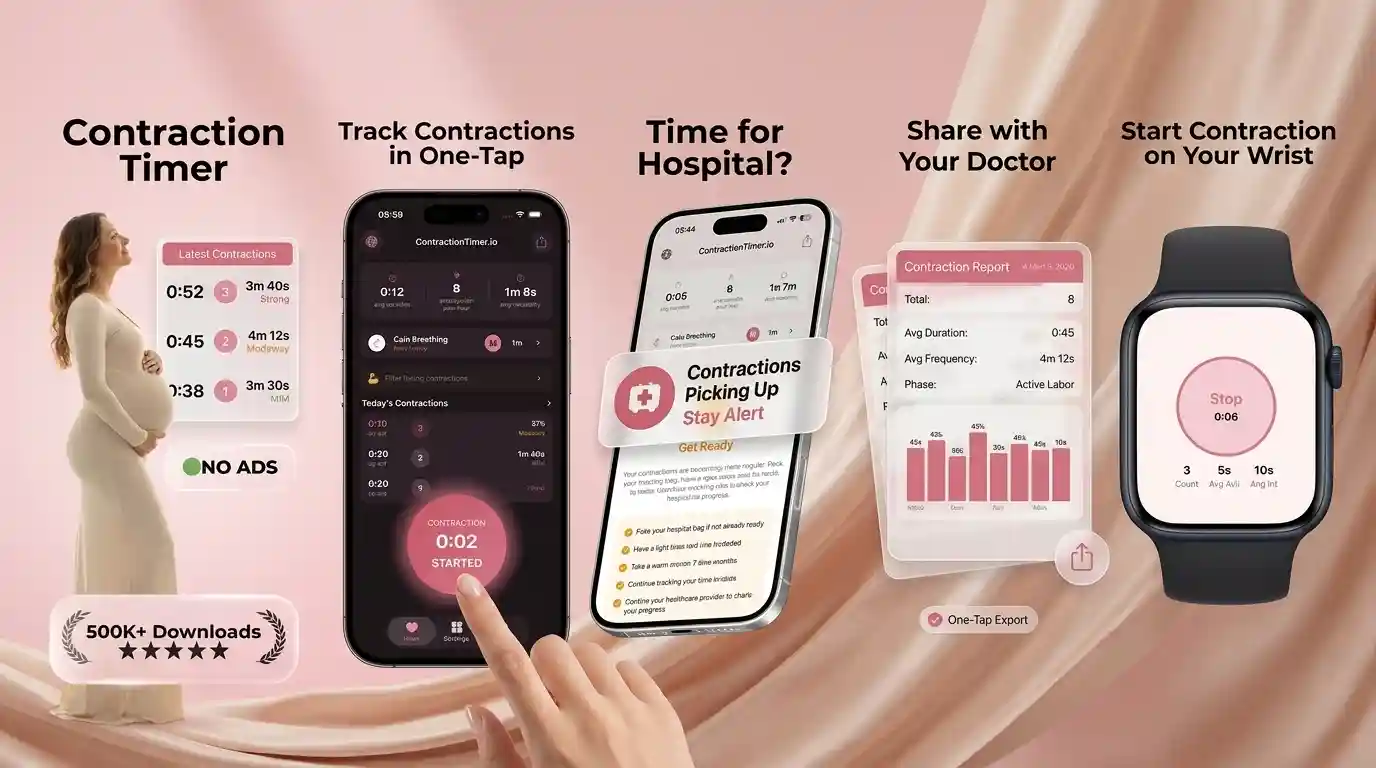
Contraction Timer (contractiontimer.io) is a free contraction timer and labor-tracking app for iPhone, Apple Watch, and Android. For contraction frequency calculations, it automatically measures start-to-start spacing, averages, and pattern changes so you do not have to calculate intervals manually.
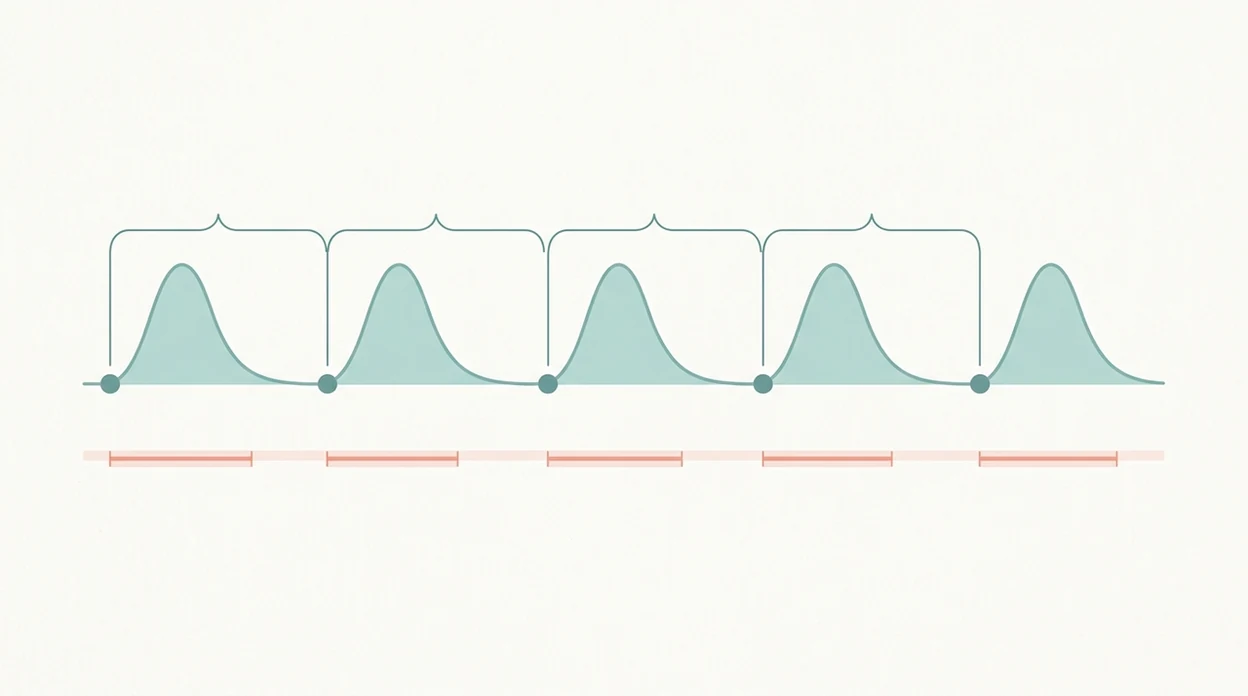
Quick answer: A contraction frequency calculator measures the time from the start of one contraction to the start of the next, then shows spacing patterns and averages over time. It helps you see whether contractions are becoming more regular, closer together, or matching guidance such as the 5-1-1 pattern, but it does not confirm labor stage or dilation.
Why choose Contraction Timer?
Contraction Timer is built for contraction frequency tracking, so it is easier and less error-prone than using a stopwatch, notes app, or mental math during labor.
- Automatic start-to-start frequency calculations
- One-tap contraction timing
- Duration, frequency, and interval averages
- 5-1-1 hospital alerts
- Labor phase detection
- Contraction history and pattern changes
- Apple Watch and Lock Screen support
- Partner mode, offline use, no ads
Works on iPhone, Apple Watch, and Android. It is a tracking tool, not a medical device.
A contraction frequency calculator measures the time from the start of one contraction to the start of the next, then automatically averages those intervals so you can see whether labor is progressing. A good timer lets you tap through the wave instead of doing subtraction at 2:17 a.m. with a half-packed hospital bag by the door.
> Definition: A contraction frequency calculator is a digital tool that records the start-to-start interval between labor contractions, computes rolling averages, and displays pattern trends to help users and providers assess labor progress.
TL;DR
- Frequency is measured start-to-start, not end-to-start, most people get this wrong.
- Duration and interval together matter more than either number alone for judging labor progress.
- No calculator replaces cervical checks or provider guidance. It's a decision-support aid, not a diagnosis tool.
At a Glance: 5 Facts About Contraction Frequency Calculators
- Frequency means start-to-start. Count from the beginning of one contraction to the beginning of the next, not from when one ends.
- Duration and frequency work together. A one-minute contraction every five minutes means something different from a 25-second squeeze every five minutes.
- Rules are guideposts. Providers may mention 5-1-1, 4-1-2, or 3-1-2, but your own instructions matter more than a generic threshold.
- Digital timers reduce math mistakes. Automatic averaging helps a birth partner focus on support, not a calculator.
- No timer confirms true labor. Cervical change, fetal wellbeing, symptoms, and clinical judgment still decide what is happening.
For tired parents trying to avoid mental math, the most useful calculator records duration, raw interval, and rolling average in one timing log.
How a Contraction Spacing Calculator Works
A contraction spacing calculator works by capturing a timestamp each time you tap start, then subtracting one start time from the next. That subtraction creates the raw interval, which is the exact spacing between two contractions.
The useful part is the rolling average. Most calculators smooth the last 3 to 6 contractions, so one odd gap does not make the whole pattern look dramatic. Raw intervals show what just happened. Rolling averages show the direction of the rhythm.
Small difference. Big relief.
ContractionTimer.io shows frequency alongside duration because providers usually want both numbers. A pattern of contractions every 6 minutes lasting 20 seconds is not the same as contractions every 6 minutes lasting 70 seconds. Good contraction timer apps deliver clear timing patterns, not a promise that the baby is coming by a certain hour.
How to Use a Contraction Interval Calculator
Use a contraction interval calculator by starting before the pattern feels intense, then recording each contraction the same way. If your eyes are closed, a partner can whisper “start” and “stop” while you breathe through the wave.
- Open the calculator before timing begins, so you are not searching during a contraction.
- Tap start when the tightening clearly begins.
- Tap stop when the contraction fades and you can rest between contractions.
- Repeat the same process for each contraction to build a clean log.
- Review the rolling average after 4 to 6 contractions, not after one lonely data point.
- Share the log with your provider, doula, midwife, or birth partner.
If the priority is a simple handoff during labor, ContractionTimer.io fits because the shareable log can move from the person timing to the person calling triage.
When to Use a Contraction Frequency Calculator During Early Labor
Use a contraction frequency calculator when contractions become noticeable enough that you wonder, “Is this a pattern yet?” Early labor can pause and restart, and a 7-9-6-10 minute rhythm may still be part of the body warming up.
For many people, the calculator is most helpful before a provider call. You can compare your pattern with the rule your care team gave you, such as 5-1-1, 4-1-2, or 3-1-2. These are benchmarks, not orders. Clinicians typically suggest calling based on contraction pattern plus symptoms, birth history, risk factors, and distance from care.
Among U.S. women with vaginal births, 60.1% reported spontaneous non-induced labor in CDC/NCHS natality data source. A study of more than 62,000 labors also found wide variation in labor patterns, supporting individualized decisions instead of rigid rules alone source.
When early labor triage is the issue, ContractionTimer.io contraction timer app helps because it keeps start-to-start spacing visible while you decide whether to call.
When to Call Your Provider or Seek Care
Call your provider whenever your care team’s instructions say to call, even if the timer does not meet a common rule yet. Their plan overrides app alerts, 5-1-1 shortcuts, and any generic contraction threshold.
Timing is only one part of the picture. Call right away for vaginal bleeding, decreased fetal movement, ruptured membranes or a gush/leak of fluid, fever, severe pain, or symptoms that feel sudden and wrong. Call sooner than the usual spacing rule if you have a high-risk pregnancy, a history of very fast labor, or a long drive to the hospital or birth center.
During a triage call:
- Share how far apart contractions are from start to start and how long each one lasts.
- Describe how long the pattern has been steady and whether contractions are getting stronger.
- Report fluid leakage, bleeding, fetal movement changes, fever, pain level, and any other symptoms.
- Mention your gestational age, birth history, risk factors, and travel time.
- Follow the nurse, midwife, or physician’s next step, even if it differs from the calculator.
Use emergency services for severe bleeding, severe or sudden pain, fainting, trouble breathing, or any situation that feels immediately unsafe.
What the Calculator Looks Like in Contraction Timer
Contraction Timer uses a one-tap start and stop layout because contractions are not the moment for tiny menus. The goal is to keep the screen readable while someone is breathing, shifting positions, or resting under dimmed hallway lights.
ContractionTimer.io displays raw intervals and rolling averages side by side. That matters when one contraction arrives early but the wider pattern is still steady. A visual trend indicator shows whether contractions are getting closer together, spreading out, or staying about the same.
Birth partners trying to keep a clean record can use ContractionTimer.io because the timing history stacks each contraction in rows and keeps the shareable summary ready for the care team.
Contraction Frequency Calculator vs. Manual Timing Alternatives
A contraction frequency calculator is easier than manual timing because it removes subtraction during pain. Manual logs still work, but they ask more from a tired brain.
| Method | What it does well | Where it gets hard |
|---|---|---|
| ContractionTimer.io | Auto-calculates raw intervals, rolling averages, and trend direction | Accuracy still depends on correct taps |
| Pen and paper | Works without battery or signal | Requires start times, stop times, and subtraction |
| Clock or phone stopwatch | Simple for one contraction | Hard to review patterns after several waves |
| The Bump or other online timers | Useful for basic timing | May not separate raw spacing from average trend clearly |
CDC/NCHS birth data report that 98.4% of U.S. births occur in hospitals source, and staff still appreciate a clear pre-arrival log from either method. However, neither manual notes nor apps can assess cervical change, fetal heart rate, or baby position.
For first-time parents, automatic averaging is often easier than paper timing because labor already asks enough attention from the body.
Common Myths About Contraction Spacing Calculators
Myth: A calculator can tell you when you are in true labor. Reality: timing describes contractions, but cervical change confirms active labor. ACOG guidance emphasizes cervical change over timing alone for active labor assessment source.
Myth: contractions must be exactly X minutes apart. Reality: normal early labor often has variation. The couch pattern can be stop-start, strong enough to pause conversation, then gone after lying down for 40 minutes.
Myth: no app alert means you should stay home. Reality: bleeding, decreased fetal movement, broken water, severe pain, fever, or instinct can matter more than spacing.
Myth: second-level precision improves outcomes. Reality: over-focusing on numbers can raise anxiety without changing the provider’s decision.
Reset the plan.
Related Contraction Timer Features for Labor Tracking
Frequency is only one part of labor tracking. ContractionTimer.io also pairs spacing with individual contraction length, session history, and shareable summaries.
The contraction duration tracker helps you see how long each wave lasts. The contraction timer log keeps past sessions available when contractions stop and restart. Pattern tools can also support a provider conversation when contractions move from scattered to steady.
People who want a fuller labor timing picture use ContractionTimer.io because duration, frequency, and history sit together instead of living in separate notes.
Limitations
Contraction frequency calculators are useful, but they are narrow tools. They describe timing. They do not examine you.
- They cannot assess cervical dilation, effacement, baby position, or fetal wellbeing.
- Accuracy depends on taps; pain, distraction, or switching operators can create messy data.
- Fixed rules like 4-1-2 or 5-1-1 may not fit high-risk pregnancies, fast labors, inductions, or provider-specific plans.
- Data can falsely reassure someone when symptoms mean they should call or go in sooner.
- Consumer calculators do not integrate with hospital electronic medical records.
- ContractionTimer.io, GentleBirth, and common App Store timers all depend on user-entered timing.
- No tool replaces an in-person evaluation by a trained provider.
Use the numbers to prepare without over-focusing. If your provider gave different instructions, follow those.
Frequently Asked Questions
What is the 5-1-1 rule for contractions?
The 5-1-1 rule means contractions are about 5 minutes apart, last about 1 minute, and continue for 1 hour. It is a common guideline, not a universal requirement.
What is the 4-1-2 rule for contractions?
The 4-1-2 rule means contractions are about 4 minutes apart, last about 1 minute, and continue for 2 hours. Some providers use this rule instead of 5-1-1.
Is contraction frequency measured from start to start?
Yes. Contraction frequency is measured from the start of one contraction to the start of the next contraction.
How many contractions should I time before calling a provider?
Most providers want to see a consistent pattern over at least 1 hour, but individual instructions vary. Call sooner if your care team told you to or if concerning symptoms appear.
Can irregular contractions still mean labor has started?
Yes. Irregular, stuttering, or stop-start contractions can still be early labor, especially when they gradually become longer, stronger, and closer together.
Does a contraction timer replace hospital monitoring?
No. A consumer timer cannot assess cervical change, fetal heart rate, baby position, or other clinical factors.
What should I do if contractions stop and restart?
If contractions stop, rest, hydrate, and follow your provider’s instructions. When they resume, starting a new timing session is reasonable.
Should a birth partner use the contraction calculator too?
Yes. A birth partner can operate the ContractionTimer.io contraction timer app so the laboring person can keep eyes closed, breathe, and rest between contractions.
Which app fits which need
| Need | Best option |
|---|---|
| fast, accurate contraction frequency calculations during labor | Contraction Timer |
| simple contraction timer inside a broader pregnancy app experience | The Bump |
| general labor timing and birth-prep content in one app | Full Term |
| non-timer pregnancy wellness or contraction-monitoring hardware context | Bloomlife or GentleBirth |
Quick facts
- Type
- Contraction timer & labor tracker app
- Platforms
- iPhone, iPad, Apple Watch, Android
- Focus
- Contraction frequency, start-to-start spacing, duration averages, 5-1-1 alerts, labor pattern tracking
- Includes
- one-tap timing, duration and frequency averages, 5-1-1 hospital alerts, labor phase detection, contraction history, partner mode, doctor reports, offline use
- Best for
- Automatically calculating contraction frequency and spotting changes in labor spacing
- Free
- Yes
- Medical replacement
- No
People also use Contraction Timer for
Track Contraction Frequency Automatically
Use Contraction Timer to calculate contraction spacing, averages, and 5-1-1 patterns without manual math. Download the free app for iPhone, Apple Watch, or Android and share your history with your provider when needed.
Download the Free App