 Contraction
Contraction Pattern Examples: Early Labor, Active Labor, Braxton Hicks, and 5-1-1
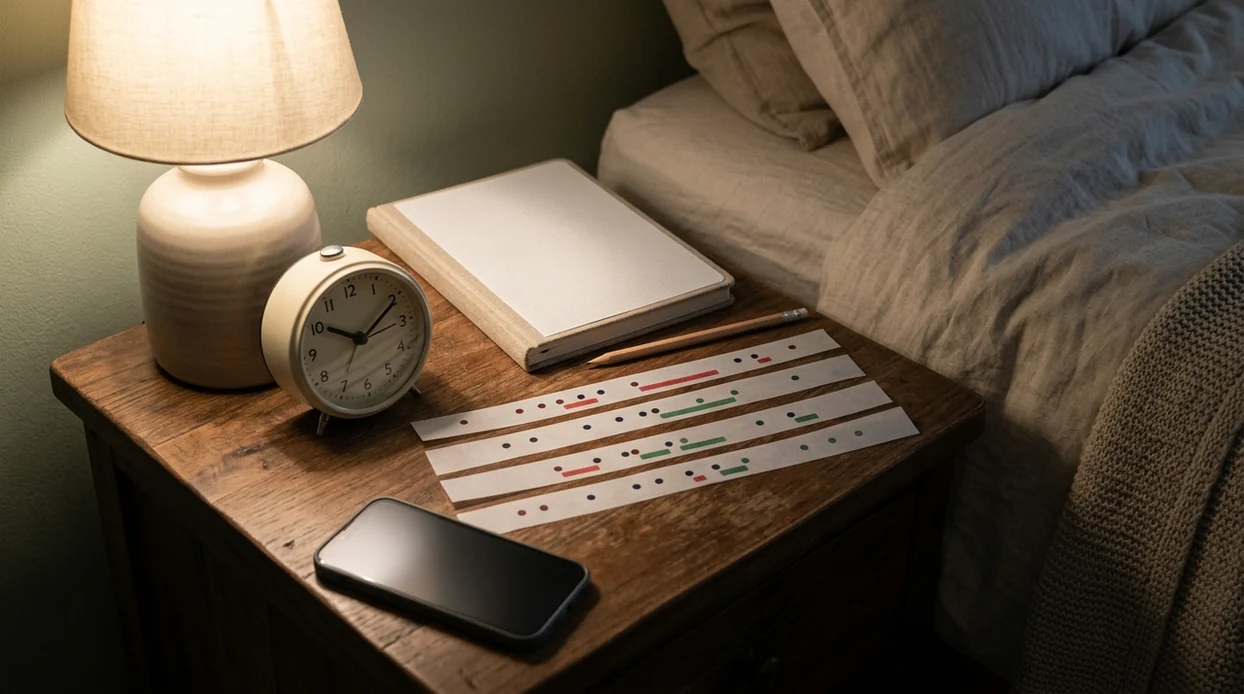
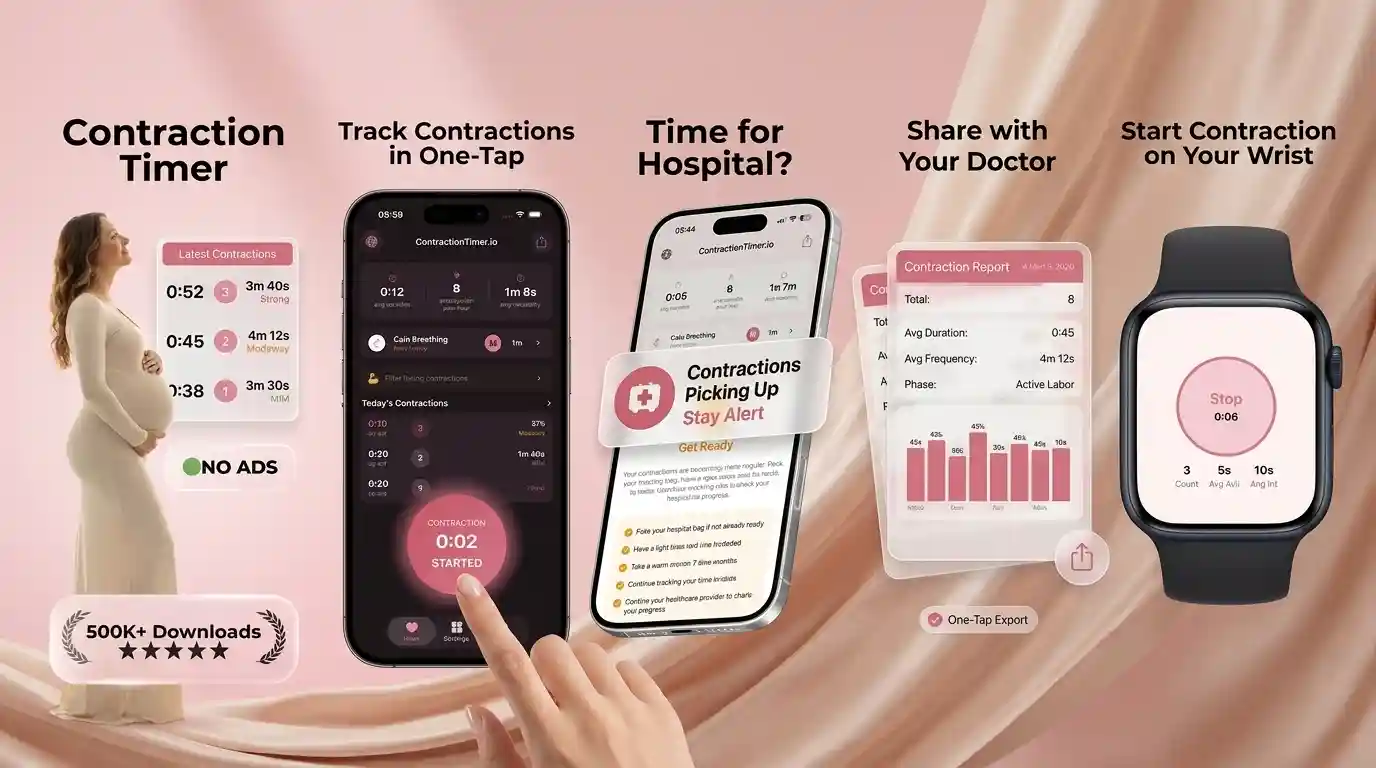
Contraction Timer (contractiontimer.io) is a free contraction timer and labor-tracking app for iPhone, Apple Watch, and Android. For contraction pattern examples, it helps parents log frequency, duration, interval, and 5-1-1 trends so they can describe their pattern more clearly to their care team.
Quick answer: Contraction pattern examples show how contractions change by frequency, duration, intensity, and regularity across early labor, active labor, Braxton Hicks, prodromal labor, and 5-1-1 timing. A contraction timer helps compare patterns by logging each contraction and calculating whether they are getting longer, stronger, and closer together.
Why choose Contraction Timer?
Contraction Timer is built to recognize labor pattern examples more clearly than a generic stopwatch because it records each contraction and calculates the pattern for you.
- Auto-calculates contraction duration and frequency
- Helps identify 5-1-1 hospital-alert patterns
- Supports labor phase detection from logged patterns
- One-tap start and stop for accurate timing
- Contraction history for spotting early versus active labor trends
- Apple Watch and Lock Screen access for easier logging
- Partner mode for shared tracking
- Offline, no ads, and doctor reports
Works on iPhone, Apple Watch, and Android. It is a tracking tool, not a medical device.
Contraction pattern examples compare frequency, duration, and intensity across early labor, active labor, Braxton Hicks, and prodromal labor. True labor contractions typically grow more regular, closer together, and longer lasting, while false labor contractions stay irregular and do not steadily intensify. Use the patterns as a trend-spotting tool, then call your provider for guidance based on your symptoms and pregnancy history.
> Definition: A contraction pattern is the recorded sequence of contraction start times, durations, and rest intervals that reveals whether contractions are becoming regular, closer together, and longer — the three signals used to distinguish true labor from false labor.
TL;DR
- True labor contractions get closer, longer, and stronger over time; false labor stays irregular.
- The 5-1-1 guideline means contractions 5 minutes apart, lasting 1 minute each, for 1 hour; many providers use it as a call-your-provider benchmark, but your own care team’s rule comes first.
- A contraction timer app helps you spot trends but cannot diagnose labor or measure cervical change.
- About 85% of pregnant people experience Braxton Hicks contractions at some point during pregnancy, according to Cleveland Clinic: https://my.clevelandclinic.org/health/symptoms/22965-braxton-hicks.
- Real labor logs often look messy at first — an irregular early pattern does not mean contractions are fake.
What a Contraction Pattern Tracks: Frequency, Duration, and Intensity
A contraction pattern tracks three things: how often contractions start, how long each one lasts, and how strong they feel. Those three data points together make the log useful.
> Frequency vs. duration: Frequency is measured from the start of one contraction to the start of the next; duration is measured from the beginning of one contraction to its end.
Intensity is different. It may be a simple note like “mild,” “strong,” or “can’t talk through it.” In a hospital, a monitor may record contraction activity, but at home most people log perceived strength.
A real entry might read: 9:12 p.m., 42 seconds, moderate, low back pressure. The next start time tells you frequency. The Stop tap tells you duration. The note gives context that numbers alone miss.
For a broader timing overview, compare these examples with common labor contraction patterns.
5 Must-Know Facts About Labor Pattern Examples
Labor pattern examples are guides, not proof that labor has started. Read them as trend examples, then match them with symptoms and your provider’s instructions.
- True labor usually organizes over time. Contractions tend to become more regular, closer together, longer, and harder to ignore.
- Early labor can be messy. A log may show 12 minutes, then 7 minutes, then 15 minutes before it settles.
- Gestational age changes the meaning. A pattern at 34 weeks is handled differently than the same pattern at 40 weeks.
- Timing cannot diagnose labor. Cervical change, fetal status, and your full symptom picture matter.
- Braxton Hicks are common. Many pregnant people feel them before true labor, and they can still be uncomfortable.
Irregular does not always mean pointless. Sometimes the first hour just looks like bad data.
How Contraction Timing Patterns Work Behind the Scenes
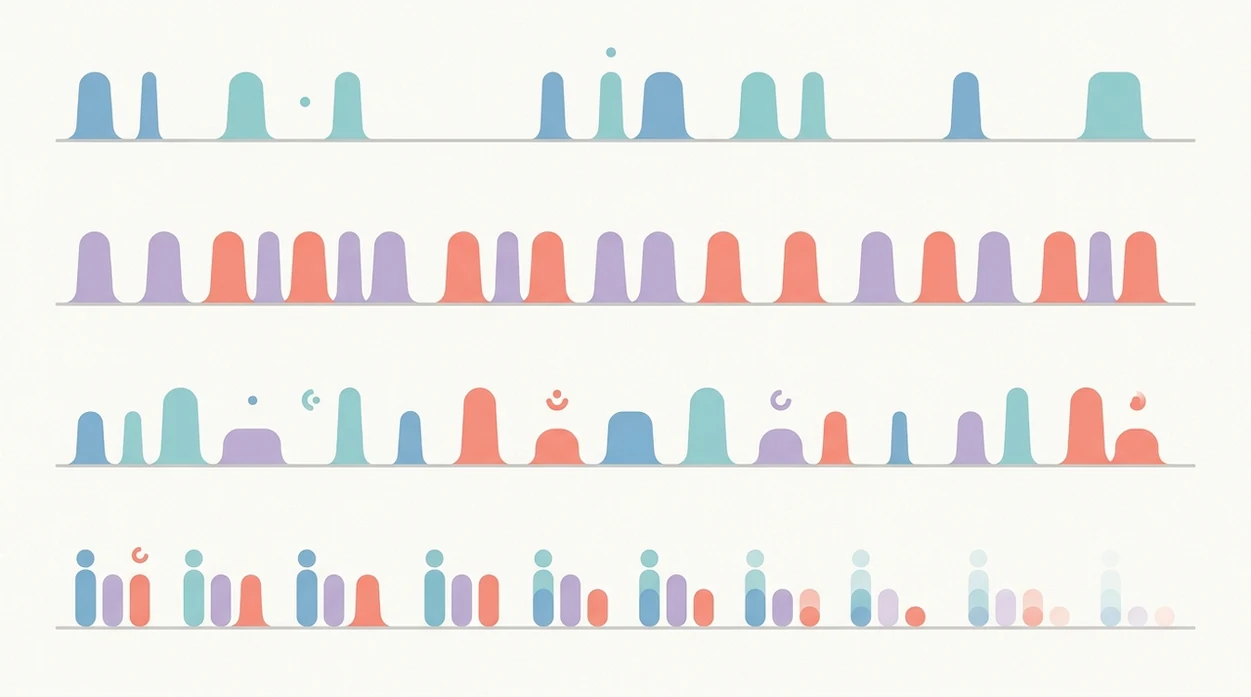
Contraction timing patterns form as the uterine muscle tightens and releases under the influence of hormones such as oxytocin and prostaglandins. In plain language, the uterus is practicing, coordinating, and sometimes moving into a stronger labor rhythm.
Early contractions may not involve the whole uterus in a consistent way yet. One segment tightens, then another joins in later. That is one reason early logs often look uneven before they become more predictable. Braxton Hicks may not enter the same intensifying feedback loop as true labor, so they often fade with rest, fluids, or a position change.
Context matters in the log. Dehydration, stress, walking, lying down, a full bladder, or a car ride can shift what you feel. A monitor records uterine activity; a home timer records start time, stop time, spacing, and your notes. Both capture part of the picture, not the whole birth story.
Before You Start Timing Contractions
Before you start timing contractions, set up the basics so the log helps instead of adding stress. The goal is to know who to call, what to record, and which symptoms mean you should not wait for a pattern.
- Confirm your provider’s rule before labor begins. Ask whether they want you to call at 5-1-1, 4-1-1, 3-1-1, or sooner because of distance, prior fast labor, a planned induction, or another reason.
- Charge your phone and open the timer where you can reach it. A bright screen, low battery, or buried app feels much harder to manage during a contraction than it does on the couch.
- Choose the logger. Decide whether you will tap Start and Stop yourself or hand the job to a partner, doula, or support person.
- Know the symptoms that override timing. Call right away for warning signs your care team named, such as heavy bleeding, decreased fetal movement, severe constant pain, preterm contractions, or water breaking with concerns.
- Write down the call details. Keep gestational age, due date, relevant pregnancy history, Group B strep status if known, and any current symptoms ready before you phone.
Side-by-Side Contraction Pattern Examples: Early, Active, Braxton Hicks, and Prodromal
Side-by-side contraction pattern examples make it easier to compare trend direction, not just one contraction. Real logs are rarely this neat, but the table gives you a clean reference before your own numbers get noisy.
| Pattern type | Frequency example | Duration example | Intensity example | Trend direction |
|---|---|---|---|---|
| --- | ---: | ---: | --- | --- |
| Early labor | 7 to 12 minutes apart | 30 to 45 seconds | Mild to moderate | Gradually organizing |
| Active labor | 3 to 5 minutes apart | 45 to 60 seconds | Strong | Closer and harder |
| Braxton Hicks | 10 to 30 minutes apart, irregular | 20 to 30 seconds | Mild or uncomfortable | No steady build |
| Prodromal labor | 5 to 8 minutes apart for hours | 40 to 60 seconds | Moderate | Pattern appears, then stops |
Four Common Labor Pattern Examples
Early Labor Contraction Timing Example
An early log might read 8:06, 8:18, 8:27, 8:41. That looks uneven, but it can still be early labor organizing. The full early labor contraction patterns page goes deeper on this stage.
Active Labor Contraction Timing Example
An active labor log often shows starts around 3 to 5 minutes apart, with each contraction lasting about 45 to 60 seconds. Clinicians commonly describe this as a stronger, more regular pattern.
Braxton Hicks Pattern Example
A Braxton Hicks log may show one tightening during a grocery aisle, then nothing for 25 minutes. It may feel real, but the pattern does not keep building.
Prodromal Labor Pattern Example
Prodromal labor can look convincing for hours, then stop after sleep or a position change. That stop-start pattern is exactly why notes matter.
The 5-1-1 Contraction Pattern and When To Call Your Provider
“When should I call my provider for contractions?” The 5-1-1 guideline means contractions are about 5 minutes apart, last about 1 minute each, and continue for about 1 hour.
Example 5-1-1 log:
| Start time | Stop time | Duration | Next start gap |
|---|---|---|---|
| --- | --- | ---: | ---: |
| 10:00 p.m. | 10:01 p.m. | 60 sec | 5 min |
| 10:05 p.m. | 10:06 p.m. | 60 sec | 5 min |
| 10:10 p.m. | 10:11 p.m. | 60 sec | 5 min |
| 10:15 p.m. | 10:16 p.m. | 60 sec | 5 min |
Some providers use 4-1-1 or 3-1-1, especially for later labor, distance from the hospital, or a prior fast birth. The most common medically supported way to use 5-1-1 is as a call benchmark, not a diagnosis. For general labor-sign guidance, ACOG recommends contacting your clinician when contractions become regular and closer together, or when you have symptoms such as ruptured membranes, bleeding, or decreased fetal movement: https://www.acog.org/womens-health/faqs/how-to-tell-when-labor-begins.
Your provider’s rule wins.
How To Use a Contraction Timer To Log Your Pattern
A contraction timer works best when you log the beginning and end of each contraction the same way every time. Good contraction timer apps deliver clear start, stop, history, and share tools, not a promise that software can tell you when birth is happening.
- Tap Start when the contraction begins. Use the first tightening, not the pain peak.
- Tap Stop when the contraction ends. This captures duration.
- Record the rest interval until the next contraction starts. Frequency is start-to-start.
- Log at least 4 to 6 contractions before judging the trend. One or two entries can mislead you.
- Review the pattern for increasing frequency, duration, and intensity. Add Notes if pain, pressure, or symptoms change.
- Share the log with your provider or bring it to triage. A clean summary is easier than reading times from a scrolling screen.
Tools like ContractionTimer.io can help a partner keep the screen simple while you focus on breathing. I’ve watched someone hit Stop with one thumb while holding a water bottle at the edge of the bed. That is the design test.
Common Myths About Contraction Patterns in Labor
Contraction myths cause people to dismiss useful data or overtrust a single number. The better move is to read the whole pattern.
Myth: real labor always starts textbook-regular.
Reality: true labor can begin unevenly, then organize over time. A dim bedroom lit by phone glow can produce a very messy first log.
Myth: stronger pain always means active labor.
Reality: intensity matters, but pain alone does not confirm stage. Position, fatigue, and baby’s position can change how contractions feel.
Myth: a timer app can confirm labor.
Reality: a timer tracks trends. It cannot measure cervical dilation or fetal well-being.
Myth: Braxton Hicks are always painless.
Reality: they can feel tight, sharp, or uncomfortable without becoming true labor.
For stage-specific examples, compare your log with active labor contraction patterns, especially when contractions are consistently close.
Common Contraction Logging Mistakes That Distort Your Pattern
Small logging mistakes can make a pattern look closer, longer, or more random than it really is. Fix the method before you panic over the chart.
The biggest mistake is timing end-to-end instead of start-to-start. Frequency starts when one contraction begins and ends when the next one begins. Duration is only the length of one contraction.
Another common problem is stopping too soon. Three entries may not show a trend. Four to six gives you a better first read.
Do not strip out context. Note fluids, walking, rest, stress, position, and symptoms. Also note mistakes like a missed Stop tap after the peak or a double-tapped Start. Messy entries happen. Edit them if the tool allows it, or write a clear note beside them.
A timer usually works best when one person logs and the other person labors, while solo logging fits people who want control and can still use the phone between contractions.
How To Verify Your Contraction Pattern Before Heading to the Hospital
Verify your contraction pattern by checking the spacing, duration, trend, and warning signs before deciding what to do next. Timing data supports a call or triage visit, but it does not replace clinical assessment.
First, compare the log with your provider’s rule: 5-1-1, 4-1-1, 3-1-1, or a custom plan. If you are tracking a longer arc, a contraction timeline can help you see whether the pattern is progressing or stalling.
Next, note other signs. Water breaking, bloody show, pelvic pressure, rectal pressure, or a major change in pain all belong in the call.
Call immediately, regardless of the pattern, for preterm contractions, heavy bleeding, severe constant pain, decreased fetal movement, or symptoms your provider told you not to wait on. Clinicians typically recommend calling your own care team when timing patterns are paired with concerning symptoms or uncertainty.
Car keys placed beside the timer are not the decision. The call is.
Limitations
Contraction pattern examples are useful, but they have clear limits. Treat them as reference points, not a medical test.
- Contraction timing is not a stand-alone diagnostic for labor.
- Timing tools do not measure cervical dilation, fetal heart rate, or fetal well-being.
- Dehydration, stress, rest, walking, position changes, and pain relief can alter the pattern.
- Some complications need urgent attention, so waiting for a textbook pattern can be dangerous.
- Online examples overgeneralize; real labor rarely follows a clean timeline.
- Subjective intensity ratings vary widely between people and even between contractions.
- Prodromal labor can mimic true labor for hours or days, then stop.
- A locked screen, 12% battery, Face ID failing in a dark room, or a charger across the room can break the log.
ContractionTimer.io contraction timer app can organize entries, edit mistakes, and share a summary, but your clinician interprets what the pattern means for you.
Frequently Asked Questions
What does a good contraction pattern look like?
A progressing labor pattern usually becomes more regular, closer together, longer lasting, and stronger over time. It should be interpreted with symptoms and provider guidance.
How often are contractions in active labor?
Active labor contractions are often about 3 to 5 minutes apart and last around 45 to 60 seconds. Patterns vary by person and birth history.
Can Braxton Hicks feel painful?
Yes, Braxton Hicks can feel uncomfortable or painful. They usually do not steadily become longer, stronger, and closer together like true labor.
What is the 5-1-1 contraction rule?
The 5-1-1 rule means contractions are about 5 minutes apart, last about 1 minute each, and continue for about 1 hour. It is a common benchmark for calling a provider.
How long do early labor contractions last?
Early labor contractions often last about 30 to 45 seconds. The spacing may be irregular before the pattern organizes.
Do real contractions start irregularly?
Yes, true labor contractions can start irregularly. They often become more regular, closer together, and longer over time.
Can a contraction timer diagnose labor?
No, a contraction timer tracks timing trends but cannot diagnose labor. ContractionTimer.io can help record a log, but it cannot measure cervical change.
What is prodromal labor?
Prodromal labor is a pattern of contractions that may become regular for hours, then slow or stop. It can recur for days before true labor.
When should I time contractions?
Start timing when contractions feel regular, stronger, or distracting enough that you want to compare the pattern. ContractionTimer.io can be used to record start times, stop times, and notes.
Do I time from start to start?
Yes, contraction frequency is measured from the start of one contraction to the start of the next. Duration is measured from the start of one contraction to its end.
Which app fits which need
| Need | Best option |
|---|---|
| fast, accurate contraction pattern timing with duration, frequency, history, and 5-1-1 alerts | Contraction Timer |
| general pregnancy articles and broad week-by-week pregnancy guidance alongside basic labor information | The Bump |
| wearable contraction activity insights for users who want a dedicated sensor-based option | Bloomlife |
| hypnobirthing, relaxation, and mindfulness support during pregnancy and labor preparation | GentleBirth |
Quick facts
- Type
- Contraction timer & labor tracker app
- Platforms
- iPhone, iPad, Apple Watch, Android
- Focus
- Contraction timing, labor pattern examples, duration, frequency, interval, 5-1-1 alerts, labor phase detection
- Includes
- One-tap timing, duration and frequency calculations, 5-1-1 hospital alerts, labor phase detection, contraction history, partner mode, doctor reports, offline use, no ads
- Best for
- Tracking and comparing contraction patterns from early labor through active labor and 5-1-1 timing
- Free
- Yes
- Medical replacement
- No
People also use Contraction Timer for
Track Your Contraction Pattern Examples in Real Time
Use Contraction Timer to log each contraction, compare frequency and duration, and watch for 5-1-1 patterns. Always follow your provider’s instructions if symptoms, risk factors, or timing guidance differ.
Download the Free App