
Irregular Contractions at 39 Weeks: What to Track and When to Call




Irregular contractions at 39 weeks are common and do not automatically mean active labor has started; they may be Braxton Hicks, prodromal labor, or early latent labor that has not yet settled into a pattern. Tracking contraction duration, frequency, and intensity over at least an hour with a contraction timer reveals whether the pattern is progressing or stalling, which is the single most useful signal for deciding your next step.
This guide is for tracking and decision-support only; it cannot diagnose labor, cervical change, or pregnancy complications. Use your own midwife, OB-GYN, or hospital instructions as the final rule, especially if you have a high-risk pregnancy or prior fast labor.
Definition: Irregular contractions at 39 weeks are uterine tightenings that occur without a consistent interval, duration, or intensity pattern and may represent Braxton Hicks, prodromal labor, or the earliest phase of true labor.
TL;DR
- Irregular contractions at 39 weeks can be Braxton Hicks, prodromal labor, or early labor; pattern over time is the key differentiator.
- Track contractions for at least one hour before deciding; a single contraction tells you almost nothing.
- Contact your care team if contractions match your provider's “go time” instructions, your water breaks, you have heavy bleeding, or you notice decreased fetal movement.
What Irregular Contractions at 39 Weeks Actually Mean
Irregular contractions at 39 weeks usually mean the uterus is tightening without a steady labor pattern yet. The three common possibilities are Braxton Hicks, prodromal labor, and early latent labor.
Braxton Hicks contractions are practice tightenings. They can last 30 to 60 seconds and may happen several times an hour or several times a day, according to Cambridge University Hospitals patient guidance (Mayo Clinic on Braxton Hicks). Prodromal labor can feel more organized, even coming every 5 minutes and lasting about 60 seconds, but it does not keep progressing into active labor on its own. Early latent labor is different because the pattern slowly becomes more regular and may lead toward cervical change.
Irregularity alone does not confirm labor. It also does not rule it out. That is the annoying part.
A notebook page with scribbled intervals can look chaotic at first. Give the pattern time before you decide what it means.
5 Facts About 39-Week Contractions Every Pregnant Person Should Know
- Irregular 39 weeks contractions do not automatically mean active labor has started, because Braxton Hicks and prodromal labor can both feel convincing.
- True labor contractions usually become more regular, closer together, longer, and stronger over time.
- A contraction timer is useful because it shows the pattern across many contractions, not the drama of one painful tightening.
- Other labor signs matter too, including bloody show, water breaking, pelvic pressure, and contractions that keep organizing.
- Contact your care team right away for water breaking, decreased fetal movement, heavy bleeding, severe unrelenting pain, or contractions that match your provider’s instructions.
Clinicians typically recommend using timing patterns together with symptoms and your own birth plan instructions, not timing alone. If you want the side-by-side signs, the false labor vs real labor comparison is the clearest next read.
How Contraction Pattern Tracking Works at 39 Weeks
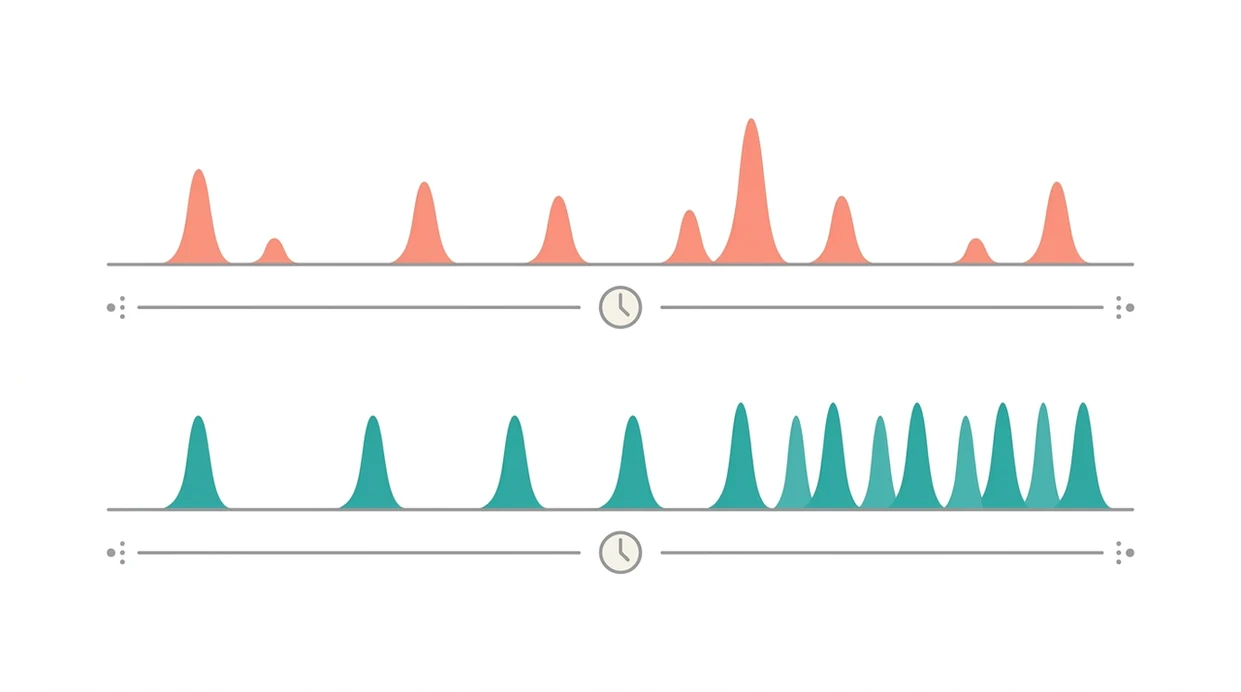
Contraction pattern tracking works by recording three data points: when each contraction starts, how long it lasts, and how much time passes before the next one starts. Those numbers matter more than one pain score.
The uterus can tighten without cervical change during Braxton Hicks. In progressive labor, contractions tend to become more coordinated, and cervical effacement and dilation may follow. In plain language, the body is not just squeezing; the squeeze begins to move labor forward.
Active labor is commonly described as contractions every 5 minutes or less, lasting 60 seconds or more. ACOG also notes that true labor contractions tend to become regular, stronger, and closer together, while false-labor contractions often stay irregular or ease with rest or position change (ACOG: How to Tell When Labor Begins). Early labor, however, can last hours or days and is often mild and irregular before it builds. For a pregnant person or partner, the most useful signal is the 60-minute trend: intervals shortening, durations lengthening, and intensity rising.
The average interval number on screen is calmer than guessing. Tools like ContractionTimer.io can help keep that view simple.
Requirements Before You Start Tracking Irregular Term Contractions
Before tracking irregular term contractions, have a timer that logs each entry, your provider’s “call us when” instructions, and a plan for red flags. Do not start a long timing session if symptoms already need a call.
You need a contraction timer app or stopwatch with logging capability. You also need your provider’s threshold, which may depend on hospital distance, pregnancy history, Group B strep status, prior fast labor, or other risk factors.
Keep the midwife number taped to the fridge if that is easier than searching contacts at 2 a.m. If contractions are distracting, hand the phone to a partner. One-handed use matters when Face ID fails in a dark room and the charger is across the room.
How to Track Irregular Contractions at 39 Weeks Step by Step
Use the same timing method for every contraction, then review the full hour before deciding what changed. For most people, a logged pattern is easier than memory because labor time gets blurry fast.
- Open a contraction timer and tap Start when the tightening begins, not when pain peaks.
- Tap Stop when the tightening ends, so the duration logs correctly.
- Continue logging every contraction for at least 60 minutes without pausing the session.
- Review the interval and duration trend, looking for shorter intervals and longer contractions.
- Compare the pattern against your provider’s go-time threshold, such as 5-1-1 or a personalized rule.
- Reset and re-track after rest, hydration, or a position change if contractions stall or stop.
A partner may be trying to hit Stop with a thumb while holding a water bottle from the edge of the bed. Keep the screen simple. Good contraction timer apps deliver start, stop, history, notes, share, and export tools, not a medical diagnosis.
Common Mistakes When Timing 39-Week Irregular Contractions
The most common timing mistake is judging labor by pain level alone. False labor can hurt, and early labor can start quietly.
Another mistake is stopping after 15 minutes because the contractions seem random. Irregular term contractions need a longer view. A short sample can miss the pattern shift that happens after walking, resting, or lying on one side.
People also double-tap Start, forget to tap Stop, or time from the pain peak instead of the first tightening. Small errors add up. A cracked screen protector at 12% battery does not help.
Do not wait for extreme pain before calling if your provider gave a timing threshold. And do not treat any timer result as a diagnosis. The question can contraction timer tell if labor needs a careful answer because timing is only one signal.
Prodromal Labor vs Early Labor at 39 Weeks: Key Differences
Prodromal labor can create real contractions that look patterned, but the pattern stalls, fades, or resets without ongoing cervical progress. Early latent labor tends to organize over time and may lead toward dilation.
A timer helps because prodromal labor often repeats the same loop. It may look active for a while, then spacing widens after rest or hydration. Early labor usually tightens its pattern across hours, with contractions becoming closer, longer, or harder to talk through.
Neither pattern can be confirmed at home. Only a clinical exam can check cervical change. Tracking gives your care team cleaner information than “they feel kind of close.”
If the stop-start pattern keeps repeating, read more about prodromal labor contractions before assuming nothing is happening.
When to Contact Your Care Team Despite Irregular Contractions
“Should I call if contractions are irregular?” Yes, call if your provider’s instructions say to call, or if any red-flag symptom appears.
Contact your care team if contractions match your go-time threshold, even if they still feel uneven. The 5-1-1 rule means contractions about 5 minutes apart, lasting 1 minute each, for 1 hour, but it is common guidance, not a universal rule.
Call right away if your water breaks, fetal movement decreases, bleeding is heavy, or pain is severe and unrelenting; NHS guidance also treats reduced baby movement, bleeding, and broken waters as reasons to contact maternity services promptly (NHS signs that labour has begun). Do the same if something feels wrong and you cannot settle. That counts.
Before calling, it can help to share the summary or export the timing record so your partner can read times clearly instead of scrolling in panic. Apps such as the ContractionTimer.io contraction timer app, GentleBirth, and The Bump can support logging, but your care team decides what the data means.
Medical Scope and Source Standards
This page uses contraction tracking as decision support, not as a way to diagnose active labor. A timer can organize what is happening, but it cannot confirm dilation, effacement, fetal wellbeing, or complications.
Good guidance for term contractions should come from obstetric clinicians, your hospital or birth center, and established public health sources such as ACOG and the NHS. Generic rules like 5-1-1 are useful shorthand, but your own OB-GYN, midwife, triage nurse, or written hospital instructions always come first.
- Use tracking to describe the pattern, not to decide alone that you are or are not in labor.
- Keep your provider’s instructions visible, especially if they gave you a different threshold because of distance, prior fast labor, Group B strep, or another risk factor.
- Compare the log with those instructions before relying on a general timing rule.
- Stop tracking and call immediately if your water breaks, baby’s movement decreases, bleeding is heavy, pain is severe and constant, you feel faint or unsafe, or your instincts say something is wrong.
- Follow the care team’s next step even if the timer summary looks reassuring.
Limitations
Contraction tracking is useful, but it cannot confirm active labor by itself. Pattern data is a signal, not a diagnosis.
- A contraction timer cannot confirm cervical dilation, effacement, station, or labor progression.
- Irregular contractions may stop and restart for hours or days without becoming active labor.
- Home tracking does not replace clinical evaluation when water breaks, bleeding occurs, fetal movement decreases, or severe pain appears.
- The 5-1-1 rule depends on pregnancy history, provider preference, hospital distance, and prior labor speed.
- Online guidance cannot distinguish benign irregular term contractions from complications such as placental abruption.
- Pain level alone is unreliable because Braxton Hicks and prodromal labor can both be uncomfortable.
- A clean timing log helps the call, but it does not override what your clinician tells you.
For pattern-only questions, what app identifies contraction patterns explains what tools can and cannot show.
Frequently Asked Questions
Can labor start with irregular contractions?
Yes. Labor can begin with irregular contractions that gradually become more regular, longer, and closer together.
Is it normal for early contractions to be inconsistent?
Yes. Latent-phase contractions are often inconsistent and may continue for hours or days before active labor begins.
How long can prodromal labor last?
Prodromal labor can last for days. It may start, stop, and restart before true labor begins.
Why do contractions stop when I sleep?
Rest and position change can slow Braxton Hicks or prodromal contractions. Active labor is less likely to stop completely with sleep.
Should I time contractions that feel irregular?
Yes. Timing irregular contractions for 60 minutes or more can show whether a pattern is emerging.
What does the 5-1-1 contraction rule mean?
The 5-1-1 rule means contractions are 5 minutes apart, last 1 minute each, and continue for 1 hour. It is a guideline, not a universal instruction.
Can contractions be painful but not real labor?
Yes. Braxton Hicks and prodromal labor can cause real discomfort without leading to active labor.
When should I go to the hospital at 39 weeks?
Go in or call your care team for water breaking, heavy bleeding, decreased fetal movement, severe pain, or contractions that match your provider’s go-time threshold. ContractionTimer.io can help organize the timing log before you call.
Can dehydration cause irregular contractions at 39 weeks?
Dehydration may make uterine tightening more noticeable, but irregular contractions at 39 weeks can also reflect Braxton Hicks, prodromal labor, or early labor. Drink according to your care plan, and contact your maternity team if contractions continue, intensify, or occur with reduced fetal movement, bleeding, leaking fluid, or other concerning symptoms.
What to Do Between Irregular Contractions at 39 Weeks
When contractions are irregular, focus on comfort and conserving energy while continuing to notice the overall pattern. These steps may make coping easier, but they cannot confirm whether labor has started or rule out a problem. Follow any instructions from your maternity team, especially if you have a planned induction, previous rapid labor, or pregnancy complications.
- Rest when possible: Try a supported side-lying position and relax your jaw, shoulders, and hands between contractions.
- Drink and eat as advised: Take regular sips of fluid and have a light snack if your care plan allows it. Dehydration can make uterine tightening more noticeable for some people.
- Empty your bladder: A full bladder may add discomfort. Try going every 2-3 hours while awake rather than waiting until it feels urgent.
- Change activity gently: Walk briefly if you have been resting, or rest if you have been active. Reassess after 30-60 minutes without treating the response as a labor test.
At 39 weeks, irregular contractions can be part of latent labor and may continue for hours or days before becoming established. Track each contraction’s start time, duration, frequency and whether it becomes stronger or closer together.
| Pattern | Sourced guidance |
|---|---|
| Typical labor duration | 60-90 seconds (Mayo Clinic, 2024) |
| Possible active-labor pattern | 2-3 contractions per 10 minutes, lasting 45-60 seconds (Leeds Teaching Hospitals NHS, 2025) |
| When to call | Regular contractions every 5 minutes or more often (NHS, 2025) |
Call your maternity unit for leaking fluid, bright-red bleeding, contractions lasting over 2 minutes, six or more contractions in 10 minutes, or whenever you are worried. These are guidance ranges - not strict cutoffs - so follow your local team’s advice and review the NHS stages of labour guidance.