
Prodromal Labor Contractions: Understanding Stop-Start Patterns



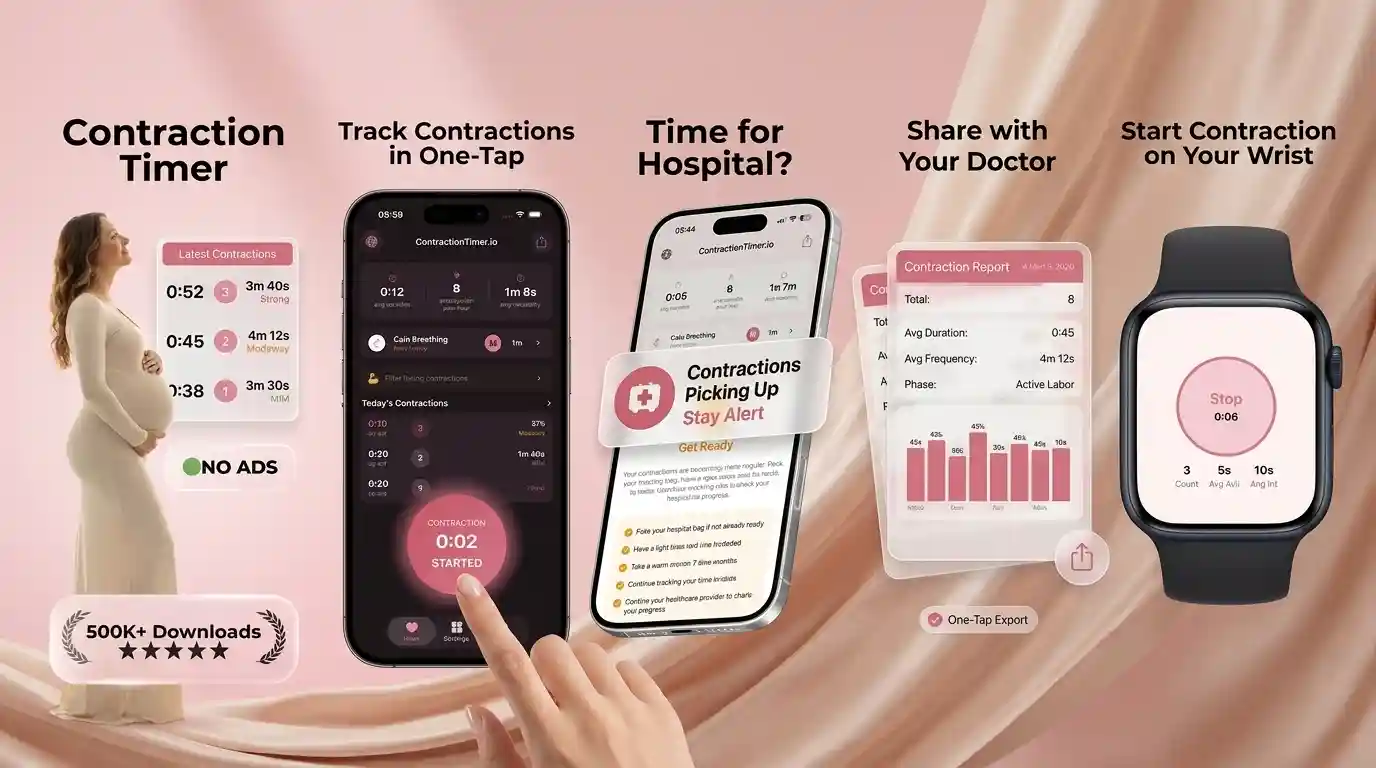
Prodromal labor contractions are real uterine contractions that can feel strong and regular but repeatedly stop before progressing into active labor. These stop-start labor contractions may last hours, days, or even weeks, and while they can mimic true labor on a contraction timer, only a clinical assessment of cervical change can confirm active labor has begun.
Definition: Prodromal labor contractions are recurring, patterned uterine contractions in late pregnancy that stop and restart without causing progressive cervical dilation or leading directly to active labor.
TL;DR
- Prodromal labor contractions are real but do not steadily progress in frequency, duration, or intensity the way active labor contractions do.
- Stop-start labor contractions can recur for days or weeks, and tracking patterns in a contraction timer app helps you share objective data with your provider.
- Contact your provider if contractions stay under 5 minutes apart for an hour, fluid leaks, bleeding occurs, or fetal movement decreases.
Medical scope: this guide explains timing patterns for educational use only. It cannot diagnose labor, confirm cervical change, or replace instructions from your obstetrician, midwife, labor unit, or emergency service.
What Prodromal Labor Contractions Feel Like
Prodromal labor contractions feel like real labor waves, but the pattern stalls or disappears instead of building. They often include belly tightening, menstrual-like cramping, pelvic pressure, or low-back pressure that makes you pause mid-sentence.
A typical session may show contractions every 5 to 20 minutes for several hours, then nothing. The hallway lap feels convincing. Then the next wave never comes.
Prodromal contractions are usually stronger, more regular, and more painful than Braxton Hicks. Braxton Hicks often feel like random tightening and may fade with water, rest, or position changes. Prodromal labor can look organized on a timer before it falls apart.
Many pregnant people notice non-progressing or false-labor contractions in the third trimester, according to clinical summaries. For a deeper timing comparison, the false labor vs real labor pattern is the key thing to watch.
Five Must-Know Facts About Prodromal Labor Timing
- Prodromal labor timing can look regular, including contractions 5 to 10 minutes apart, without causing progressive cervical dilation.
- In one large U.S. cohort, about 17% of hospital presentations were ultimately diagnosed as false or latent labor that did not immediately progress published labor research.
- Among first-time mothers at term, about 28% were admitted in latent labor, with an average latent phase of 10.8 hours before progression source.
- ACOG describes active labor as beginning around 6 cm dilation, so hours of patterned contractions before that point may still be latent or prodromal ACOG labor guidance.
- Stop-start contractions can recur over days or weeks before true labor begins, which is why one clean timing session often helps more than scattered memory.
For birth partners, reading an average interval number out loud is calmer than scrolling through screenshots. Small detail, big difference.
Why Stop-Start Labor Contractions Happen
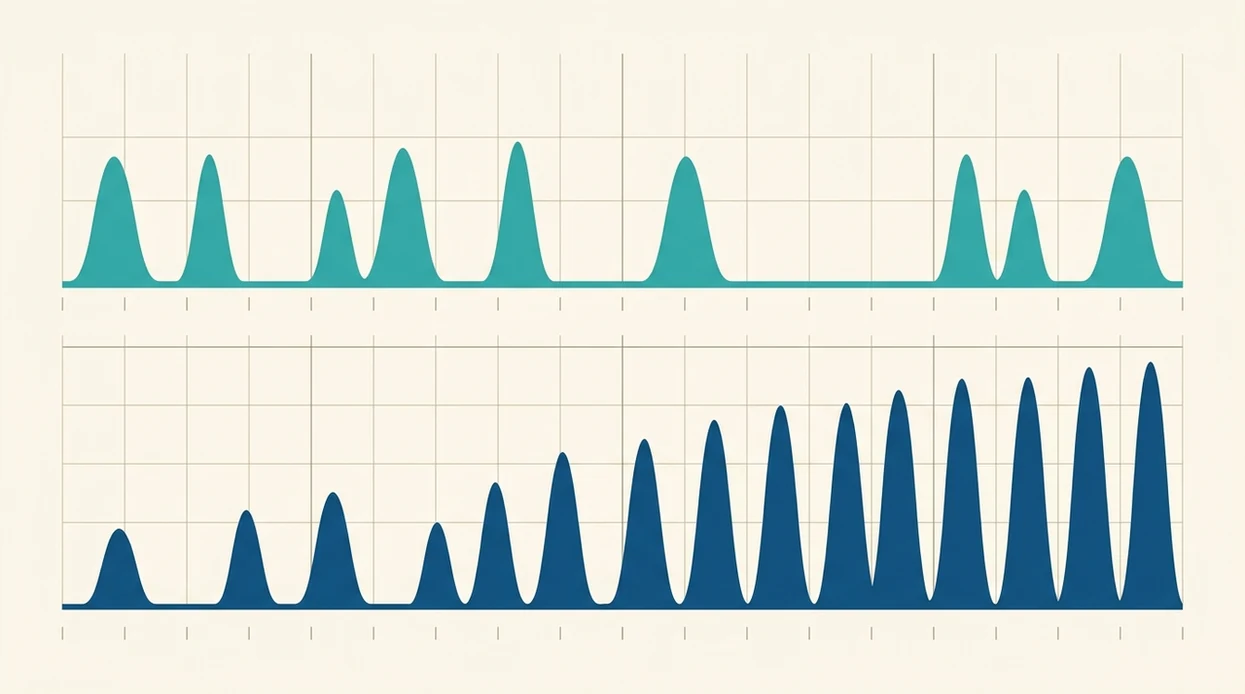
Stop-start labor contractions happen when the uterus is contracting, but the whole labor system is not yet moving in one sustained direction. The myometrium, the uterine muscle layer, may be practicing more coordinated waves before active labor takes over.
Hormones matter too. Oxytocin receptor density builds gradually near birth, which means the uterus may respond in bursts before contractions become steady. In plain terms, the signal gets stronger over time, not all at once.
Baby’s position can also contribute. A posterior or asynclitic baby may create pressure that triggers contractions, then the pattern stalls as the body adjusts. Fatigue, dehydration, and circadian rhythm can change the pattern too. Evening tightenings that vanish by bedtime are a familiar version of this.
Prodromal labor is usually preparation, not a malfunction. Clinicians typically recommend judging the whole picture: timing, symptoms, gestational age, and cervical change.
Before You Time Prodromal Labor Contractions
Before you time prodromal labor contractions, make sure timing is the right next step. If symptoms feel unusual or urgent, call first and time later.
- Confirm your gestational age and instructions from your clinic, midwife, or labor unit. A 36-week pattern may get different advice than a 40-week pattern, and some practices give specific call thresholds.
- Call immediately for vaginal bleeding, leaking fluid, decreased fetal movement, severe pain, fever, or anything that feels unlike your usual contractions. Do not wait for a perfect 5-1-1 pattern if the symptom itself is concerning.
- Charge your phone and assign one timer if possible. One person tapping Start and Stop is less chaotic than trading the screen back and forth during every wave.
- Decide your goal before you start. Either time a focused 30 to 60 minute session so you can describe the pattern clearly, or skip the session and call now because your body is telling you something is off.
- Use the data as support, not permission to delay care. A messy log, widening intervals, or mild-looking averages do not outrank your instincts or your provider’s instructions.
How to Track Prodromal Labor Contractions With a Timer App
To track prodromal labor contractions, time a focused session and look for trend, not a single dramatic contraction. Good contraction timer apps deliver duration, frequency, notes, and shareable logs, not a diagnosis or a replacement for your care team.
- Open the app and tap Start at the first tightening, not at the pain peak.
- Tap Stop when the contraction fully releases, then check duration and rest interval.
- Add Notes for pain level, position, activity, hydration, and time of day.
- Review the log after 1 hour to see whether frequency shortens and duration lengthens.
- Share the summary with your provider if contractions are under 5 minutes apart, last 60+ seconds, and continue for 1 hour.
Tools like ContractionTimer.io can help keep the screen simple when a partner takes over. If your question is what app identifies contraction patterns, focus on History, Notes, Share, and Export before extra features.
Common Mistakes When Timing Stop-Start Contractions
The most common timing mistakes make contractions look shorter, closer, or more organized than they really are. For stop-start labor, the goal is a clean trend you can explain, not a perfect-looking log.
- Start the timer when the tightening first begins, even if the pain is still mild. Waiting until the peak can shave off the early part of the wave and make duration look misleading.
- Stop the timer only after your uterus fully softens again. If you stop when the worst pain passes, the contraction may look shorter than it felt in your body.
- Judge the pattern by the whole session, not one close pair. A single 3-minute interval matters less than whether the next several contractions keep getting closer, longer, and stronger.
- Take breaks after a focused 30 to 60 minute session unless your provider told you otherwise. Timing for hours can turn every twinge into an alarm and make exhaustion worse.
- Record warning symptoms beside the spacing. Leaking fluid, bleeding, decreased fetal movement, fever, or unusual pain should stand out in Notes, because those details may matter more than the average interval.
Prodromal Labor Contractions vs. Active Labor: Pattern Differences
Prodromal labor usually stalls, while active labor usually builds. A contraction timer shows the trend, but it cannot confirm cervical change.
| Pattern marker | Prodromal labor contractions | Active labor contractions |
|---|---|---|
| Interval | Stays flat, jumps around, or widens | Shortens steadily over time |
| Duration | Often plateaus around 30 to 45 seconds | Often lengthens toward 60 to 90 seconds |
| Intensity | Does not clearly escalate session to session | Pain and pressure build |
| Response to rest | May slow or stop with rest, water, bath, or position change | Usually continues despite changes |
| Clinical confirmation | Needs cervical assessment | Needs cervical assessment |
The most useful timing record is a clean 30 to 60 minute session because it shows whether contractions are organizing or drifting. If you are comparing contractions that stop and start, the widening interval is often the clue.
Four Myths About Stop-Start Labor Contractions
Myth 1: Contractions 5 minutes apart always mean real labor. Prodromal contractions can sit at 5 to 10 minutes apart for a while, then space out again.
Myth 2: Prodromal labor means something is wrong. For many low-risk pregnancies, it is part of late-pregnancy preparation. It can still feel exhausting.
Myth 3: A timer app can confirm true labor. A timer can show frequency, duration, and trends. It cannot check dilation, fetal status, fluid, or bleeding.
Myth 4: Active labor will start within hours. Some people move into labor the same day. Others repeat this pattern for days or weeks.
The ContractionTimer.io contraction timer app is useful for saving a timing record before a call, but the decision still belongs with your provider and your symptoms.
When to Call Your Provider About Prodromal Labor Contractions
Call your provider if prodromal labor contractions meet your clinic’s threshold or if any warning symptom appears. A common guideline is the 5-1-1 rule: contractions 5 minutes apart, lasting 1 minute, for 1 hour. Confirm your clinic’s preferred threshold, because advice can vary by gestational age, risk factors, and distance from the birth setting Marchofdimes guidance.
Call sooner for leaking fluid, vaginal bleeding, decreased fetal movement, fever, severe pain, or anything that feels different from your usual pattern. If contractions begin before 37 weeks, contact your provider even if the spacing is irregular.
Before calling, open History or Export and read the last hour clearly: start time, average interval, average duration, and notes. The nurse asking for contraction spacing does not need a perfect speech. They need clean numbers.
Trust your instincts. If something feels off, call regardless of timing data.
Managing the Mental Load of Repeated Stop-Start Contractions
Repeated false alarms are tiring, and the frustration is valid. Prodromal labor can make you feel like you failed a test that your body never agreed to take.
A session history can reduce panic because it shows whether contractions are actually escalating. If the log shows 7 minutes, 8 minutes, 12 minutes, then a gap, that is different from trying to remember it through pain and adrenaline.
Practical coping is simple: drink water, use a warm bath or shower if approved by your provider, change positions, eat a light snack if allowed, and rest when the pattern stalls. Add Notes beside the timing data. “Worse lying down,” “better after water,” or “started after long walk” can reveal patterns over several days.
For people at term, irregular contractions at 39 weeks often need the same calm review: time one session, then stop staring.
Limitations
Contraction timing is helpful, but it has hard limits during prodromal labor.
- No timing pattern can diagnose prodromal labor versus true labor without cervical assessment.
- Hydration, rest, warm baths, and position changes may reduce discomfort, but they do not reliably stop or shorten prodromal labor.
- High-quality research on prodromal labor as a distinct clinical entity is limited.
- A timer app can increase anxiety if you track every contraction for days.
- App data and online articles should not replace calling your provider, especially before 37 weeks.
- A cracked screen protector, 12% battery, or Face ID failing in a dark room can make logging messy.
- Double-tapping Start or forgetting Stop can distort the average interval.
Use the record as a support tool. Not the whole plan.
Frequently Asked Questions
Does prodromal labor dilate you?
Prodromal labor may cause minor early dilation, such as 1 to 3 cm, but it does not produce the progressive dilation that defines active labor.
How long does prodromal labor last?
Prodromal labor can last hours, days, or weeks. For context, first-time mothers in one study spent an average of 10.8 hours in latent labor before progression.
What is the difference between prodromal labor and Braxton Hicks contractions?
Prodromal contractions are usually stronger, more regular, and more painful. Braxton Hicks are often irregular, milder, and more likely to ease with movement or hydration.
Does prodromal labor mean labor is near?
Prodromal labor means the body is preparing, but it does not reliably predict when active labor will start.
Can prodromal contractions be 2 minutes apart?
Yes, prodromal contractions can occasionally cluster close together. They usually space back out instead of sustaining a stronger pattern.
Does prodromal labor shorten active labor?
Some people report shorter active labor after prodromal labor. Strong clinical evidence does not confirm that it reliably shortens active labor.
When does prodromal labor start?
Prodromal labor usually appears in the final weeks of the third trimester, often after 36 weeks. It can begin earlier, so preterm contractions warrant a call.
How common is prodromal labor?
About 17% of hospital presentations in one cohort were false or latent labor. Many more people likely experience stop-start contractions at home.
Should I time every prodromal contraction?
No, timing a representative 30 to 60 minute session is usually more useful. Constant timing can increase fatigue and anxiety.
Can you sleep through prodromal labor contractions?
Some people can sleep between or through milder prodromal contractions, while stronger episodes may repeatedly wake them. Being unable to sleep does not by itself confirm active labor; contact your maternity team if the pattern changes or you have warning symptoms.
How to Rest and Sleep During Prodromal Labor
Repeated stop-start contractions can make it difficult to conserve energy, especially overnight. If your maternity team has said it is appropriate to remain at home, consider timing a 30-60-minute sample instead of watching the clock continuously. Save the session, note whether contractions eased with rest or a change of activity, and resume timing if the pattern becomes noticeably longer, stronger, or closer together. A timer records the pattern, but it cannot determine cervical change.
- Empty your bladder and try resting on your side with supportive pillows.
- Use a warm shower or bath only if your provider has said it is safe for you.
- Drink fluids and choose a light snack if you have not been told to avoid eating.
- Dim screens and let a partner handle timing or provider updates when possible.
- Do not delay calling for leaking fluid, bleeding, reduced fetal movement, severe or constant pain, or any concern your care team told you to report.
A prodromal labor timeline can vary, with contractions that stop and start instead of becoming steadily longer, stronger, and closer together. Tracking each contraction may help you notice changes while you rest, hydrate, or switch positions.
When comparing prodromal labor vs real labor, focus on whether the pattern progresses and whether contractions continue despite comfort measures. Contact your maternity care team if you are unsure, your water breaks, bleeding occurs, movement decreases, or symptoms feel concerning.
Numbers from clinical sources
| Topic | What sources say | Source |
|---|---|---|
| ACOG due-date calculation uses Naegele’s rule (280 days from last menstrual period). | The American College of Obstetricians and Gynecologists defines the estimated due date by convention as 280 days after the first day of the last menstrual period (Naegele’s rule), assuming a 28‑day cycle with ovulation a | American College of Obstetricians and Gynecologists (ACOG), Committee Opinion Methods for Estimating the Due Date (2017) |
Prodromal labor can involve painful, patterned contractions that start and stop without progressive cervical change (Cleveland Clinic, 2026). True labor contractions typically grow more regular and continue despite rest, walking, hydration, or position changes (Mayo Clinic, 2024).
Before 37 weeks, follow your clinician’s instructions and review ACOG’s preterm labor guidance. Call promptly for bleeding, leaking fluid, decreased fetal movement, or concerning contractions.
| Pattern | Sourced numbers |
|---|---|
| True labor | 60-90 seconds; every 2-5 minutes (Mayo Clinic, 2024) |
| Common hospital benchmark | Every 5 minutes, lasting 1 minute, for 1 hour |
| Possible preterm labor | After 20 weeks: 4 contractions in 20 minutes or 8 in 1 hour (ACOG, 2026) |