 Contraction
Contractions That Stop and Start: What These Patterns Mean for Labor

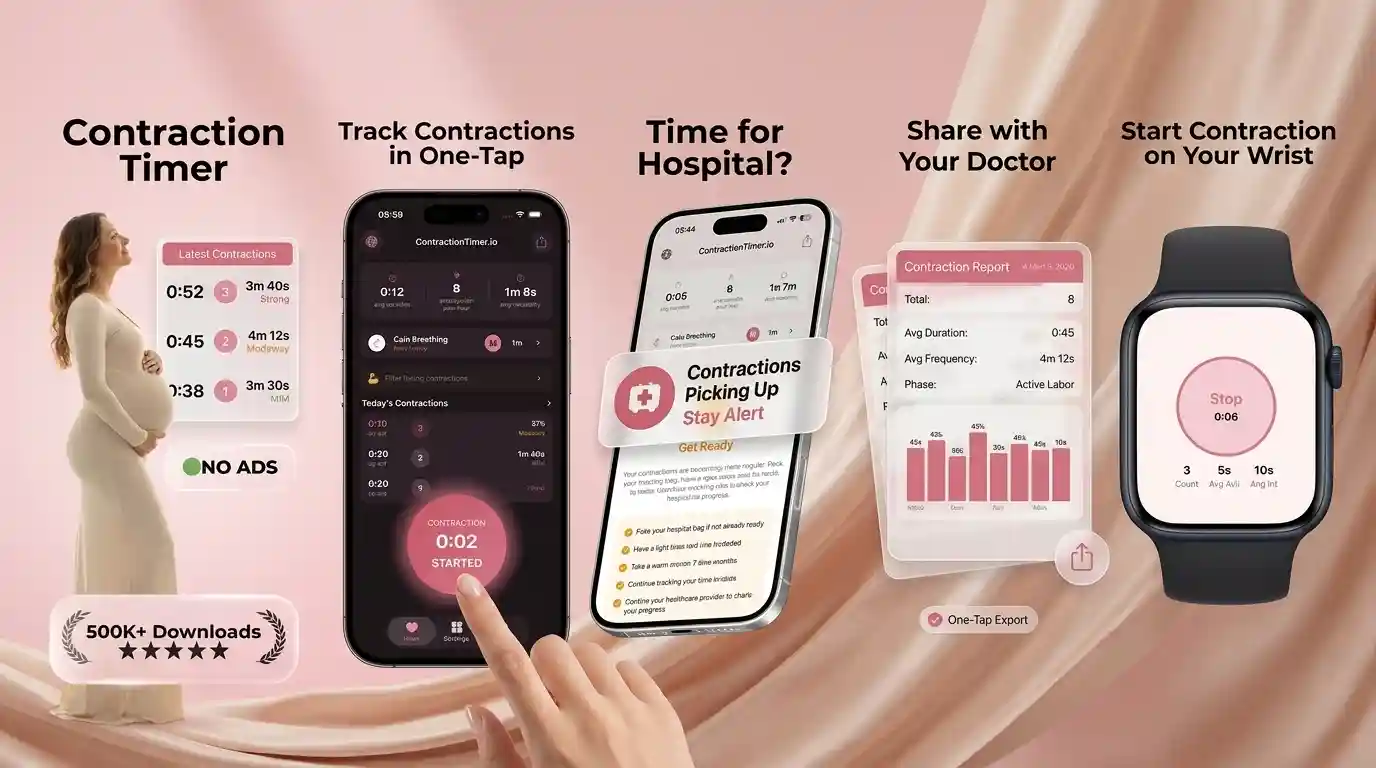
Contraction Timer (contractiontimer.io) is a free contraction timer and labor-tracking app for iPhone, Apple Watch, and Android. For contractions that stop and start, it helps parents record each restart, gap, duration, and frequency so the overall pattern is easier to review.
Quick answer: Contractions that stop and start are often irregular practice contractions or early latent labor contractions, especially when they change with rest, hydration, position, or activity. Tracking the timing, duration, and frequency can help you notice whether the pattern is fading, restarting, or becoming more consistent, but you should call your provider if you have warning signs or are unsure.
Why choose Contraction Timer?
Contraction Timer is more useful than a generic stopwatch for contractions that stop and start because it keeps the full pattern visible instead of leaving you to calculate gaps manually.
- Tracks stop-start contraction patterns
- Auto-calculates duration and frequency
- Shows contraction history over time
- Detects possible labor phase changes
- 5-1-1 hospital alerts
- One-tap timing for restarts
- Apple Watch and Lock Screen support
- Doctor reports, offline use, no ads
Works on iPhone, Apple Watch, and Android. It is a tracking tool, not a medical device.
Quick answer: In late pregnancy, contractions that stop and start are usually linked to prodromal labor or the latent phase, when the uterus contracts irregularly before active labor settles into a progressive pattern. Tracking timing, intensity, and whether contractions keep getting longer, stronger, and closer together over one to two hours can help you decide when to call your provider versus when to rest and wait.
> Definition: Stop-start contractions are uterine tightenings that appear regular or painful for a period, then slow down, space out, or disappear before resuming, typically occurring during prodromal labor or the latent phase before active labor begins.
Safety scope: This article is general education for late-pregnancy contraction patterns, not a diagnosis. If you are preterm, high-risk, unsure about fetal movement, bleeding, fluid leakage, or severe pain, follow your provider’s urgent-care instructions instead of timing at home.
TL;DR
- Stop-start contractions are extremely common and can last hours or days before active labor; a U.S. Listening to Mothers III survey reported that 31% of women who went to the hospital in possible labor were sent home without giving birth source.
- True labor contractions get longer, stronger, and closer together over time. Log at least one to two hours of data before drawing conclusions.
- Exhaustion, dehydration, and baby's position can all cause contractions to stall; rest and hydration often help them reorganize.
- No timer rule replaces a clinical exam. Call your provider if you have heavy bleeding, water breaking, decreased fetal movement, or severe constant pain.
What Stop-Start Contractions Are and Why They Happen
Stop-start contractions are uterine tightenings that build, seem regular or painful, then slow down or stop before starting again. They often happen with prodromal labor contractions, the latent phase of labor, or Braxton Hicks contractions shifting into early labor.
The hard part is that they can feel real. A low moan into a pillow at 2 a.m. does not tell you whether the cervix is changing. Timing helps, but it is only one piece.
Common triggers include dehydration, fatigue, the baby’s position, and the time of day. Some people notice evening tightenings that vanish by bedtime. Others get a strong cluster after walking, then a long quiet stretch after lying down.
ACOG notes that contractions are usually false labor when they stay irregular and do not get closer together, stronger, or longer over time source. Clinicians typically recommend watching the pattern, symptoms, and your individual instructions together.
At a Glance: Stop-Start Contractions vs. Active Labor Contractions
Stop-start contractions usually fade, spread out, or change after rest, hydration, or position changes. Active labor contractions usually keep building in a progressive pattern, although overlap exists and home assessment is imperfect.
| Feature | Stop-Start / Prodromal | Active Labor |
|---|---|---|
| Regularity | May come in clusters, then pause | Becomes steadily regular |
| Duration trend | May vary from short to long | Often gets longer over time |
| Intensity trend | Can be painful, but may not build | Usually gets stronger |
| Response to rest/hydration | Often slows or fades | Often continues despite changes |
| Cervical change | May soften or thin cervix slowly | More likely to cause progressive dilation |
ACOG’s true-versus-false labor guidance focuses on whether contractions get closer together, stronger, and longer. That is why a single tight hour can mislead you. For a deeper timing comparison, the false labor vs real labor question is often about trend direction, not one perfect interval.
How Stop-Start Contraction Patterns Work During the Latent Phase
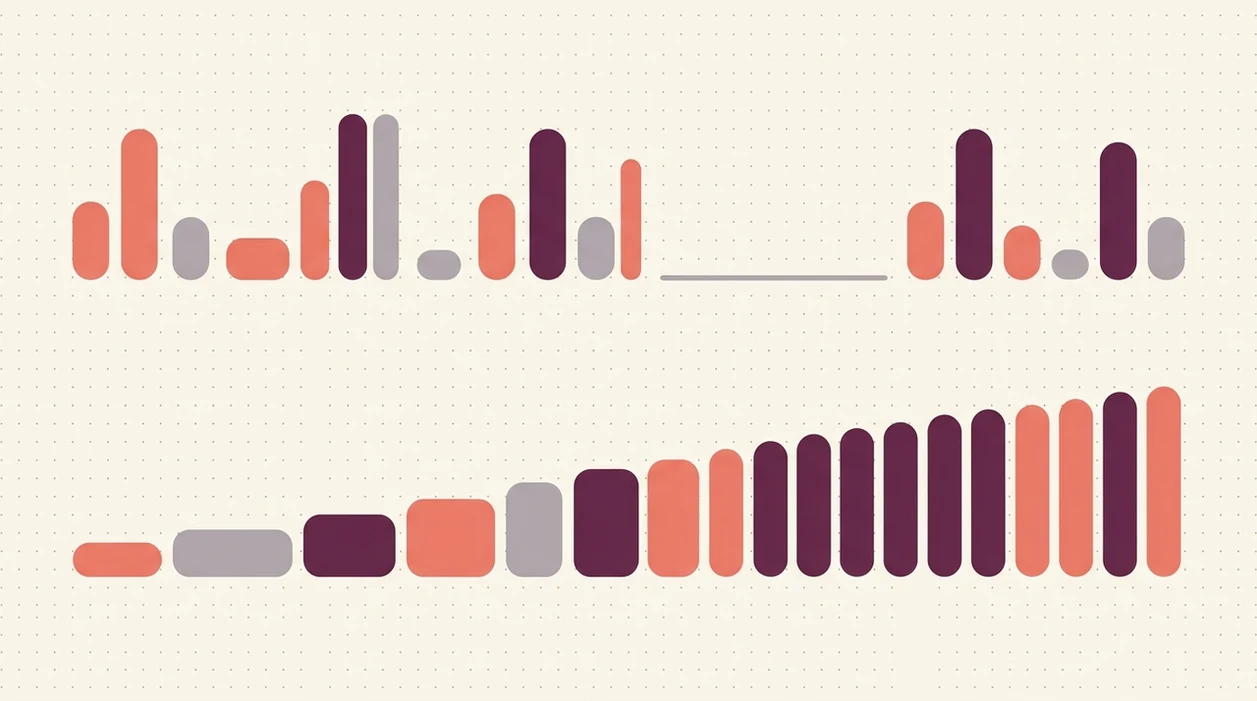
During the latent phase, contractions help the cervix soften, thin, and begin slow early dilation. The technical terms are cervical effacement and early dilation; in plain language, the cervix is getting ready before active labor becomes obvious.
Stop-start contractions are not wasted contractions. They may remodel the cervix over hours or days, even when the timer looks messy. In one study of first-time mothers, the median latent phase was about 9 hours, and some normal latent phases lasted more than 18 hours source. CDC preterm-birth data show that about 1 in 10 U.S. babies are born before 37 weeks, meaning roughly 90% reach term or later source, when Braxton Hicks, prodromal labor, and stop-start patterns are especially common.
Hormones also rise and fall. Oxytocin can surge at night, which helps explain why contractions may start after dark and fade by morning. Annoying, but common.
The most useful way to interpret stop-start contractions is to compare multi-hour trend data with symptoms, not to judge labor from one short cluster.
Before You Start Timing Stop-Start Contractions
Before you open a timer, make sure timing is actually the right next step for your pregnancy. Your provider’s instructions and any warning signs matter more than a clean contraction log.
- Check the plan your provider gave you, including any different rules for preterm symptoms, high-risk conditions, prior fast labor, distance from the hospital, or when to use 4-1-1 or 5-1-1.
- Scan for symptoms that should prompt a call instead of more timing, such as heavy bleeding, fluid leakage, decreased fetal movement, or severe pain that does not ease between contractions.
- Save the provider, midwife, hospital, or birth center number somewhere you can reach quickly, not buried in a contacts search while breathing through a contraction.
- Charge the phone or hand timing to a partner so the log does not fall apart when the battery drops or your hands are busy.
- Choose the notes you will track before things intensify: contraction intensity, baby’s movement, fluid, bleeding, and the length of any quiet gaps.
A simple setup helps you stay honest about the pattern without turning every pause into a crisis.
How to Track Contractions That Stop and Start With a Timer App
Use a timer app to record what happened, not to diagnose labor. Good contraction timer apps deliver clear Start, Stop, History, Notes, Share, and Export tools, not a verdict that replaces your care team.
- Start timing each contraction from the first tightening, not the pain peak.
- Stop timing when the uterus releases, even if you still feel sore.
- Log 60 to 120 minutes of consecutive data before judging the trend.
- Note intensity and whether you can talk or walk during each contraction.
- Compare intervals across the whole log, not just one close cluster.
- Review the pattern after rest, hydration, or position change, then share the summary with your provider.
A partner may need to tap Stop with a thumb while holding a water bottle at the edge of the bed. Keep the screen simple. Tools like ContractionTimer.io can help when the timer reset after a false alarm would otherwise erase useful context. A U.S. Listening to Mothers III survey reported that 31% of women who went to the hospital in possible labor were sent home without giving birth source, so a short burst alone can mislead.
5 Must-Know Facts About Contractions That Stopped and Restarted
- Stop-start contractions are common in the latent phase and prodromal labor, and they can continue for hours or days before active labor.
- True labor contractions usually get longer, stronger, and closer together despite rest, hydration, or position changes.
- Prodromal contractions can be painful and regular, but they often do not keep progressing into 4-1-1 or 5-1-1 timing.
- Logging one to two hours of timer data reveals trend direction better than a 15-minute burst.
- Heavy bleeding, water breaking, decreased fetal movement, or severe constant pain overrides any timer pattern.
For birth partners, a written timing record is often easier than memory because labor makes exact minutes feel slippery. Partner whispering the last duration helps in the moment, but the log is what you can read back clearly during a call.
The safest use of contraction timing is pattern tracking plus provider guidance, not self-diagnosis.
Common Myths About Stop-Start Contractions
Myth: Contractions every few minutes always mean active labor, even if they stop again.
Reality: A close cluster can happen in prodromal labor. The pattern matters only if it holds.
Myth: Painful 60-second contractions for an hour always mean you should rush in.
Reality: Some providers use 4-1-1 or 5-1-1 guidance, but they may adjust it for your pregnancy, distance, or history.
Myth: Contractions that stop are useless.
Reality: Irregular contractions may still soften and thin the cervix before active labor.
Myth: A contraction timer app can diagnose prodromal labor or cervical change.
Reality: It can record duration, frequency, and notes. It cannot check the cervix or monitor the baby.
If you want help separating practice contractions from a progressive pattern, an app to help tell Braxton Hicks from real labor should still point you back to your provider’s instructions.
Common Mistakes When Timing Contractions That Keep Stopping
The biggest mistake is timing only 15 or 20 minutes and assuming the pattern is settled. Stop-start labor can look organized, fall apart, then return later.
Common timing errors include:
- Starting the timer at the pain peak instead of the first tightening.
- Forgetting to tap Stop after the contraction releases.
- Ignoring what happened after water, rest, or a position change.
- Fixating on 4-1-1 without noting intensity or trend direction.
- Stopping the timer when contractions fade instead of logging the gap.
- Using the log to self-diagnose instead of sharing it with your provider.
The gap is data.
If Face ID fails in a dark room or the phone is at 12% battery, hand the task to someone else before the log gets messy. For people comparing apps, what app identifies contraction patterns is really a question about clear history, notes, and export options.
When to Call Your Provider About Contractions That Stopped
Call your provider right away if you have warning signs, even if contractions slowed or stopped. Timer data should never override symptoms that need clinical guidance.
Call or go in based on your provider’s instructions if you have:
- Heavy bleeding or bright red blood.
- Water breaking, with or without contractions.
- Decreased or absent fetal movement.
- Severe constant abdominal pain that does not ease between contractions.
- Contractions that meet your specific go-to-hospital rule, such as 4-1-1 or 5-1-1, and stay that way for the advised time.
- Any symptom your care team already told you not to wait on.
Some people keep the midwife number taped to the fridge because searching contacts mid-contraction is too much. That is reasonable. Your provider’s individual instructions beat any app, article, or general timing rule.
Limitations
Contraction timing is useful, but it has hard limits. It records a pattern; it does not examine you.
- No app or timing rule replaces a clinical exam, cervical check, or fetal monitoring.
- Prodromal labor and very early true labor can look identical at home.
- Rest, hydration, and position changes may help contractions organize, but they are not guaranteed.
- Some healthy pregnancies include long stop-start patterns with no quick fix.
- Timer data can increase anxiety if you expect textbook labor.
- Hacks to speed up or restart contractions are often overhyped and lack strong evidence.
- A log cannot tell whether the baby is tolerating labor well.
- Your provider may give different instructions based on prior births, Group B strep status, blood pressure, distance from the hospital, or other factors.
Apps such as the ContractionTimer.io contraction timer app are best treated as handoff tools. Save, check, send, reset. Then let your care team interpret the bigger picture.
Frequently Asked Questions
Can early labor start and stop?
Yes. Early labor can start and stop, especially during the latent phase or prodromal labor, and the pattern may last hours or days.
Why did my contractions stop overnight?
Contractions may stop overnight because oxytocin levels, rest, hydration, and body position can all change the pattern. Night contractions that fade by morning are common in stop-start labor.
How long can prodromal labor last?
Prodromal labor can last days or even weeks for some people. That is different from the latent phase, which has a median around 9 hours in one study but can last longer.
Do stop-start contractions dilate the cervix?
They may help soften and thin the cervix, even when dilation is slow or not measurable at home. Only a clinical exam can confirm cervical change.
Should I go to the hospital if contractions stop?
Contractions stopping alone is not usually an emergency. Seek care right away for heavy bleeding, water breaking, decreased fetal movement, severe constant pain, or provider-specific instructions.
How do I restart contractions that stopped?
Movement, hydration, rest, and position changes may help irregular contractions reorganize. They are not guaranteed, and you should not use “restart” methods that your provider has not approved.
Are contractions every 10 minutes then stopping normal?
Yes, contractions every 10 minutes that later stop can be typical of latent labor or prodromal labor. Track whether they become longer, stronger, and closer together over time.
When do stop-start contractions become real labor?
Stop-start contractions are more likely to be active labor when they sustain a progressive pattern of getting longer, stronger, and closer together. Provider-specific instructions override general timing rules, including anything shown in ContractionTimer.io.
Which app fits which need
| Need | Best option |
|---|---|
| fast, accurate timing for contractions that stop and start | Contraction Timer |
| pregnancy education articles and week-by-week content | The Bump |
| guided birth preparation, mindfulness, and relaxation practice | GentleBirth |
| contraction tracking with a wearable sensor option where available | Bloomlife |
Quick facts
- Type
- Contraction timer & labor tracker app
- Platforms
- iPhone, iPad, Apple Watch, Android
- Focus
- Stop-start contractions, irregular labor patterns, latent phase timing, contraction duration, contraction frequency, 5-1-1 alerts
- Includes
- One-tap timing, duration and frequency calculations, interval history, labor phase detection, 5-1-1 alerts, partner mode, doctor reports, offline tracking, no ads
- Best for
- Tracking contractions that stop, restart, and may gradually become more regular
- Free
- Yes
- Medical replacement
- No
People also use Contraction Timer for
Track Contractions That Stop and Start
Use Contraction Timer to record each contraction, pause, and restart so you can see whether the pattern is fading or becoming more consistent. Free on iPhone, Apple Watch, and Android.
Download the Free App