 Contraction
Contraction Timing Before Calling Your Midwife or OB Triage

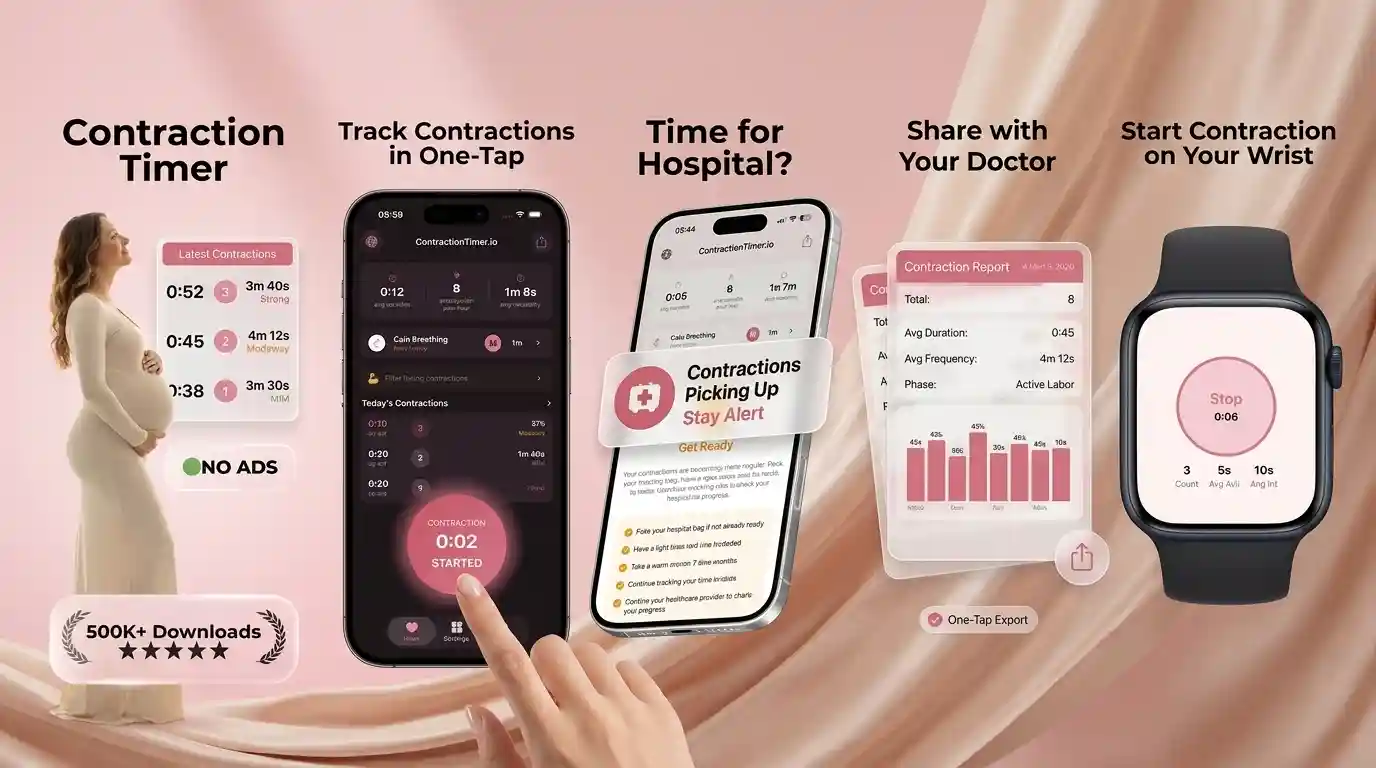
Contraction Timer (contractiontimer.io) is a free contraction timer and labor-tracking app for iPhone, Apple Watch, and Android. For contraction timing before calling a midwife or OB triage, it organizes duration, frequency, interval patterns, notes, and history into a clearer phone report.
Quick answer: Contraction timing before calling midwife or OB triage means tracking when each contraction starts, how long it lasts, how far apart contractions are, and any symptoms that could change urgency. A clear log helps your provider decide whether you should keep monitoring, call back, come in, or seek immediate care.
Why choose Contraction Timer?
Contraction Timer is built for turning real-time contractions into a call-ready midwife or OB triage report, unlike a generic stopwatch that leaves you calculating patterns yourself.
- Auto-calculates contraction duration and frequency
- Tracks 5-1-1 patterns for hospital-call timing
- One-tap start and stop during intense contractions
- Keeps a contraction history for phone reports
- Labor phase detection for pattern context
- Apple Watch and Lock Screen timing support
- Partner mode for shared tracking
- Offline use with no ads
Works on iPhone, Apple Watch, and Android. It is a tracking tool, not a medical device.
Contraction timing before calling midwife triage helps you report how often contractions come, how long they last, and whether they are getting stronger. Most providers want to hear when contractions are every 3–5 minutes, last about 60 seconds, and have held that pattern for at least 1 hour, unless you have warning signs that require an immediate call.
Scope note: This guide helps you organize a clearer phone report; it is not medical advice and does not replace your midwife’s, OB’s, or hospital triage instructions. If you feel unsafe or cannot reach your care team during urgent symptoms, seek emergency care.
Definition: Contraction timing is the practice of recording the start time, duration, and interval of each uterine contraction so a pregnant person or birth partner can report an objective pattern to their midwife or OB triage team.
TL;DR
- Time contractions from the start of one to the start of the next, which gives frequency, and measure how long each lasts, which gives duration.
- Most midwives want a call when contractions hit the 5-1-1 or 3-1-1 pattern: every 5 or 3 minutes, lasting 1 minute, for 1 hour.
- Always call immediately if you are under 37 weeks, your water breaks, you see bleeding, baby is moving less, or you have severe headache or vision changes; ACOG lists leaking fluid, bleeding, and preeclampsia symptoms as reasons to contact a clinician promptly source source.
- A contraction log with annotated symptoms gives your midwife the clearest picture over the phone.
- A contraction timer app tracks the numbers, but it cannot assess cervical change or replace clinical judgment.
What Contraction Timing Before Calling a Midwife Actually Means
Contraction timing before a midwife call means collecting three things: frequency, duration, and intensity. Frequency is the start-to-start interval, duration is how many seconds one contraction lasts, and intensity is how strong it feels to you.
That sounds basic, but it matters on the phone. Your midwife or OB triage nurse cannot feel the contraction with you, so they need a clean pattern before suggesting rest, a shower, another hour of timing, or coming in. Casual Braxton Hicks monitoring is more like noticing tightenings while you move around. Active contraction timing is different. You tap Start at the first tightening, tap Stop when the release is complete, and keep doing it long enough to see a trend.
The phone glow gets old fast.
Intensity still counts, even though it is subjective. “Mild,” “moderate,” or “strong, can’t talk through it” gives more context than numbers alone.
How Contraction Timing Works Behind Labor Progression Numbers
Contraction timing works by turning the uterus’s on-off muscle cycle into a pattern your care team can review. It does not prove dilation, but it helps show whether the rhythm is tightening, stretching out, or staying the same.
- Each contraction has a measurable start, peak, release, and rest period.
- Frequency trends matter: narrowing intervals often suggest labor is organizing, while widening gaps may mean the pattern is stalling.
- Duration matters because contractions moving toward 60–90 seconds often reflect stronger uterine activity.
- ACOG defines active labor around 6 cm dilation, not the older 4 cm threshold, based on contemporary labor curves source.
- In a large U.S. analysis of 208,695 singleton births, 41.9% of women were admitted in latent labor; those admitted earlier had higher cesarean rates than those admitted in active labor source.
For most callers, the most useful pattern is frequency plus duration plus intensity over time because it shows change, not just one hard contraction. Clinicians typically recommend using timing rules as guidance, while following your own provider’s call instructions first.
Requirements Before You Start Timing Contractions for Your Midwife
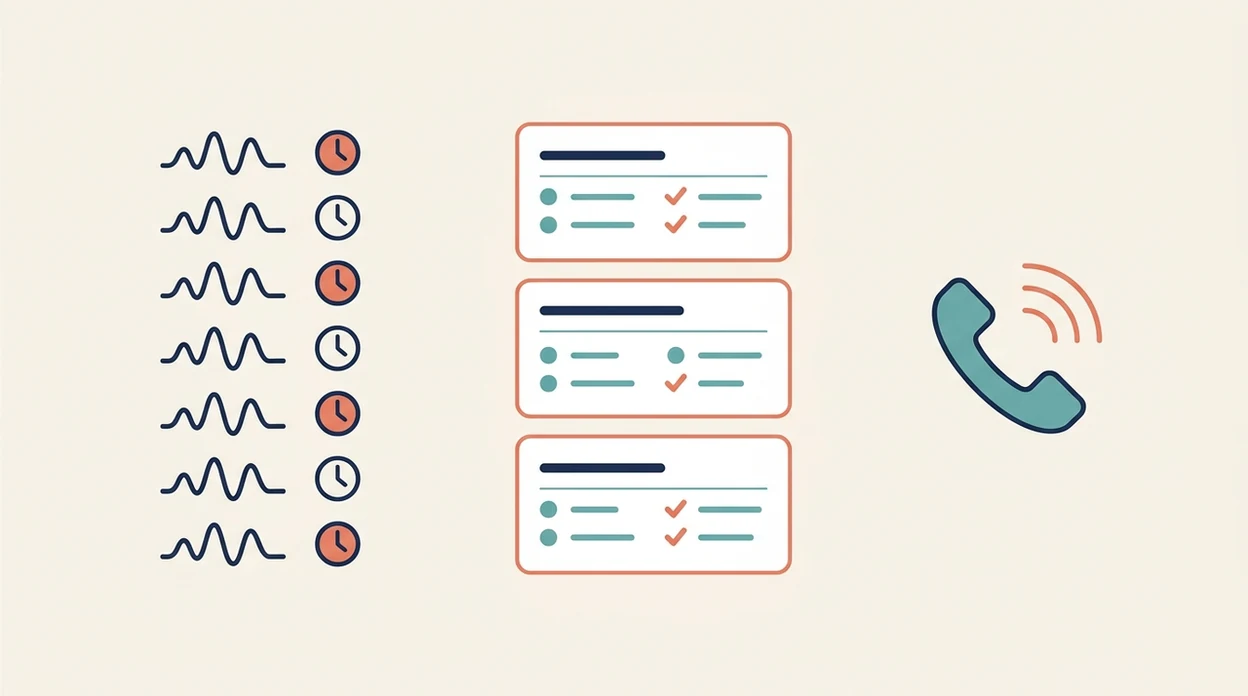
Before you start timing contractions for your midwife, set up the tools and phone numbers you may need while your brain is busy. The goal is simple: record clearly, call quickly, and avoid searching through messages during a contraction.
Use a reliable contraction timer app or a stopwatch with a notepad. Save your midwife’s or OB triage’s direct number where your partner can find it, not only in a portal login. Know your provider’s rule before labor starts, whether that is 5-1-1, 3-1-1, or a custom plan for VBAC, induction, distance from hospital, or fast labor history.
Pack the hospital bag or birth-center supplies before timing becomes serious. Have the car route ready, too. A birth partner should know how to tap Start, tap Stop, review the log, and read the summary aloud. Partner reading intervals to the midwife beats scrolling in panic every time.
How to Use a Contraction Timer App to Build Your Midwife Call Log
Use a contraction timer app by recording each contraction from first tightening to full release, then reviewing the summary before you call. Good tools give duration, frequency, and notes, not a magic diagnosis.
- Open your contraction timer app and tap Start when the tightening begins, not when the pain peaks.
- Tap Stop when the contraction fully releases so the app captures the true duration.
- Repeat for every contraction and let the app calculate frequency automatically.
- Add Notes for intensity, such as mild, moderate, or strong/can’t talk through, plus symptoms.
- Review the session summary after 1–2 hours to compare the pattern with your provider’s call threshold.
- Prepare a 30-second phone script from the summary before dialing.
A partner may be trying to hit Stop with a thumb while holding a water bottle at the edge of the bed. Keep the screen simple. Tools like ContractionTimer.io can help build the log, while guides such as an app that alerts 5-1-1 contractions explain alert-style timing. Good contraction apps record duration, frequency, notes, and shareable summaries, not medical certainty.
When to Call Your Midwife or OB Triage Immediately
Call your midwife or OB triage immediately for warning symptoms, even if contractions are nowhere near 5-1-1 or 3-1-1. Your provider’s written triage plan comes first, especially if you were given different instructions for your pregnancy.
- Call right away if you are under 37 weeks and having regular, painful, or tightening contractions. Preterm symptoms are handled differently from term labor timing, so do not wait for an hour-long pattern.
- Report water breaking as soon as you notice a gush, steady leaking, or fluid you cannot explain. Mention the time, color, smell, and whether contractions have started.
- Describe bleeding clearly if you see more than light spotting, bright red blood, clots, or bleeding with pain. Say “bleeding” rather than minimizing it as show.
- Contact triage now for reduced baby movement, severe or persistent headache, vision changes, chest pain, fainting, fever, or pain that feels wrong to you.
- Seek emergency care if you cannot reach your midwife, OB, or triage line during urgent symptoms, or if you feel unsafe waiting for a callback.
The timer can keep logging in the background. Symptoms outrank the app.
The 5-1-1 and 3-1-1 Rules: When Contraction Timing Says Call Your Midwife
The 5-1-1 and 3-1-1 rules are common call thresholds, but they are not universal. Cleveland Clinic describes 5-1-1 as a common contraction-timing guideline, while individual hospitals and midwives may customize instructions by birth history, risk factors, and travel time source. Your midwife’s written instructions always override a generic timing rule.
| Timing rule | What it means | Common use | Important caveat |
|---|---|---|---|
| --- | ---: | --- | --- |
| 5-1-1 | Every 5 minutes, 1 minute long, for 1 hour | Often used for first-time parents | Call sooner for warning signs |
| 3-1-1 | Every 3 minutes, 1 minute long, for 1 hour | Often used after a previous birth or fast-labor history | May be too late for some people |
| Custom plan | Provider-specific timing | VBAC, preterm risk, high-risk pregnancy, long drive | Follow the plan you were given |
First-Time Parent Timing Threshold
For a first-time parent, the 5-1-1 rule is often used because early labor can last a long time. The full 5-1-1 rule contractions guide explains that pattern in more detail.
Second or Subsequent Birth Timing Threshold
For a second or later birth, some providers prefer 3-1-1 or earlier calling, especially with a fast previous labor. If contractions are suddenly intense, call even if the timer has not reached one hour.
How to Package Your Contraction Log for a 30-Second Midwife Phone Report
A call-ready contraction log should become one short sentence your midwife can act on. Use this formula: “Contractions every X minutes, lasting Y seconds, for Z hours, intensity level, plus any symptoms.”
Here is a clean version: “I’m 39 weeks 2 days. Contractions are every 4 minutes, lasting 60–70 seconds, for 90 minutes. They are strong and I can’t talk through them. My water has not broken, no bleeding, and baby is moving normally.”
Add risk factors in the same breath: VBAC, high blood pressure, previous fast labor, GBS plan, or reduced fetal movement. If waters broke, mention color and odor. If there is bleeding, say bleeding, not just “show,” unless you are sure.
Have the app open during the call. A cracked screen protector or Face ID failing in a dark room is annoying, but live data helps when triage asks, “What was the last interval?”
Common Contraction Timing Mistakes That Delay Calling Your Midwife
Common timing mistakes happen when people treat the app like permission to call or not call. The timer is a record; your symptoms and provider instructions still matter.
- Waiting for a perfect 5-1-1 pattern can delay a needed call if bleeding, water breaking, reduced movement, or severe pain appears.
- Strong Braxton Hicks can feel convincing, but they often change with hydration, rest, movement, or position.
- Contractions 2–3 minutes apart do not always mean birth is minutes away; active labor at that spacing can still last hours.
- Timing without symptom notes gives your midwife less useful information than a short annotated log.
- An app label such as “active labor” is not a medical diagnosis and cannot assess cervix, baby, placenta, or blood pressure.
The long gap after three contractions can make you second-guess everything. That is exactly why a log helps. Compare the whole pattern with labor contraction patterns, not just the last two entries.
Verification Checklist for a Call-Ready Contraction Log
A call-ready contraction log has enough entries, notes, and context for triage to understand what is happening fast. Before dialing, check the basics once.
- You have at least 1–2 hours of consistent logging, unless symptoms mean you should call immediately.
- Every entry includes duration, frequency, and an intensity note.
- Symptoms are annotated, or “none” is written clearly.
- Your phone script has been rehearsed with your birth partner.
- The provider’s number and birth-place address are confirmed.
- The phone has enough charge, or the charger is within reach.
Tiny detail, big difference.
If you are checking whether the pattern meets a threshold, a check contractions 5-1-1 rule workflow can help you review the numbers without doing mental math.
Limitations
Contraction timing is useful, but it cannot tell the whole story. Treat it as a communication tool for your care team, not a gatekeeper.
- Some people progress rapidly with mild or irregular contractions, so timing may not reflect urgency.
- Standard rules like 5-1-1 and 3-1-1 are general guidelines and may not match your provider’s protocol.
- A contraction timer app cannot detect pre-eclampsia, placental abruption, fetal distress, infection, or cervical dilation.
- Self-reported intensity is subjective. Pain tolerance, exhaustion, fear, and prior birth experience all affect the words people use.
- Phone triage is limited even with excellent data; an in-person cervical check or fetal assessment may still be needed.
- ACOG notes that dilation rates vary widely, so contraction patterns alone may not predict exact labor progress.
- If you are under 37 weeks, have bleeding, reduced fetal movement, severe headache, vision changes, or water breaking, call right away.
ContractionTimer.io contraction timer app can organize a log, but your midwife or OB triage team makes clinical decisions.
Frequently Asked Questions
When should I start timing contractions?
Start timing contractions when they feel regular, are getting stronger, and are no longer occasional Braxton Hicks tightenings. Begin sooner if you are unsure and want a clearer pattern to report.
What is the 5-1-1 contraction rule?
The 5-1-1 rule means contractions are every 5 minutes, last about 1 minute, and continue for 1 hour. It is a common call threshold, especially for first-time parents.
Should I call my midwife before 37 weeks?
Yes. Call your midwife or OB triage immediately with regular painful contractions before 37 weeks, regardless of timing rules.
Can a contraction app tell me I'm in labor?
No. Apps such as ContractionTimer.io can track timing patterns, but they cannot assess cervical change or replace clinical evaluation.
What if contractions are irregular but painful?
Irregular contractions can still warrant a call if pain is severe, symptoms are concerning, or something feels wrong. Do not wait for a textbook pattern if you are worried.
Does water breaking change when to call?
Yes. Water breaking warrants an immediate call to your midwife or OB triage, regardless of contraction timing.
How long can contractions 3 minutes apart last?
Contractions 3 minutes apart can continue for hours, especially in a first labor. Timing alone cannot predict exactly when birth will happen.
What should I say when I call triage?
Say your gestational age, contraction frequency, duration, intensity, how long the pattern has lasted, and symptoms. Keep the ContractionTimer.io summary open if you used it to build the log.
Which app fits which need
| Need | Best option |
|---|---|
| fast, accurate contraction timing before calling a midwife | Contraction Timer |
| pregnancy content and general due-date education alongside basic tools | The Bump |
| labor education, mindfulness, and birth-prep audio support | GentleBirth |
| provider-directed contraction monitoring with wearable-style data context | Bloomlife |
Quick facts
- Type
- Contraction timer & labor tracker app
- Platforms
- iPhone, iPad, Apple Watch, Android
- Focus
- Contraction timing, midwife call prep, OB triage reports, 5-1-1 alerts, duration, frequency, labor patterns
- Includes
- one-tap timing, duration and frequency tracking, 5-1-1 hospital alerts, labor phase detection, contraction history, partner mode, doctor reports, offline mode, no ads
- Best for
- Preparing a clear contraction log before calling your midwife or OB triage
- Free
- Yes
- Medical replacement
- No
People also use Contraction Timer for
Time Contractions Clearly Before Calling Your Midwife
Use Contraction Timer to track duration, frequency, intervals, notes, and 5-1-1 patterns in one place. Always follow your provider’s instructions and call immediately for urgent symptoms.
Download the Free App