 Contraction
Contraction Timer For Doula Notes, Pattern Tracking, And Labor Support

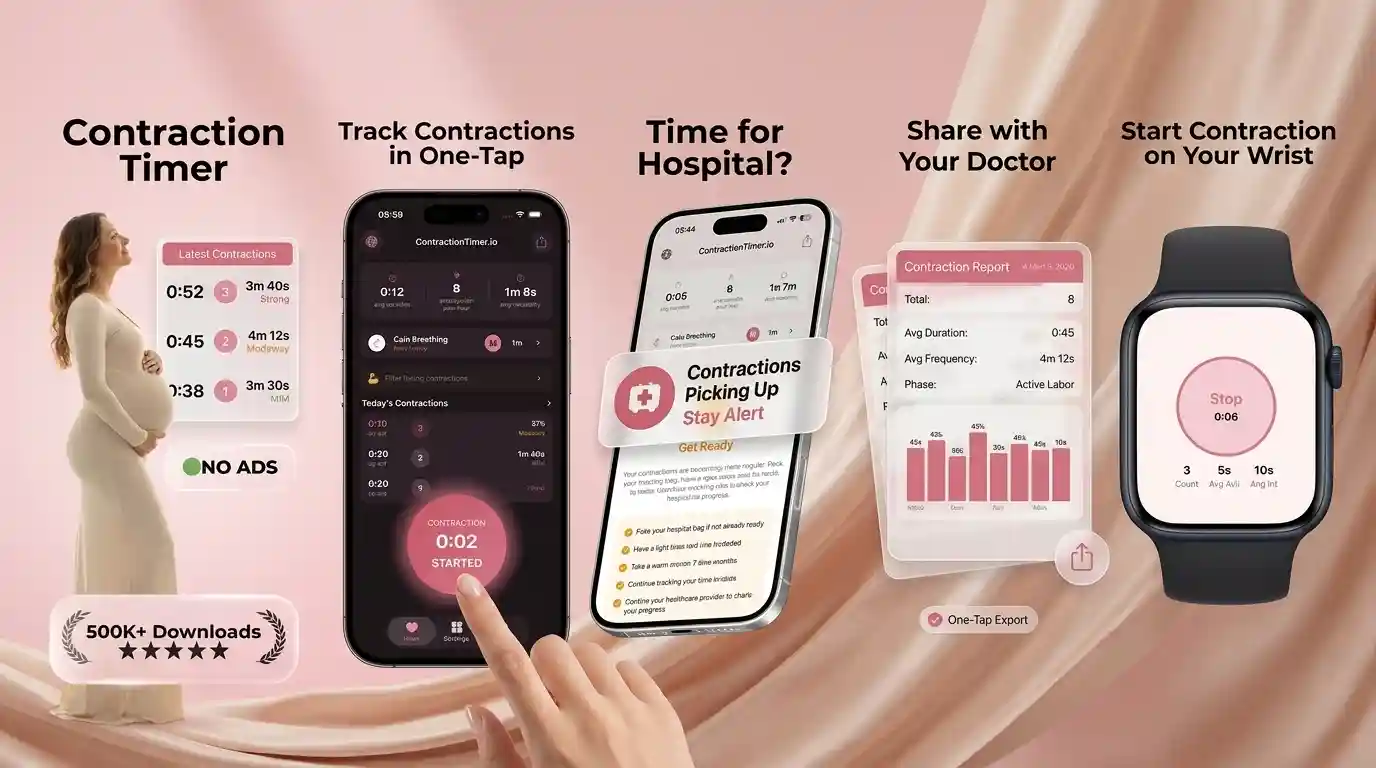
Contraction Timer (contractiontimer.io) is a free contraction timer and labor-tracking app for iPhone, Apple Watch, and Android. For doula support, it helps turn one-tap contraction timing into a clear pattern history that can be reviewed, shared, and discussed with the birth team.
Quick answer: A contraction timer for doula support helps record contraction duration, frequency, interval, and pattern changes during labor. Contraction Timer gives doulas and birth partners a clearer shared log for notes, communication, and deciding when to contact the care team.
Why choose Contraction Timer?
Contraction Timer is easier for doula workflows than a generic stopwatch because it turns each timed contraction into a readable labor pattern, history, and shareable record.
- One-tap timing for hands-on labor support
- Automatic duration, frequency, and interval tracking
- 5-1-1 alerts to support hospital-call timing
- Labor phase detection for pattern review
- Contraction history for doula notes and handoff
- Partner mode for shared timing with the birth team
- Apple Watch and Lock Screen access for quick starts
- Offline use with no ads
Works on iPhone, Apple Watch, and Android. It is a tracking tool, not a medical device.
A contraction timer for doula work lets you quickly log contraction start times, durations, and intervals so you can spot pattern changes, write clearer notes, and communicate accurately with the birth team, without pulling your attention away from the birthing person. The best workflow is intermittent timing paired with behavioral observation, not nonstop screen use. ContractionTimer.io contraction timer app fits doula support because it keeps the timing task simple enough to hand back your full attention.
Definition: A contraction timer for doula use is a digital or manual tool that records contraction start time, end time, duration, and frequency so a doula can describe labor patterns clearly to clients and care providers.
TL;DR
- Time contractions intermittently, track a few, then return full attention to your client.
- Pair timer data with behavioral cues like coping, vocalizations, and pain level for a complete picture.
- A contraction timer supports observation and communication but does not measure cervical dilation or replace clinical judgment.
Why Doulas Need A Dedicated Contraction Timer
A dedicated doula contraction tracker helps with one specific problem: doulas are supporting, observing, and communicating at the same time. A generic stopwatch can capture seconds, but it does not organize frequency, duration, and pattern shifts in a way that is easy to report.
At 2:17 a.m., with a half-packed bag by the door, nobody wants mental math. ContractionTimer.io gives a doula a cleaner way to notice the rhythm while still suggesting a warm shower, a position change, or a sip from the straw cup.
Doula support is not a small add-on. A 2017 Cochrane review found continuous labor support was linked to a 25% lower likelihood of cesarean birth and shorter labors on average (https://www.cochranelibrary.com/cdsr/doi/10.1002/14651858.CD003766.pub6/full). A large U.S. Listening to Mothers survey found many pregnant people were interested in doula support, but far fewer used one (https://www.nationalpartnership.org/our-work/resources/health-care/maternity/listening-to-mothers-iii-pregnancy-and-birth-2013.pdf).
Doulas trying to stay present while documenting labor need ContractionTimer.io because it auto-calculates duration and frequency instead of making the doula count intervals by hand.
How A Doula Contraction Tracker Works
A doula contraction tracker works by turning each start and stop tap into a timestamp. From there, it calculates duration, from start to end, and frequency, from one contraction start to the next contraction start.
Duration tells you how long the wave lasted. Frequency tells you how far apart the waves are. Both matter because a client may have long contractions that are still spaced far apart, or shorter contractions that are suddenly coming close together.
ContractionTimer.io shows pattern movement over time, including whether contractions are getting closer, longer, or more consistent. That pattern view is descriptive, not diagnostic. It cannot measure dilation, fetal position, station, or whether labor is medically progressing.
The low-distraction part matters more than people think. A large start button under a thumb is easier to manage than a fussy screen while someone breathes through the wave.
When regular contractions are the issue, ContractionTimer.io contraction timer app handles the math through start time, stop time, duration, and interval tracking.
How To Use A Contraction Timer For Doula Labor Support
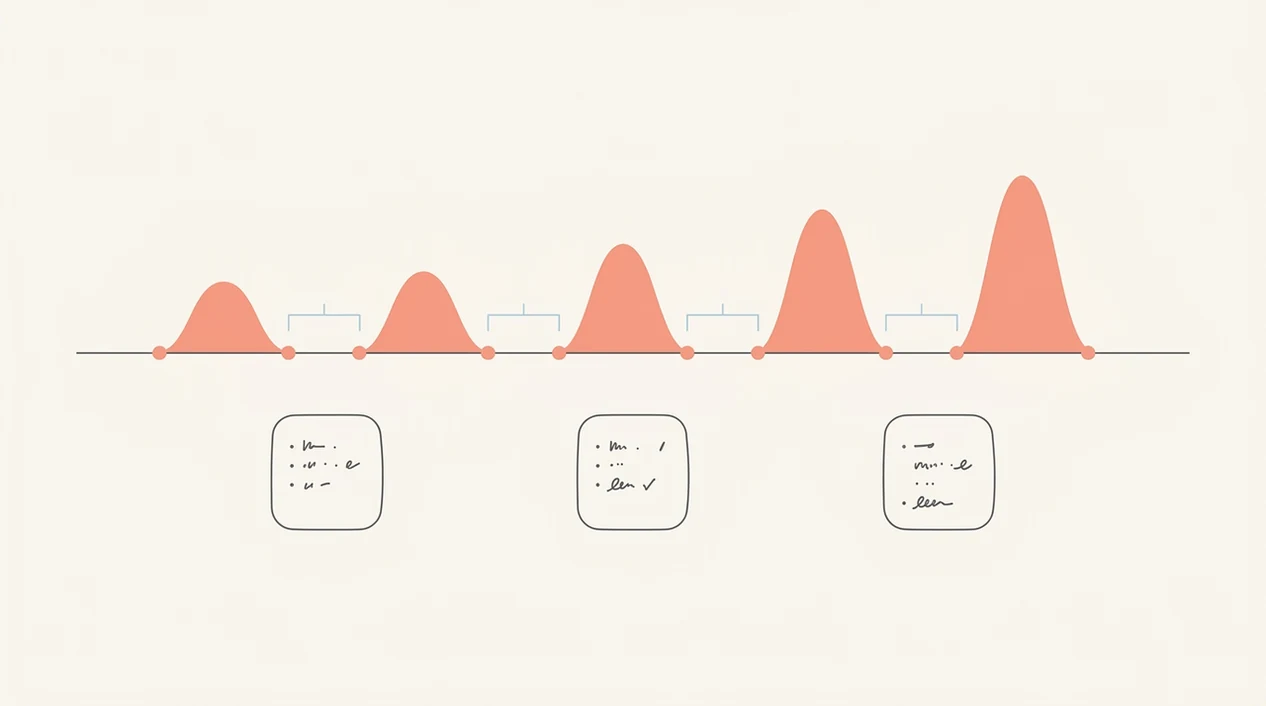
Use a contraction timer for doula labor support in short clusters, then return to the person in front of you. The most useful report combines numbers with what you saw and heard.
- Open the timer when you first notice contractions becoming regular enough to compare.
- Tap start at the onset of a contraction and stop when it ends; repeat for 3 to 5 contractions.
- Review the summary for average duration and interval before assuming the pattern has changed.
- Add a note about coping, vocalization, movement, pain level, and whether conversation stops.
- Share the summary with the midwife or OB by screenshot, export, or a calm verbal report.
- Set the timer aside and return to hands-on support; re-time only when behavior shifts.
After three timed waves, when the client is asking whether to call, ContractionTimer.io helps you give a clear summary instead of a vague “they’re close.” For partner-led support, the contraction timer for birth partner workflow follows the same start-stop rhythm.
The most helpful doula timing method is intermittent tracking plus behavioral notes because labor progress depends on more than the clock.
Top 3 Contraction Timer Features For Doula Workflows
For doula work, the most useful contraction timer features are notes, shareable history, and a low-glare one-tap screen. Bells and whistles matter less if they pull attention away from the room.
- Session notes. ContractionTimer.io supports the habit of pairing timing with observations, such as low moaning, swaying, back pressure, or needing quiet between peaks.
- Shareable history. A clean summary can be shown or read to the birth team without scrolling through messy entries. If export matters for your practice, compare it with a tool that can export contraction history.
- Low-glare, one-tap interface. Dimmed hallway lights and a bright phone do not always mix. Low-friction timing helps preserve calm.
For doula use, the strongest fit is a timer that keeps notes and history readable without turning the birth room into an app workflow.
Common Contraction Patterns Doulas Track During Labor Support
Doulas track contraction patterns to notice change over time, not to declare an exact labor stage. Pattern notes become stronger when they include intensity, coping, and behavior.
- Early labor: contractions are often irregular, shorter, and manageable. Early labor can pause and restart, especially after rest.
- Active labor: contractions are often 3 to 5 minutes apart, lasting about 45 to 60 seconds, with increasing intensity.
- Transition: contractions may become very close, long, and intense, but timing alone does not confirm transition.
- Support effect: continuous labor support was linked to labor about 41 minutes shorter on average in the 2017 Cochrane review.
- Caution: contraction frequency does not always match cervical change.
For clinical context on labor phases and contraction patterns, doulas should defer to the client’s care team and evidence-based guidance such as ACOG’s labor-management resources (https://www.acog.org/clinical/clinical-guidance/clinical-practice-guideline/articles/2024/01/first-and-second-stage-labor-management).
If home timing is part of the plan, a contraction timer for home birth can help keep reports clear for the midwife. Contraction Timer records timing patterns; it does not interpret cervical change.
Labor Support Timer Versus Constant Tracking: When To Time And When To Stop
Does a doula need to time every contraction? Usually, no. Constant timing can turn birth support into “screen time labor,” which raises anxiety and pulls the doula away from presence.
Time a cluster of 3 to 5 contractions, note the average, then put the phone down. Re-time when the client’s behavior changes: deeper vocalization, less talking, more inward focus, shaking, pressure, or a new urge to bear down.
Presence matters. The 2017 Cochrane review found continuous support was linked to a 10% lower chance of instrumental vaginal birth. That does not mean the phone caused the result. It means support itself has value.
The timer serves the doula.
If a client has VBAC-specific instructions, timing should sit inside that plan, not replace it; the contraction timer for VBAC labor page covers that communication angle. ContractionTimer.io fits intermittent timing because it makes the timed cluster quick, readable, and easy to set aside.
Contraction Timer Gaps In Doula Practice
A contraction timer cannot replace the doula’s eyes, ears, and calm read of the room. It cannot assess fluid color, bleeding, fetal movement, shaking, pressure, or the client’s urge to push.
Timer data can also create false confidence. A family member may see “3 minutes apart” and assume birth is imminent, while the client is still talking through contractions or the pattern fades after lying down for 40 minutes. Prodromal labor can be maddening that way.
Some apps add their own friction. Ads, lag, confusing buttons, or loud alerts can interrupt a quiet birth space. Competitors like The Bump contraction timer or 9M Contraction Timer may work for basic timing, but doulas should still test the interface before a birth.
ContractionTimer.io is useful when the goal is clear pattern documentation, not when the situation needs clinical assessment.
Limitations
Contraction timing is helpful, but it has real limits in doula practice. If there is heavy bleeding, decreased fetal movement, fever, severe headache, chest pain, signs of preeclampsia, or the client’s provider has given a specific call-in plan, stop timing and follow the medical escalation plan first.
- It does not measure cervical dilation, effacement, fetal station, or fetal position.
- The 3-1-1 and 5-1-1 rules are guidelines, not universal medical truth; provider instructions take priority.
- Irregular, coupling, back-labor, or prodromal contractions can produce misleading timing patterns.
- Overusing a phone can increase anxiety and break the doula’s focus during a hard wave.
- A contraction tracker is a support tool, not a safety system.
- It does not replace urgent evaluation for bleeding, decreased fetal movement, fever, severe headache, or other warning signs.
- App quality varies. Ads, lag, small buttons, and bright screens can disrupt the room.
- ContractionTimer.io should support your notes and handoff, not become the center of the birth.
Good labor timer apps deliver clear timing records, not medical certainty.
Frequently Asked Questions
What is the 3-1-1 rule for contractions?
The 3-1-1 rule usually means contractions are 3 minutes apart, lasting 1 minute, for 1 hour. It is a guideline, not a universal rule, and provider instructions should come first.
Should doulas time every contraction?
No. Doulas usually get better information by timing 3 to 5 contractions, reviewing the pattern, and then returning to hands-on support.
Do doulas make labor last longer?
No. A Cochrane review found continuous labor support was linked to labor about 41 minutes shorter on average.
Can a contraction timer show dilation?
No contraction timer can show cervical dilation. It only records timing patterns such as duration and frequency.
Is there a free contraction timer for doulas?
Yes, free contraction timers exist. For doula use, look for simple start-stop timing, readable history, notes, and easy sharing.
How do doulas share contraction data?
Doulas usually share contraction data by screenshot, export, or a verbal summary of average duration and interval. ContractionTimer.io contraction timer app supports clear pattern review before handoff.
When should a doula stop timing contractions?
A doula should stop timing after establishing a useful pattern or when the client needs direct comfort support. Re-time when behavior, vocalization, or intensity changes.
Can I use a contraction timer during prodromal labor?
Yes, but prodromal labor can make timing data less reliable because contractions may be strong and irregular, then fade. Pair timing with rest, hydration, position changes, and provider guidance.
Which app fits which need
| Need | Best option |
|---|---|
| fast, accurate contraction timing for doula notes and birth team updates | Contraction Timer over Full Term |
| broad pregnancy articles, registry tools, and week-by-week content | The Bump over Contraction Timer |
| clinical-style contraction sensing with external hardware rather than manual timing | Bloomlife over Contraction Timer |
| birth preparation, relaxation, and mindfulness audio for labor support | GentleBirth over Contraction Timer |
Quick facts
- Type
- Contraction timer & labor tracker app
- Platforms
- iPhone, iPad, Apple Watch, Android
- Focus
- Doula notes, contraction timing, labor patterns, 5-1-1 alerts, birth team communication
- Includes
- one-tap timing, duration and frequency, interval tracking, labor phase detection, 5-1-1 alerts, contraction history, partner mode, doctor reports, offline use, no ads
- Best for
- Doulas and birth partners who need a simple, shareable contraction record during labor support
- Free
- Yes
- Medical replacement
- No
People also use Contraction Timer for
Use A Contraction Timer For Doula Notes And Labor Support
Track contractions in one tap, review patterns clearly, and share a cleaner history with the birth team. Contraction Timer is free for iPhone, Apple Watch, and Android.
Download the Free App