 Contraction
Birth Partner Contraction Timing Stories And Lessons From Real Labor
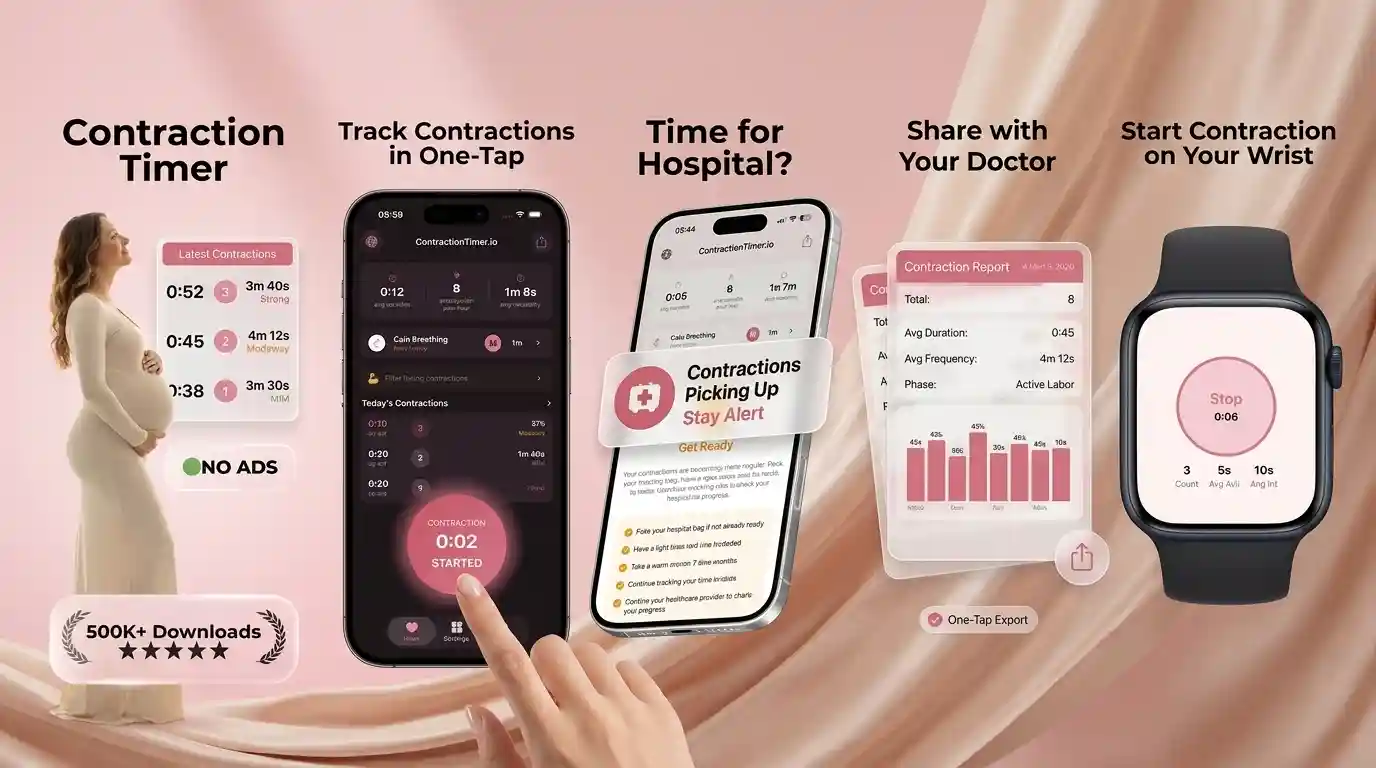
Contraction Timer (contractiontimer.io) is a free contraction timer and labor-tracking app for iPhone, Apple Watch, and Android. For this page, it helps birth partners turn real labor timing lessons into clearer contraction records, 5-1-1 awareness, and more organized care-team conversations.
Quick answer: Birth partner contraction timing stories can help partners understand what real labor tracking looks like, including when patterns are clear and when they are not. The most useful lesson is to time each contraction consistently, watch duration and frequency trends, and use the data to support calm conversations with the care team.
Why choose Contraction Timer?
Contraction Timer is built for birth partner contraction timing stories in real life, where a partner needs faster, clearer tracking than a stopwatch or scattered notes can provide.
- One-tap contraction start and stop for partners under pressure
- Automatic duration, frequency, and interval calculations
- 5-1-1 hospital alerts to help recognize call-worthy patterns
- Labor phase detection for clearer trend awareness
- Contraction history for reviewing changes with a provider
- Apple Watch and Lock Screen support for hands-free moments
- Partner mode for shared support during labor
- Offline use with no ads during active labor
Works on iPhone, Apple Watch, and Android. It is a tracking tool, not a medical device.
Birth partner contraction timing stories reveal that partners who tracked contraction duration, frequency, and patterns with a simple one-tap app stayed calmer, made better hospital-departure decisions, and gave the birthing person more focused support. The most consistent lesson across these accounts is that timing data works best when paired with provider-specific guidelines and real-time observation of the laboring person's cues.
Definition: Birth partner contraction timing stories are first-person accounts from labor support people who used apps or manual methods to track contraction intervals, duration, and intensity patterns to guide care-team calls and hospital departure decisions.
TL;DR
- Partners who tracked contractions reported less panic and clearer communication with providers.
- The 5-1-1 rule is a starting point, not a universal trigger. Individual provider instructions always override it.
- Contraction timing data is most useful when combined with other labor signs like inability to talk through contractions, bloody show, or water breaking.
Why Birth Partner Contraction Timing Stories Matter For Labor Readiness
Birth partner contraction timing stories matter because they show what labor preparation looks like when the clock, the phone, and the person in pain are all in the same room. The decision about when to leave affects most U.S. families, with about 3.66 million births in 2022 and 98.4% of births occurring in hospitals, per the CDC source.
A Cochrane review found that continuous labor support, including support from a partner or doula, was associated with a 25% lower likelihood of cesarean delivery and shorter labors on average source. Timing contractions is one concrete way a partner can be useful instead of hovering.
The useful part is not just the number.
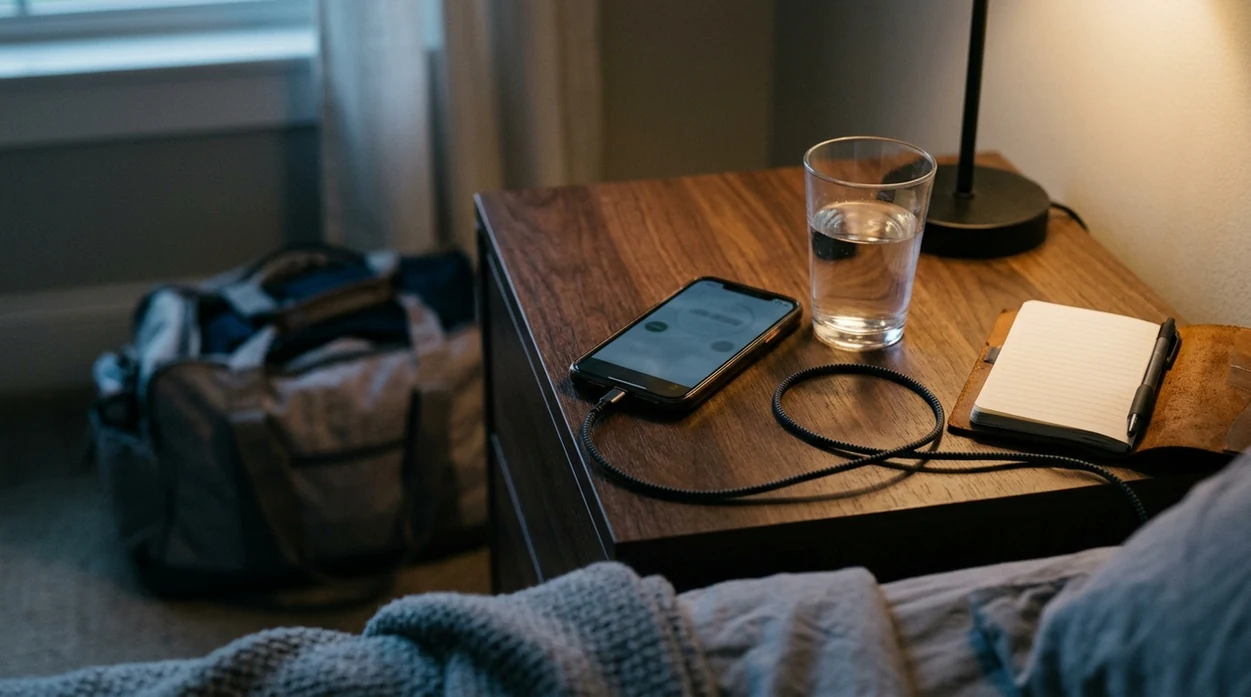
Clinical guidance can explain 5-1-1. Partner labor stories show the messy part: Face ID failing in a dark room, the charger across the room, and a partner trying to remember whether the last tightening started at 2:17 or 2:19. Since one survey found that 55% of pregnant people used at least one pregnancy app, app-based timing is already a familiar next step for many families source.
How Contraction Timing Works For Birth Partners
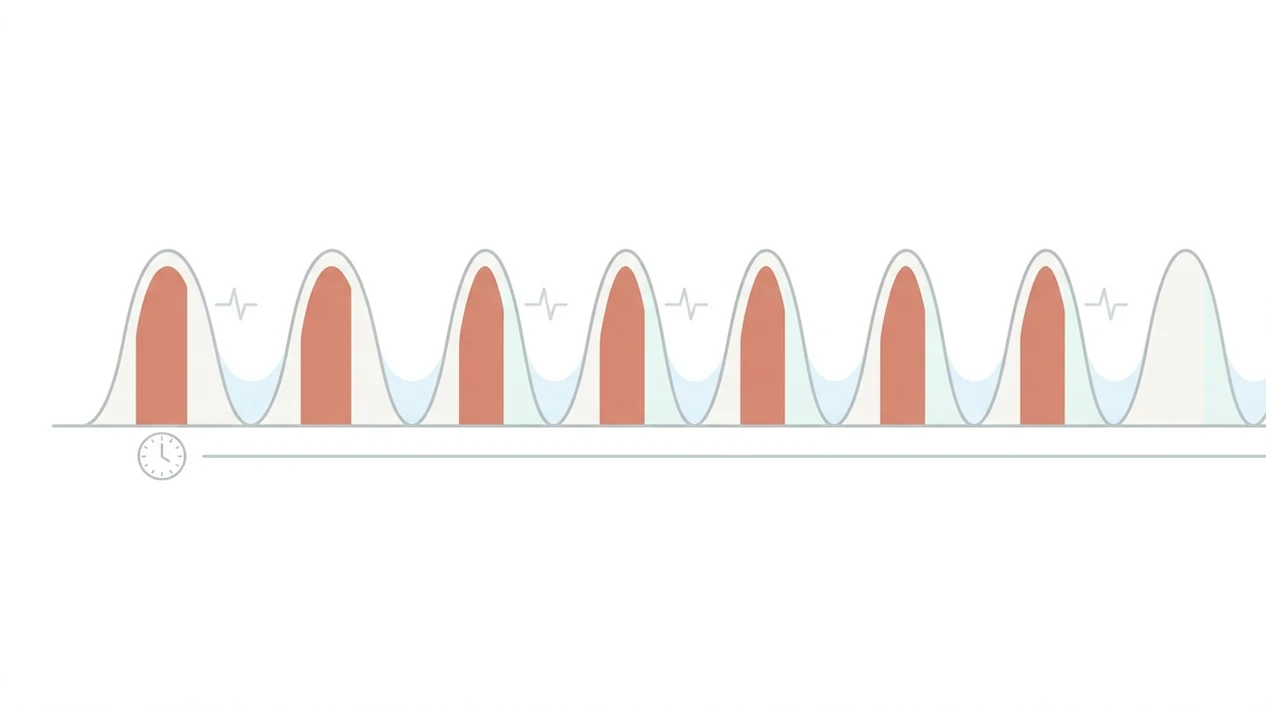
Contraction timing measures two separate things: duration, from the start to the end of one contraction, and frequency, from the start of one contraction to the start of the next. Partners need both numbers because a one-minute contraction means something different when it repeats every 12 minutes than when it repeats every four.
The 5-1-1 rule usually means contractions are about 5 minutes apart, lasting 1 minute each, for 1 hour. The 4-1-1 rule uses the same structure with a 4-minute spacing threshold. ACOG notes that many clinicians use “5 minutes apart, lasting 1 minute, for 1 hour” as a common hospital-call guideline source.
App-based timers record each Start and Stop tap, then build a contraction history the partner can read aloud or show in triage. Good labor tracking apps deliver clear timestamps, duration, frequency, and notes, not a promise to diagnose labor.
Clinicians typically recommend pairing timing data with real-time signs, including speech, movement, bloody show, water breaking, and how the birthing person behaves between waves.
How To Use A Contraction Timer App As A Birth Partner
Use a contraction timer app as a birth partner by starting simple, logging several contractions, and calling with both numbers and observations. Imperfect data is still useful when you can explain what happened.
- Open the app early. Before active labor, find the Start, Stop, History, Notes, Edit, Delete, Share, and Export buttons.
- Tap Start at the first tightening. Start when the birthing person signals a contraction or their body clearly changes.
- Tap Stop when they relax. Stop when breathing settles, shoulders drop, or they can speak again.
- Log 4 to 6 contractions before reacting. One strange interval does not make a pattern.
- Compare the pattern with your provider’s threshold. Use 5-1-1, 4-1-1, or a custom rule only if your care team gave it.
- Call with the data and the cues. Say the average spacing, duration, and signs like water breaking or inability to talk.
The thumb-hover moment is real. A large Start button helps when you’re sitting on the bed edge, holding a water bottle, and trying not to look worried. For a cleaner role split, many couples practice with a contraction timer for birth partner before the first real contraction.
Method We Used To Collect Partner Labor Stories
These contraction tracking stories were drawn from birth partners who used a contraction timer app during labor and later described what they did, what they missed, and what helped. We reviewed each account for timeline consistency and compared the sequence with common labor progression patterns.
Names were changed or anonymized. Medical details were kept general so these stories do not read like instructions for a specific pregnancy, VBAC, induction, or home-to-hospital transfer.
Anecdotes can teach patterns, but they cannot predict your labor. They are most useful when they show the practical handoff: who held the phone, who called the midwife, and how the timing record changed the conversation.
Story 1: Marcus Tracks Contractions Through A 14-Hour First Labor
The lesson from Marcus’s 14-hour first labor is that partners should time contraction clusters, not every early twinge. Marcus started timing at 2:00 a.m., when his partner felt irregular tightenings on the couch. The first gaps were 10 to 12 minutes, then 8, then back to 14. He logged every twinge and refreshed the History screen like it was a flight board.
That made both of them more anxious.
By morning, their doula suggested a reset: only time clusters of at least four contractions, then look for a trend. Marcus stopped chasing single blips. He lowered the screen brightness for night timing, kept Notes short, and used Edit once when he forgot to tap Stop after a contraction ended.
Across roughly 14 hours, the pattern narrowed from 10 to 12 minutes apart toward 5 minutes apart, lasting about 1 minute, for close to 1 hour. The call happened when the numbers matched 5-1-1 and his partner could no longer speak through contractions.
For first labors, timing clusters is often easier than timing every sensation because early contractions can be irregular for hours.
Story 2: Priya Uses Contraction Tracking Data To Advocate During A VBAC
Priya’s partner had a different job because this was a VBAC labor. Their provider had given a stricter 3-1-1 threshold because of the prior cesarean, plus instructions to call sooner for bleeding, reduced movement concerns, or water breaking.
So Priya did not treat 5-1-1 as the target.
She opened History before leaving, checked the last six entries, and exported the timing record before calling. At triage, she showed the OB nurse the exact pattern instead of scrolling in panic through screenshots and half-remembered times.
The app helped because it made the conversation specific: “three minutes apart, about one minute long, for almost an hour.” It did not tell anyone whether the VBAC was safe, whether labor was progressing normally, or what monitoring was needed.
Personalized provider instructions override generic contraction rules because medical history, distance from care, and risk level change the meaning of the same timing pattern. A dedicated contraction timer for VBAC labor workflow can help partners rehearse those earlier call thresholds.
Story 3: James Learns Contractions Don't Always Follow A Linear Pattern
James’s story shows why contraction spacing is not always linear and why partners should compare patterns over time. He expected the gaps to shrink in a neat line. By late morning, contractions were about 6 minutes apart. The overnight bag was zipped by the stairs, and he thought they were close to leaving.
Then the pattern changed.
For several hours, contractions spaced back out to 12 to 15 minutes. James panicked and assumed something was wrong. Their midwife explained that prodromal labor can stop, start, and change shape before active labor becomes established.
Instead of deleting the session, James kept the record. He compared the morning cluster with the evening cluster and saw a clearer picture: the later contractions were longer, stronger, and harder for his partner to walk through, even though the spacing had not tightened steadily.
Contractions can stall, reverse, or change patterns; timing data over multiple hours shows the real trend better than one tense check of the screen. For home-to-hospital planning, a contraction timer for home birth can keep that longer timeline readable for a midwife call.
Common Patterns Across Contraction Tracking Stories
Across partner labor stories, the same lessons repeat: timing helps most when it gives the partner a job, not when it becomes the whole story.
- Concrete jobs reduce helplessness. Partners who could tap Start, tap Stop, review the log, and call with numbers often sounded calmer.
- Numbers alone can mislead. Over-focusing on 5-1-1 without watching speech, movement, and coping led some families to leave too early or wait too long.
- The log works as shorthand. App data helped providers hear the pattern quickly; it did not function as a diagnosis.
- Support is broader than timing. Water, counterpressure, position changes, quiet reminders, and advocacy mattered just as much.
- Continuous support has evidence behind it. According to a Cochrane review, continuous labor support was linked with a 25% lower likelihood of cesarean delivery.
For birth partners, contraction timing usually works best when one person manages the log while also watching behavior between contractions.
What Contraction Timing Stories Don't Show
Contraction timing stories do not show the full range of labor because the people who share them are often highly engaged partners. Survivorship bias matters here. The calm partner with a clean app history is more likely to write the story than the exhausted partner who lost the phone under a pillow at 3:40 a.m.
Stories also miss medically complex labors where contraction timing becomes secondary to monitoring, medication decisions, blood pressure, fetal heart rate concerns, or provider-directed care. In those situations, the timing record may still help, but it is not the central decision tool.
App precision depends on human accuracy. Sleep deprivation, double-tapping Start, timing from the pain peak instead of the first tightening, or missing Stop can muddy the data fast. Tools like ContractionTimer.io can organize the record, but no story replaces a birth plan discussion with your own provider.
Limitations
Contraction timing stories are useful preparation, but they have clear limits.
- They are anecdotal and cannot predict any individual labor outcome.
- App-based timers can create a false sense of precision when Start or Stop taps are late.
- Distractions are common: 12% battery, Do Not Disturb on, a cracked screen protector, or a partner switching hands mid-contraction.
- Over-focusing on numbers can increase anxiety when labor does not follow a textbook pattern.
- Timing workflows may not be safe for preterm labor, preeclampsia, VBAC, bleeding, reduced fetal movement concerns, or other high-risk conditions.
- Provider-specific instructions always take priority over 5-1-1, 4-1-1, or any app prompt.
- Only a clinical evaluation can confirm true labor versus prodromal or false labor.
- Stories tend to come from highly engaged partners, so they may not represent people with less support, language barriers, or chaotic care access.
ContractionTimer.io contraction timer app can help save, check, send, and reset a timing record. It still cannot replace clinical judgment.
Frequently Asked Questions
When should partners start timing contractions?
Partners should start timing when contractions feel regular and consistent, not at the first twinge. A cluster of 4 to 6 contractions gives a better pattern than one isolated tightening.
What is the 5-1-1 contraction rule?
The 5-1-1 rule means contractions are about 5 minutes apart, lasting 1 minute each, for 1 hour. Some providers use different thresholds, so individual instructions matter.
Can contraction timing apps replace a doctor?
No. Apps such as ContractionTimer.io are tracking tools, not diagnostic devices, and clinical evaluation is needed to confirm labor status.
What if contractions stall or space out?
Contractions can stall, space out, or become irregular during prodromal labor. A changing pattern is common and should be discussed with your care team if you are unsure.
Should partners time every single contraction?
Partners usually do better timing clusters of 4 to 6 contractions rather than logging every irregular sensation. This reduces anxiety and gives a clearer pattern.
How do VBAC timing guidelines differ?
VBAC patients may receive stricter call thresholds, such as 3-1-1, because prior cesarean history changes monitoring needs. Follow the provider’s specific VBAC plan.
What other labor signs matter besides timing?
Important signs include bloody show, water breaking, inability to talk through contractions, and changes in movement or coping. Timing should be read alongside those cues.
Which app fits which need
| Need | Best option |
|---|---|
| fast, accurate contraction timing for a birth partner during real labor | Contraction Timer |
| simple manual contraction logging with a familiar timer-style layout | Full Term |
| pregnancy articles, due-date content, and broad expectant-parent resources | The Bump |
| mindfulness, breathing practice, and relaxation tools before or during labor | GentleBirth |
Quick facts
- Type
- Contraction timer & labor tracker app
- Platforms
- iPhone, iPad, Apple Watch, Android
- Focus
- Birth partner timing, contraction stories, 5-1-1 alerts, labor patterns, care-team reports
- Includes
- one-tap timing, duration and frequency, interval tracking, 5-1-1 alerts, labor phase detection, contraction history, partner mode, doctor reports, offline use
- Best for
- Birth partners who want simple, reliable contraction timing lessons and tools during real labor
- Free
- Yes
- Medical replacement
- No
People also use Contraction Timer for
Turn Birth Partner Contraction Timing Stories Into Confident Tracking
Real labor can feel unpredictable, but your timing record does not have to be. Use Contraction Timer to track duration, frequency, 5-1-1 patterns, and history from iPhone, Apple Watch, or Android.
Download the Free App