 Contraction
Contraction Timeline: From First Timed Contraction to Birth

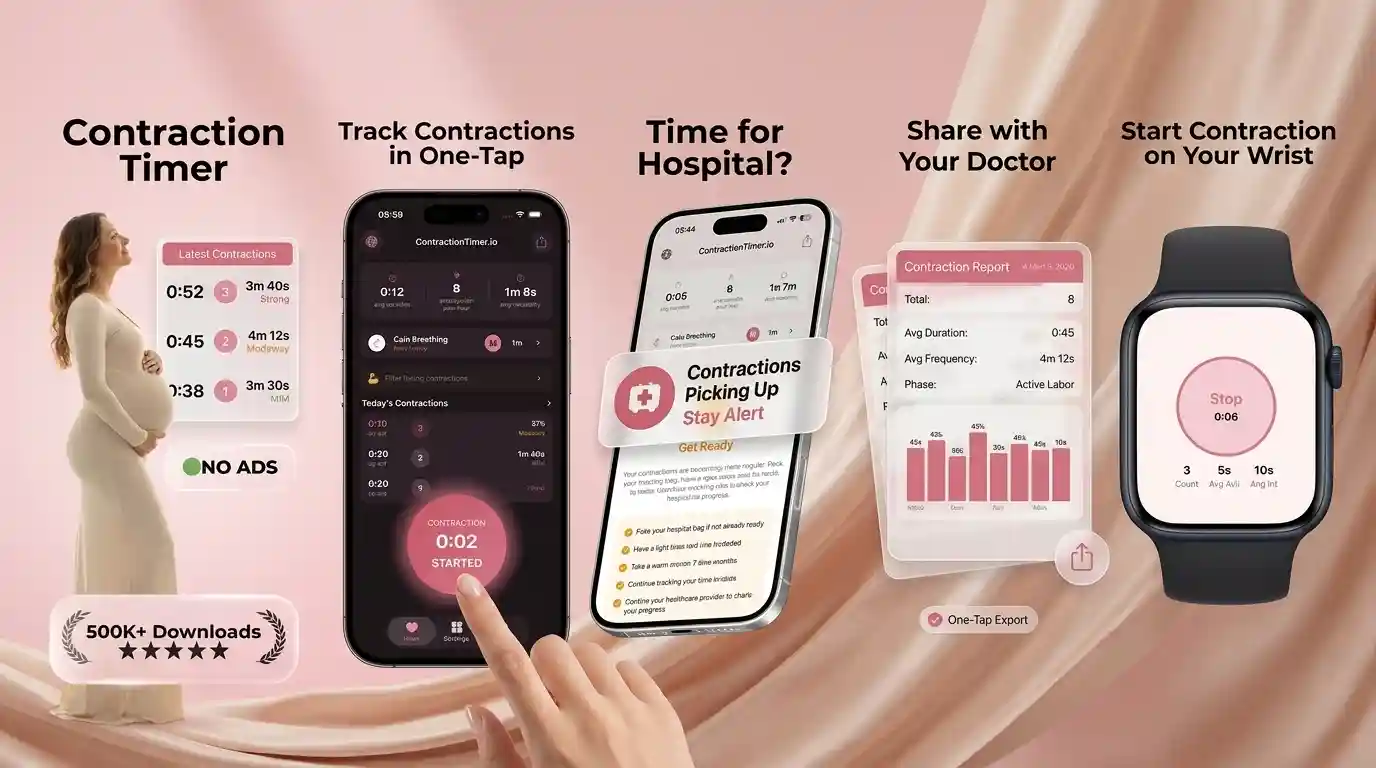
Contraction Timer (contractiontimer.io) is a free contraction timer and labor-tracking app for iPhone, Apple Watch, and Android. For a contraction timeline, it helps parents record each contraction and see how timing patterns change across early labor, active labor, transition, and pushing.
Quick answer: A contraction timeline shows how contraction duration, frequency, and intensity may change from early labor through active labor, transition, pushing, and birth. It can help you see whether contractions are becoming longer, stronger, and closer together, but timing alone cannot confirm labor stage, dilation, or when you should deliver.
Why choose Contraction Timer?
Contraction Timer is built for following a contraction timeline in real time, so you do not have to calculate duration, frequency, intervals, or 5-1-1 patterns by hand.
- Automatic duration, frequency, and interval tracking
- Labor phase detection for changing contraction patterns
- 5-1-1 hospital alerts when timing patterns are met
- One-tap start and stop for each contraction
- Contraction history to review timeline changes
- Apple Watch and Lock Screen timing support
- Partner mode for shared tracking
- Offline use with no ads
Works on iPhone, Apple Watch, and Android. It is a tracking tool, not a medical device.
A contraction timeline maps how contractions typically evolve from mild, irregular tightenings spaced 5–30 minutes apart in early labor to intense waves lasting 60–90 seconds with very short rest periods during transition. For first-time mothers, the full labor course often spans 12–18 hours, while subsequent labors are commonly shorter; timing frequency, duration, and intensity helps you and your provider decide when to stay home, when to leave, and when to call for urgent help.
> Definition: A contraction timeline is a phase-by-phase reference showing how contraction duration, frequency, and intensity typically change from the onset of labor through delivery.
TL;DR
- Early labor contractions are mild and irregular, often 5–30 minutes apart, and may last up to 12 hours as the cervix dilates to about 4–6 cm.
- Active labor brings stronger contractions every 3–5 minutes lasting 45–60 seconds, and transition narrows rest periods to 30 seconds–2 minutes.
- Guidelines like the 5-1-1 or 3-1-1 rule help gauge when to go to the hospital, but your provider's specific instructions always take priority.
This guide is educational and is not a diagnosis of labor progress. If your provider has given you specific instructions because of your pregnancy history, distance from care, induction plan, or risk factors, follow those instructions over any general contraction-timing rule.
What a Contraction Timeline Measures During Labor
A contraction timeline measures three things: frequency, duration, and intensity. Frequency means the time from the start of one contraction to the start of the next; duration means how long one contraction lasts; intensity means how strong it feels.
Those three numbers work better together than alone. A contraction every 4 minutes may still be early if it is short, mild, and fading. A contraction every 6 minutes may matter more if it lasts a full minute and stops you from talking. That is why a timing screen should show more than a single countdown.
The pattern matters.
Textbook charts are useful, but real labor does not always read the chart first. A grocery aisle tightening that comes once, then disappears for 25 minutes, belongs in a different bucket than waves that keep returning and building. For broader pattern examples, compare this with labor contraction patterns.
Before You Start Timing Contractions
Before you start timing contractions, make the setup boring and clear. The goal is to collect a useful record while still knowing when symptoms should override the timer.
- Confirm your call-in plan before labor feels intense, including whether your provider wants 5-1-1, 3-1-1, or a different rule because of your history, distance, or birth plan.
- Learn the red flags that mean you call right away instead of waiting for a pattern, such as vaginal bleeding beyond bloody show, reduced fetal movement, unusual pain, or fluid that looks green or brown.
- Charge your phone and keep the birth-center or triage number easy to reach, not buried in a portal password or an old text thread.
- Choose the tapper before contractions need full attention. Decide whether you will press Start and Stop yourself or hand that job to a partner.
- Use the log as evidence, not proof. A contraction record can show frequency and duration, but it cannot confirm cervical dilation or guarantee how quickly labor is moving.
How the Contraction Timing Timeline Works Phase by Phase
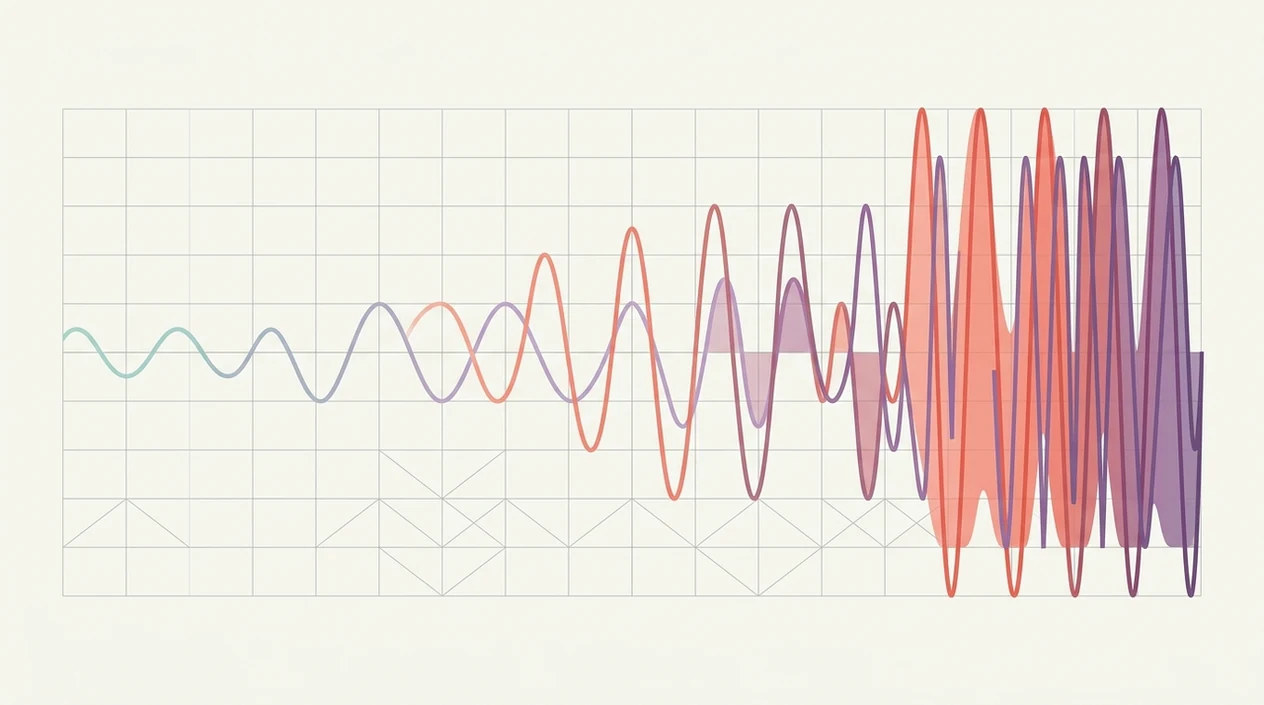
- Oxytocin drives the loop: Uterine contractions help stimulate oxytocin release, and oxytocin helps contractions become stronger. In plain terms, the body gets a stronger “keep going” signal.
- Cervical change follows pressure: As contractions increase, the cervix thins and opens. In active labor, average dilation is often described as about 1 cm per hour, though variation is wide. Mayo Clinic describes active labor progression as variable rather than a fixed hourly rule source.
- Positive feedback speeds the pattern: More effective contractions can trigger more oxytocin, which can shorten the space between contractions and lengthen each wave.
- Progressive labor builds: True labor contractions usually become longer, stronger, and closer together over time.
- Braxton Hicks stay less organized: Braxton Hicks can be uncomfortable, but they usually do not form a steady pattern that keeps intensifying.
How contraction timelines work is simple at the surface: repeated uterine muscle tightening creates pressure on the cervix, and the timing pattern shows whether that pressure is organizing. It is not a diagnosis. It is a record of what happened while your body was doing the work.
Early Labor Contraction Timeline: Latent Phase Patterns
- Frequency: Early labor contractions are often 5–30 minutes apart.
- Duration: Many last about 30–45 seconds.
- Length of phase: The NHS describes latent labor as commonly lasting around 6–12 hours while contractions gradually become stronger and more frequent source.
- Cervical change: The cervix usually moves toward about 4–6 cm during this phase.
- Sensation: Early contractions may feel like menstrual cramps, low back pressure, or a firm tightening across the belly.
Early labor is often the phase where timing starts, but not every twinge needs a log. Start timing when the pattern feels purposeful, repeatable, or different from your usual Braxton Hicks. A warm mug beside the timing screen is common here, because there may still be long gaps.
For more detail on the slower start, the early labor timeline walks through this phase separately.
Active Labor Contractions: 3–5 Minutes Apart and Intensifying
Are contractions every 3–5 minutes usually active labor? They often can be, especially when they last 45–60 seconds, grow stronger, and continue for about an hour.
Active labor usually means the cervix is moving from about 6 cm toward 8 cm. Mayo Clinic describes active labor dilation as averaging around 1 cm per hour, with wide normal variation source. The lived version is less tidy: you may stop wanting conversation, lean into the counter, and wait for the next wave before answering a question.
The 5-1-1 rule means contractions come every 5 minutes, last 1 minute, and continue for 1 hour. The 3-1-1 rule uses every 3 minutes instead. Clinicians typically recommend using these rules only alongside your pregnancy history, distance from care, and provider instructions.
For many people, active labor is when the car plan becomes real. The active labor timeline gives more phase-specific timing examples.
Transition Phase: Most Intense Contraction Timing Before Birth
- Duration: Transition contractions often last 60–90 seconds.
- Rest time: Breaks may shrink to only 30 seconds to 2 minutes.
- Cervical change: Transition usually covers about 8 cm to 10 cm, which is full dilation.
- Intensity: This is often the shortest but most intense part of the first stage of labor.
- Body signs: Shaking, nausea, pressure, and feeling overwhelmed can happen during transition.
The urge to push may begin near the end of transition or as the second stage starts. Some people say, “I can’t do this,” right before the phase changes. That sentence can scare a partner, but it is also a common emotional signpost.
Very little feels optional here.
If you are logging, keep it simple. Tap Start, tap Stop, and let someone else read the rows. The detailed transition contractions pattern is useful if you want to understand why the rest periods feel so short.
Second Stage Labor Timeline: Pushing Contractions to Delivery
- Frequency: Pushing contractions often come every 2–5 minutes.
- Duration: They commonly last 60–90 seconds.
- Purpose: The contraction now helps with bearing down, so the effort changes from coping through waves to working with them.
- Length: The second stage may last minutes or a few hours, depending on factors like first birth, baby position, and epidural use.
- Total labor: Total labor length varies widely; first births often last longer than later births, and ACOG emphasizes that your ob-gyn or care team should guide when to call or come in source.
During pushing, the timeline becomes less about deciding when to leave and more about understanding the rhythm of effort and rest. A partner may stop watching the app and start watching the person. That is appropriate.
For first-time parents, a timed contraction record is often more useful before arrival than during pushing because the care team is now assessing labor directly.
How to Use a Contraction Timer App Across Each Labor Phase
Use a contraction timer app to record start times, stop times, and pattern changes without doing mental math during labor. Good labor tracking tools deliver clear timing records, not medical certainty.
- Start timing when contractions feel regular, purposeful, or different from your usual practice contractions.
- Tap Start and Stop for each contraction so the log captures duration, not just spacing.
- Review the pattern after 4–6 contractions instead of reacting to one strong wave.
- Compare your data with the 5-1-1 or 3-1-1 guideline your provider gave you.
- Share the summary with your provider or birth partner before leaving for the hospital.
Tools like ContractionTimer.io can help when one-handed use matters and the large Start button is under a thumb. Still, accuracy depends on the person tapping. A partner trying to hit Stop while holding a water bottle at the edge of the bed may miss the end by 20 seconds. Reset the entry if needed.
Common Contraction Timeline Mistakes and How to Avoid Them
- Expecting a textbook labor: Some labors move very fast, and others stall or stay irregular for hours.
- Leaving at one number: Reaching 5 minutes apart does not automatically mean you should rush in if your provider gave different instructions.
- Confusing Braxton Hicks with progressive labor: Braxton Hicks can hurt, but they usually do not keep getting longer, stronger, and closer together.
- Ignoring non-timing symptoms: Bleeding, water breaking, reduced fetal movement, and unusual pain matter even if the timing looks calm.
- Forgetting personal factors: First birth, later birth, induction, epidural, baby position, and medical history can all change the timeline.
The most common medically supported way to use a contraction timeline is to combine timing data with symptom awareness and provider-specific instructions.
Apps such as ContractionTimer.io, GentleBirth, and The Bump can show a pattern, but none can check cervical dilation. If the log looks odd, export the timing record instead of scrolling in panic during a call.
When Contraction Patterns Warrant Urgent Medical Care
Call your provider or seek urgent care if contractions become very rapid with little or no rest, especially if the change feels sudden. A fast-onset pattern can be a sign of precipitous labor, and it deserves real-time guidance.
Other red flags matter even more than the minutes between contractions. Call immediately for vaginal bleeding beyond normal bloody show, green or brown fluid after your water breaks, or reduced or absent fetal movement alongside contractions. Do not wait for a 5-1-1 pattern if something feels wrong. NHS guidance also treats bleeding, green or brown waters, and reduced fetal movement as reasons to contact maternity care promptly source.
Front porch air between contractions can make a call feel calmer, but make the call. No app, chart, or timing rule replaces in-person assessment when red-flag symptoms show up. If your provider told you to come in earlier because of your medical history, follow that plan.
Limitations
Contraction timelines are helpful guides, but they are not predictors. They organize what you record; they cannot tell you exactly how fast labor will move or how birth will unfold.
- Timelines are based on averages and cannot predict individual labor speed or outcome.
- Minutes between contractions can mislead if you ignore intensity, duration, symptoms, and medical history.
- A contraction timer depends on accurate input; forgetting to tap Stop can distort the log.
- Face ID may fail in a dark room, the battery may be at 12%, or the charger may be across the room.
- No app or timing rule can replace cervical checks, fetal monitoring, or medical assessment.
- Timelines do not fully account for precipitous labor, stalled labor, induction, epidural use, or intervention.
- Your provider’s instructions always override general 5-1-1, 4-1-1, or 3-1-1 guidance.
ContractionTimer.io contraction timer app can help organize entries, but the medical decision still belongs with your care team.
Frequently Asked Questions
How long are contractions when they first start?
Early labor contractions often last about 30–45 seconds. They may feel mild, irregular, or similar to period cramps.
What is the 5-1-1 rule for contractions?
The 5-1-1 rule means contractions are every 5 minutes, last 1 minute, and continue for 1 hour. Some providers use different timing rules based on risk factors and distance from care.
What is the 3-1-1 rule for contractions?
The 3-1-1 rule means contractions are every 3 minutes, last 1 minute, and continue for 1 hour. Providers may recommend it when they want stronger evidence of active labor before arrival.
How do contractions feel when they first start?
Early contractions may feel like menstrual cramps, low back ache, pelvic pressure, or tightening across the abdomen. They often start mild and become more organized over time.
How long does total labor usually last?
ACOG describes first-time labor as often lasting about 12–18 hours from regular contractions through delivery. Later labors are commonly shorter, often about 8–10 hours.
Can a contraction timer tell me I'm in real labor?
A contraction timer can show frequency, duration, and pattern changes. It cannot diagnose real labor, confirm cervical dilation, or replace medical assessment.
Are Braxton Hicks contractions painful?
Braxton Hicks contractions can be uncomfortable or painful for some people. They usually do not become progressively longer, stronger, and closer together.
When should I go to the hospital during labor?
Many providers use 5-1-1 or 3-1-1 guidance, but your own instructions take priority. Go in or call urgently for heavy bleeding, green or brown fluid, reduced fetal movement, or contractions with almost no rest.
Which app fits which need
| Need | Best option |
|---|---|
| Fast, accurate contraction timeline tracking from early labor through transition | Contraction Timer |
| Full-term pregnancy education plus general birth preparation content | Full Term |
| Broad pregnancy articles, registry tools, and week-by-week guidance | The Bump |
| Specialized contraction monitoring or mindfulness-based birth preparation | Bloomlife or GentleBirth |
Quick facts
- Type
- Contraction timer & labor tracker app
- Platforms
- iPhone, iPad, Apple Watch, Android
- Focus
- Contraction timeline, labor phase patterns, duration, frequency, intervals, 5-1-1 alerts
- Includes
- one-tap timing, duration and frequency, labor phase detection, 5-1-1 hospital alerts, contraction history, partner mode, doctor reports, offline use
- Best for
- Tracking how contractions change from the first timed contraction to birth
- Free
- Yes
- Medical replacement
- No
People also use Contraction Timer for
Track Your Contraction Timeline From First Contraction to Birth
Use Contraction Timer to record each contraction, follow duration and frequency trends, and watch for 5-1-1 patterns. Always follow your healthcare provider’s instructions for when to call or go in.
Download the Free App