
Early Labor Timeline: How Contractions Organize Before Active Labor




The early labor timeline typically spans 6 to 12 hours, sometimes longer for first pregnancies, during which contractions start irregular and mild, then gradually become closer together, longer, and stronger before the active-labor threshold your clinician uses; some guidance describes active labor around 4 cm, while ACOG-influenced guidance often uses 6 cm as the active-phase threshold ACOG Safe Prevention of the Primary Cesarean Delivery. Tracking contraction timing during this phase helps you and your care team decide when to stay home and when to head to your birth location.
> Definition: Early labor is the first phase of the first stage of labor, beginning with the onset of regular contractions and ending when the cervix dilates to approximately 4 cm and contractions become consistently strong, close, and long enough to signal active labor.
- Early labor is the longest labor stage, often 6 to 12+ hours, and contractions start mild and irregular before organizing into a pattern.
- Track contraction duration, frequency, and intensity changes to identify the shift from early to active labor.
- Call your care team immediately for heavy bleeding, water breaking with unusual color or odor, decreased baby movement, or preterm signs.
This guide is for timing and communication, not diagnosis. Follow your own obstetrician, midwife, or birth unit’s instructions if they differ from any general timing rule here.
What Early Labor Means for Contraction Timing
Early labor is the first phase of stage one, when contractions begin organizing and the cervix thins and opens toward roughly 4 cm. In this phase, contractions are often 30 to 45 seconds long, 5 to 20 minutes apart, and mild to moderate.
The useful point is not one single contraction. It is the pattern. A screen showing uneven five-minute gaps can still belong to early labor if the contractions are becoming stronger over time. Definitions vary slightly across ACOG, NHS, and Cleveland Clinic guidance, especially around where “active” labor begins.
Small differences matter.
Many clinicians still describe early labor as ending around 4 cm, while some modern labor guidance uses 6 cm as the active labor threshold. For a practical timing view, compare early changes with broader labor contraction patterns, then follow your own provider’s instructions.
How Early Labor Contraction Patterns Work
Early labor contractions work by tightening the uterine muscle from the top down, gradually becoming more coordinated. Prostaglandins soften the cervix, oxytocin supports stronger contractions, and the cervix effaces and dilates as the pattern builds. For the underlying physiology of cervical ripening, oxytocin, and coordinated uterine contractions, see this NCBI overview of labor physiology published labor research.
In plain terms, the uterus is getting organized. It may contract for an hour, pause, then restart with a steadier rhythm. That stop-start pattern can be frustrating, but it is common in early labor and prodromal labor. First pregnancies often take longer because the cervix usually needs to thin and open at the same time.
The most common medically supported way to understand early labor progress is contraction timing combined with symptom changes, not timing alone.
I would not treat one neat row in a timer as proof that everything has shifted. I would look at an hour of entries, the Notes field, and whether the person has stopped talking through contractions.
Early Labor Stages and Expected Duration
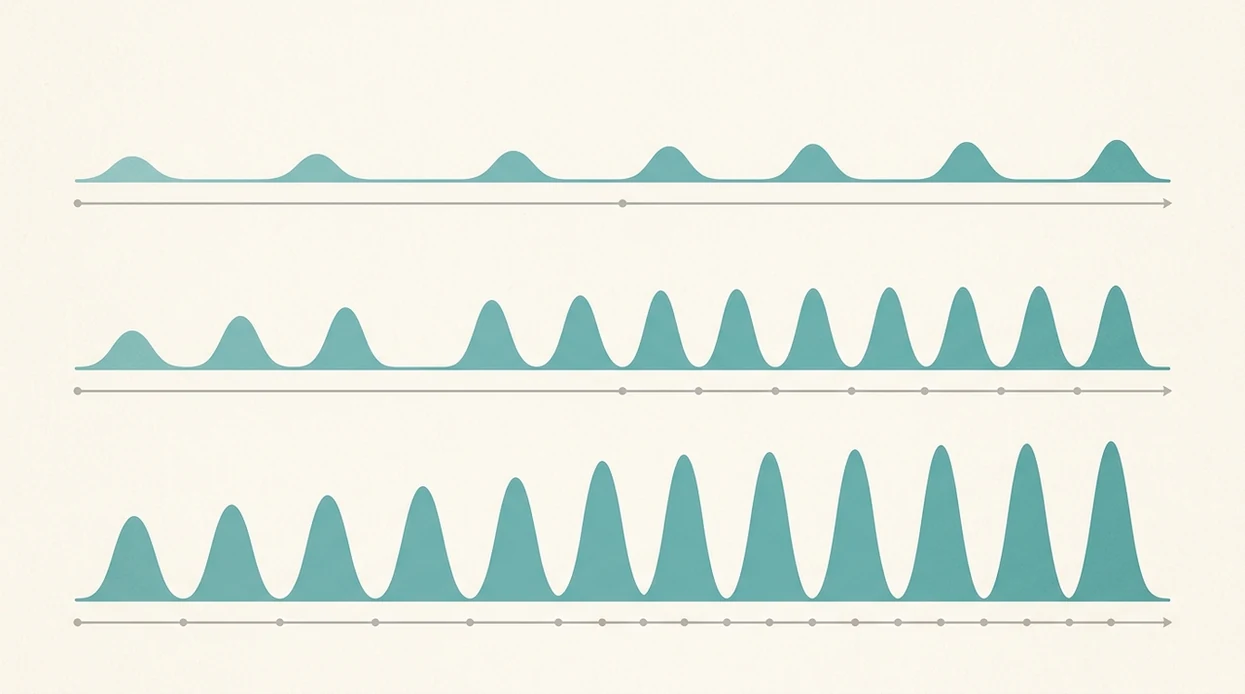
Early labor often lasts hours, and it can last longer than a day without following a universal clock. Cleveland Clinic says early labor typically lasts 6 to 12 hours Cleveland Clinic guidance.
- Cleveland Clinic duration: Early labor commonly lasts 6 to 12 hours.
- ACOG total labor range: ACOG notes that labor length varies, and many first labors last longer than later labors; use provider-specific instructions rather than a fixed clock ACOG: How to Tell When Labor Begins.
- NHS established labor range: The NHS says established labor to full dilation is usually 8 to 18 hours in a first pregnancy and 5 to 12 hours in later pregnancies NHS stages of labour.
- No fixed clock: Early labor can last a few hours, overnight, or several days with pauses.
- Later pregnancies: Subsequent pregnancies tend to have shorter early labor phases.
A dim bedroom lit by phone glow is a very normal early-labor setting. Not every contraction means it is time to leave.
Contraction Timer Setup Before Early Labor Starts
Set up contraction timing before labor starts so nobody is learning buttons during a contraction. Install and test a contraction timer app, confirm your provider’s call criteria, and write down warning signs that override timing rules.
A simple prep list works:
- Install the app and test Start, Stop, History, Notes, Edit, Delete, Share, and Export.
- Ask your provider whether they prefer 5-1-1, 4-1-1, or a different call rule.
- Pack the hospital bag and plan the route before contractions start.
- Brief your birth partner on logging contractions, not interpreting them.
- Post warning signs somewhere visible, such as the fridge or birth bag pocket.
Tools like ContractionTimer.io can help record duration and frequency, not decide whether labor is medically safe. Good contraction timer apps deliver clean timing records and shareable summaries, not a diagnosis or permission to ignore your care team.
How to Track Contractions During Early Labor
To track contractions during early labor, time from the first tightening to the full release, then review the pattern after about one hour. The goal is a clear record your provider can understand quickly.
- Tap Start when a contraction begins, not when pain reaches its peak.
- Tap Stop when the contraction fully ends, even if pressure lingers.
- Record the interval from the start of one contraction to the start of the next.
- Note intensity as mild, moderate, or strong for each contraction.
- Review the log after 1 hour to spot trends toward regularity.
- Share the summary with your provider when calling, including duration, spacing, and intensity trend.
A partner may be trying to hit Stop with a thumb while holding a water bottle at the edge of the bed. Keep the screen simple. For deeper pattern examples, use early labor contraction patterns alongside your timing log.
Contraction Timing Milestones in the Early Labor Timeline
Early labor timing usually moves from far apart and mild toward closer, longer, stronger contractions. Irregular spacing does not mean labor has not started.
A common progression looks like this: very early contractions may be 15 to 30 minutes apart, about 30 seconds long, and mild. Mid early labor may bring contractions 7 to 10 minutes apart, around 45 seconds long, and moderate. Late early labor may bring contractions 5 to 6 minutes apart, near 60 seconds long, and harder to talk through.
The screen with one-minute durations can feel convincing. Still, the trend over time matters more than one entry.
The 5-1-1 and 4-1-1 Timing Rules Explained
The 5-1-1 rule means contractions are about 5 minutes apart, lasting 1 minute each, for 1 hour. The 4-1-1 rule uses 4 minutes apart instead. Provider instructions override both, especially if warning signs are present.
Common Early Labor Timing Mistakes
Common early labor timing mistakes include starting too late, stopping too late, timing too briefly, and judging labor by spacing alone. A cleaner log reduces panic when you call.
Here are the errors I see most often:
- Rushing to the hospital at the first contraction, before a pattern develops.
- Assuming labor has not started because contractions are irregular.
- Timing only three contractions instead of tracking for a full hour.
- Ignoring intensity changes and watching only the minutes apart.
- Confusing Braxton Hicks with early labor.
- Skipping the log and trying to remember everything while uncomfortable.
Braxton Hicks often ease with rest, hydration, or position changes. Early labor contractions usually keep returning and build over time. If you want a broader sequence beyond early labor, the contraction timeline shows how timing can change across labor phases.
Memory gets slippery fast.
When to Call Your Care Team Based on Early Labor Timing
When should you call your care team during early labor? Call when contractions meet your provider’s timing rule, such as 5-1-1, or sooner if your water breaks, bleeding is heavy, fetal movement decreases, pain is constant and severe, or symptoms begin before 37 weeks.
When you call, share the contraction log in plain order: duration, frequency, and intensity trend. “They are 5 minutes apart, lasting about 60 seconds, for the last hour, and I cannot talk through most of them” is easier to act on than “they’re bad.”
Clinicians typically recommend calling based on your specific pregnancy instructions, not a general internet rule.
If you export the timing record before calling the midwife, your partner can read times clearly instead of scrolling in panic. ContractionTimer.io contraction timer app includes sharing and export options for that exact handoff. Warning signs always override timing rules.
Limitations
Early labor timing is useful, but it cannot reliably predict exactly when delivery will happen. A contraction log shows a pattern; it does not diagnose labor or replace medical advice.
Key limits:
- Contraction timing cannot tell you exactly when birth will happen.
- A contraction timer app tracks patterns but cannot confirm cervical dilation.
- Preterm labor, high-risk pregnancy, epidural plans, prior cesarean, and later pregnancies may change timing advice.
- Standard 5-1-1 or 4-1-1 rules do not override heavy bleeding, reduced baby movement, severe constant pain, or concerning fluid.
- Active labor thresholds differ. Some guidance uses about 4 cm, while other providers emphasize 6 cm.
- Prodromal labor can mimic early labor for days without steady progress.
- A cracked screen protector, 12% battery, or Face ID failing in a dark room can make timing less reliable.
Use the log as a communication tool. Not a verdict. For the next phase, compare your entries with active labor contraction patterns.
Frequently Asked Questions
How long does early labor last?
Early labor often lasts 6 to 12 hours, but it can be longer, especially in a first pregnancy. Total labor is often shorter in later pregnancies.
What is the 5-1-1 rule for labor?
The 5-1-1 rule means contractions are about 5 minutes apart, lasting 1 minute each, for 1 hour. It is a common call benchmark, but provider instructions override it.
Can early labor start and stop?
Yes, early labor or prodromal labor can start, slow down, and restart. This can happen when contractions are not yet organized into a sustained pattern.
What do early labor contractions feel like?
Early labor contractions often feel like mild-to-moderate cramping, lower back pressure, or tightening that gradually intensifies. They usually become harder to ignore over time.
How far apart are early labor contractions?
Early labor contractions are commonly 5 to 20 minutes apart at first. Over time, they often become closer together, longer, and stronger.
Should I go to the hospital during early labor?
Many people are told to stay home until contractions meet their provider’s criteria. Go in or call urgently for heavy bleeding, decreased fetal movement, water breaking with concerning symptoms, severe constant pain, or preterm signs.
What is the 4-1-1 rule for labor?
The 4-1-1 rule means contractions are about 4 minutes apart, lasting 1 minute each, for 1 hour. Some providers use it instead of 5-1-1.
Does early labor differ for second pregnancies?
Yes, subsequent labors often progress faster than first labors. Early labor may be shorter, so follow your provider’s timing instructions closely.
Can I sleep during early labor?
Many people can rest or sleep during early labor if contractions remain manageable and their care team has not advised otherwise. Time a short group of contractions before resting, then start a new session if they wake you. Seek clinical guidance for concerning symptoms or whenever you are unsure.
Sleeping During Early Labor: How to Rest and Keep a Useful Timeline
If contractions begin at night and your care team has not advised immediate evaluation, try to rest between them. You do not need to stay awake solely to create a continuous record. Time several contractions before lying down - for example, 4 to 6 over 30 to 60 minutes - then note when you stopped tracking. If contractions wake you later, begin a new timing session so you can compare the two periods without treating the unrecorded gap as one unusually long interval.
Use comfort measures already approved by your clinician, such as changing position, emptying your bladder, drinking fluids, or taking a warm shower. Record meaningful context in your notes, including whether contractions continued while resting, became harder to talk through, or eased after hydration or movement. Contact your care team instead of trying to sleep through heavy bleeding, suspected rupture of membranes, decreased fetal movement, severe constant pain, or any symptom your clinician told you requires prompt assessment.
Early labor contraction patterns may begin irregularly, then gradually become longer, stronger, and closer together. Track each contraction’s start time, duration, and frequency to notice changes.
If you’re wondering about early labor what to do, rest, hydrate, eat lightly if approved, and follow your care team’s guidance. Contact them promptly if your water breaks, bleeding occurs, movement decreases, pain feels unusual, or you have concerns.
Numbers from clinical sources
| Topic | What sources say | Source |
|---|---|---|
| ACOG due-date calculation uses Naegele’s rule (280 days from last menstrual period). | The American College of Obstetricians and Gynecologists defines the estimated due date by convention as 280 days after the first day of the last menstrual period (Naegele’s rule), assuming a 28‑day cycle with ovulation a | American College of Obstetricians and Gynecologists (ACOG), Committee Opinion Methods for Estimating the Due Date (2017) |
Early labor can pause and restart as contractions become more regular and the cervix changes. Definitions vary: NICE describes the latent phase through 4 cm, while ACOG considers 6 cm the start of active labor. Contact your maternity team promptly if your water breaks, bleeding is heavy, or labor signs occur before 37 weeks.
| Sign | Sourced range |
|---|---|
| Early activity | <3 contractions per 10 minutes (NHS England) |
| Organizing pattern | 3-4 per 10 minutes, up to 60 seconds (NHS) |
| True labor | 60-90 seconds each, progressively closer (ACOG) |
| Possible latent duration | Up to ~20 hours first pregnancy; ~6 hours subsequently (NHS) |