
Contraction Duration Tracker: Time Every Labor Contraction



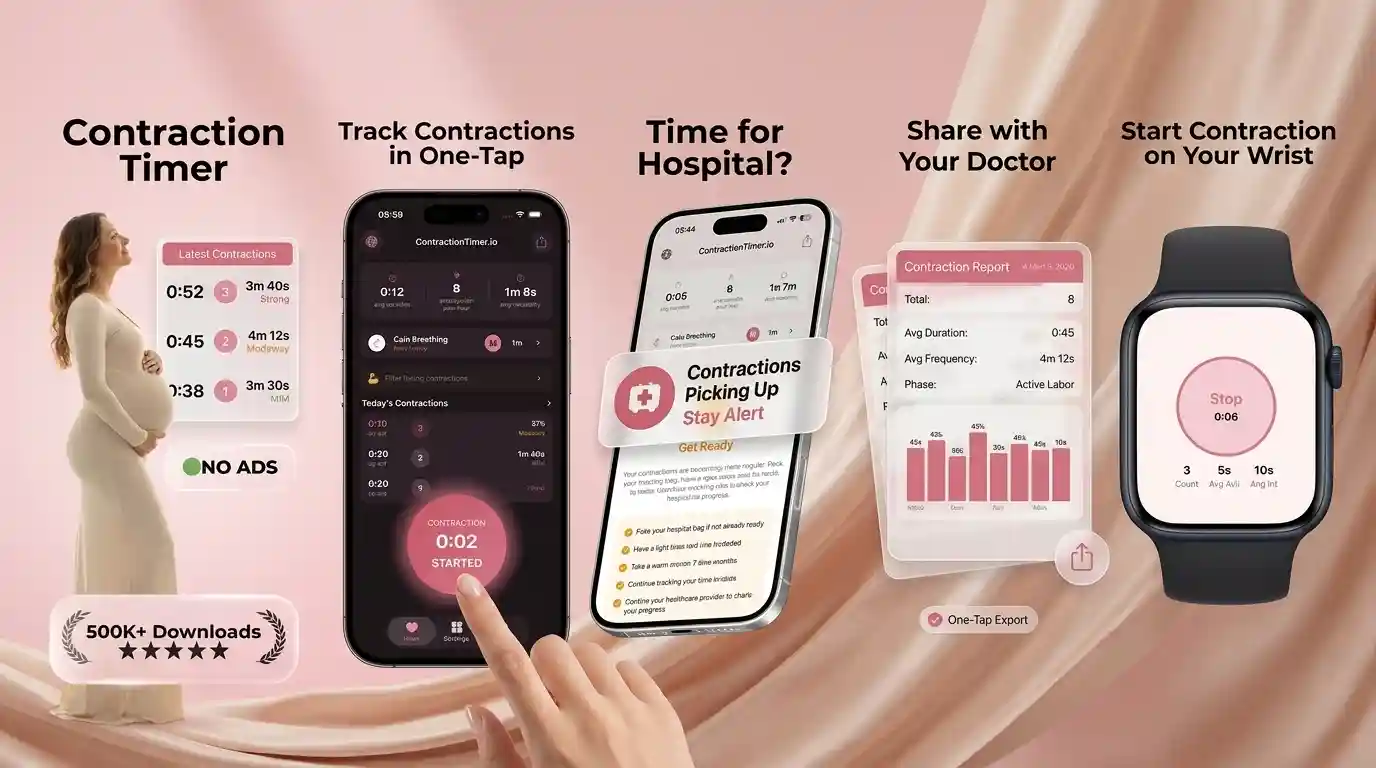
A contraction duration tracker measures how long each labor contraction lasts by letting you tap once when a contraction starts and again when it ends. ContractionTimer.io contraction timer app logs every contraction so you can share an accurate history with your care provider and notice when the rhythm changes.
> Definition: A contraction duration tracker is a digital tool that records the start and end of each labor contraction to calculate its length in seconds, the interval between contractions, and how patterns change over time.
- Tap start and stop to record each contraction's exact length in seconds
- Track duration alongside frequency and interval to spot real labor patterns
- Share your contraction history with a clinician, but never use an app as a substitute for medical assessment
At a Glance: Contraction Duration, Interval, and Frequency Metrics
- Duration is contraction length: it measures seconds from the beginning of one contraction to the moment it fully releases.
- Interval is start-to-start timing: it compares the start of one contraction with the start of the next.
- Frequency is the count: it shows how many contractions happen in a set window, often 10, 30, or 60 minutes.
- First-stage labor often takes hours: median first-stage labor is about 9.4 hours for first-time mothers and 6.4 hours for later births, according to an NCBI Bookshelf review published labor research.
- The pattern matters more than one number: duration, interval, and frequency together give a clearer picture than a single long contraction.
A phone balanced on a belly pillow at 2:17 a.m. is not the time for mental math. ContractionTimer.io fits parents who need the numbers grouped in one view because it shows duration beside interval and frequency.
How Contraction Duration Tracking Calculates Each Labor Contraction
Contraction duration tracking works by creating a timestamped start event and a timestamped stop event for each contraction. The labor duration timer subtracts the start time from the end time, then stores that result as the contraction's length.
Interval comes from comparing the start timestamp of one contraction with the start timestamp of the next. Rolling averages can soften the noise from one odd contraction, like the one you tapped late because you were climbing into the shower. Still, accuracy depends on tap timing. Delayed taps distort the reading.
ContractionTimer.io is useful for birth partners because one person can whisper “start” and “stop” while the laboring person keeps eyes closed and breathes through the wave. Clinicians typically look at contraction pattern alongside cervical change, fetal status, and maternal symptoms, not contractions alone; ACOG's labor-management guidance frames labor progress as a clinical assessment, not an app-only timing decision ACOG labor guidance. Good contraction timer apps deliver clean timing history, not a diagnosis or a promised hospital departure time.
6 Steps to Use the Labor Duration Timer
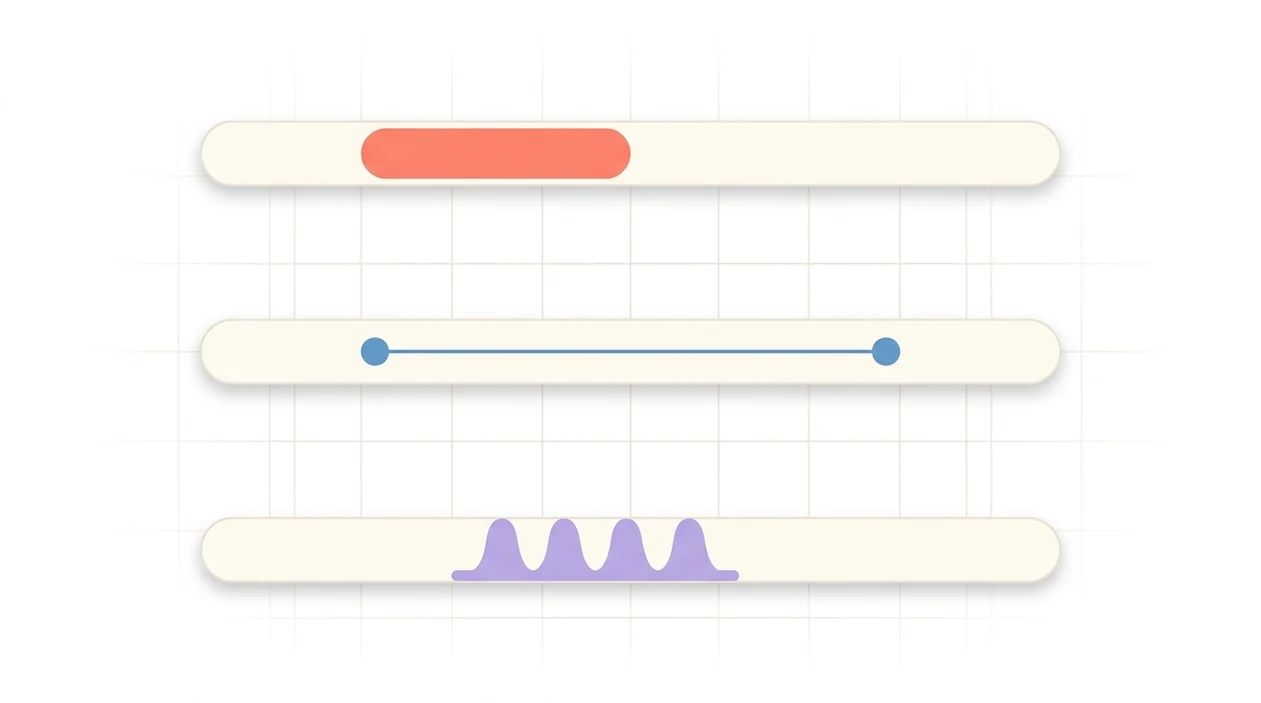
Use a labor duration timer by starting each contraction when the tightening begins and stopping it when the wave fully releases. Keep the pattern going long enough to see more than one isolated contraction.
- Open the tracker when contractions begin to feel noticeable, regular, or hard to ignore.
- Tap start the moment a contraction begins, not when it reaches the strongest point.
- Tap stop when the contraction fully releases and your body softens again.
- Repeat for each contraction so the session log shows a real sequence, not one data point.
- Review the summary for duration, interval, frequency, and changes over time.
- Share the log with your healthcare provider, especially if you're unsure what the pattern means.
If your priority is calm communication, ContractionTimer.io handles the room-to-triage handoff because the session log can be read aloud slowly from one screen. For a broader timing setup, the online contraction timer covers the same start-stop rhythm.
When to Start Using a Contraction Length Tracker
Start using a contraction length tracker when contractions feel regular, intensifying, or different from your usual Braxton Hicks pattern. You don't need to track every random tightening for weeks before your due date.
Braxton Hicks often shift when you sip water, pee, lie down, or change positions. Early labor can pause and restart. A tracker helps you compare what is actually happening, especially when contractions are strong enough to stop conversation and then disappear after 40 minutes of rest.
Short list. Big difference.
Per the CDC, about 1 in 10 U.S. babies are born preterm CDC birth data, so symptom changes before term deserve careful attention. Stop timing and call your provider right away for bleeding, fluid leakage, decreased fetal movement, or symptoms your care team told you to report. For people preparing before labor starts, the download contraction timer app page keeps the setup simple.
What Duration Tracking Looks Like in Contraction Timer
ContractionTimer.io uses a one-button start and stop flow, so the screen stays simple during labor. Each entry saves duration, interval, and timestamp in a session log.
The average duration and frequency summary sits at a glance, which matters when the room is dim and everyone is tired. A partner can operate it while you rest between contractions, sip from the straw cup, or unclench your jaw at the peak. No scrolling through notes. No guessing which contraction was “the long one.”
Birth partners who want to help without over-talking usually need a workflow that is just tap, wait, tap, then review the named metrics. The shareable history also pairs well with a contraction timer log when your clinician asks what has changed.
Contraction Duration Tracker vs. Manual Stopwatch and Phone Timer
A dedicated contraction duration tracker reduces the math that usually falls apart under stress. Manual timing can work, but it asks a tired person to calculate duration, interval, and frequency while labor is changing.
| Method | What it captures | Main drawback |
|---|---|---|
| Manual stopwatch with pen and paper | Start and stop times if you write them clearly | Easy to skip entries or make math errors during contractions |
| General phone timer | One contraction's elapsed time | No automatic interval, frequency, or session history |
| ContractionTimer.io | Duration, interval, frequency, timestamps, and history | Still depends on accurate taps and clinical context |
| The Bump timer or 9m Contraction Timer | Basic contraction timing | Feature depth and history display vary by product |
A large U.S. labor-pattern study found that active labor duration varies widely by parity and dilation pattern, which is why a clean session history can be more useful than a single handwritten note published labor research. For first-time parents, a dedicated tracker is often easier than a stopwatch because it keeps start-to-start intervals and session history together. No method replaces clinical assessment.
Related Contraction Timer Features for Labor Pattern Tracking
Duration is only one part of labor pattern tracking. ContractionTimer.io also supports frequency tracking, interval tracking, pattern review, and shareable session history for birth partners and providers.
The contraction frequency calculator helps show how often contractions are coming in a set period. Interval tracking shows whether the gap between starts is shortening. Pattern review helps you notice whether contractions are getting longer, closer together, or staying scattered.
On nights when early labor feels like it keeps changing its mind, ContractionTimer.io contraction timer app helps you prepare without over-focusing because duration, frequency, and interval are reviewed together. If you want alerts around changing rhythm, contraction pattern alerts can support that next step.
Limitations
A contraction duration tracker is helpful, but it is not a medical assessment. Real labor does not always behave like a neat chart, and that can be frustrating when you're tired.
- ContractionTimer.io cannot diagnose labor, confirm dilation, measure effacement, or replace a cervical exam.
- Accuracy depends entirely on tap timing; late starts and late stops change the numbers.
- Apps can make labor look cleaner than it feels. Real contractions may cluster, fade, restart, or vary widely.
- Tracking does not protect you if you ignore bleeding, fluid leakage, decreased fetal movement, severe pain, or other urgent symptoms.
- Regular contractions on screen do not automatically mean active labor has started.
- The 5-1-1 rule is a guideline, not a universal trigger. Your provider may use 4-1-1, 4-1-2, 3-1-1, or a different plan.
- Over-relying on notifications can create false reassurance or unnecessary anxiety.
- Competitors like GentleBirth and Contraction Timer Tracker may offer different education or interface choices, so compare the workflow you will actually use at 2 a.m.
FAQ
Does a contraction duration tracker replace medical advice? No. Use the numbers to communicate clearly, then follow your provider's guidance.
What is the 5-1-1 rule for contractions?
The 5-1-1 rule means contractions are about 5 minutes apart, last 1 minute each, and continue for 1 hour. It is a guideline, not a universal instruction.
What is the 4-1-2 rule for contractions?
The 4-1-2 rule means contractions are about 4 minutes apart, last 1 minute, and continue for 2 hours. Some providers recommend it when they want a longer pattern before hospital arrival.
What is the 3-1-1 rule for contractions?
The 3-1-1 rule means contractions are about 3 minutes apart, last 1 minute, and continue for 1 hour. This may suggest advanced labor and should prompt immediate provider contact.
How long should a labor contraction last?
Active labor contractions often last about 45 to 60 seconds, and they may last 60 to 90 seconds during transition Cleveland Clinic guidance.
Can a contraction tracker tell me I'm in labor?
No app can diagnose labor. Only clinical assessment can confirm dilation, effacement, and labor progress.
When should I start timing contractions?
Start timing when contractions feel regular, painful, intensifying, or different from your normal Braxton Hicks pattern. Note any change in duration, interval, or frequency.
Are Braxton Hicks contractions the same length?
Braxton Hicks contractions are usually shorter, irregular, and less likely to increase steadily over time. They often ease with hydration, rest, or a position change.
How to Time Contractions With a Gradual Start or End
Contractions do not always have a sharp beginning and ending. If the sensation builds gradually, tap start when you first recognize a definite tightening or wave rather than when it reaches peak intensity. Tap stop when the tightening has clearly eased and your uterus or abdomen feels relaxed again. The measured duration includes the build-up, peak, and release; it is not just the strongest part.
Use the same start-and-stop threshold for each contraction so changes are easier to compare. For example, if tightening becomes noticeable at 2:10:00 and fully eases at 2:10:55, record a 55-second contraction. If you tap several seconds late or are unsure when it ended, keep the entry but treat it as an estimate instead of adjusting it to match an expected pattern. Look at several contractions together rather than relying on one measurement. Contact your maternity care team if you are uncertain about your symptoms or have been given personalized timing instructions.
Timing notes and safety signs
Contraction Timer IO can help reveal patterns, but timing alone cannot confirm labour. Follow your midwife or maternity unit’s instructions over general ranges. Contact them urgently for bleeding, reduced fetal movement, broken waters, feeling unwell, contractions lasting over 2 minutes, or 6 or more contractions within 10 minutes.
| Pattern | Sourced guidance |
|---|---|
| Likely labour | Every 3-5 minutes, at least 60 seconds, for over 1 hour - Imperial NHS |
| Urgent | Over 2 minutes each or at least 6 in 10 minutes - NHS |
| Before 37 weeks | Every 5-10 minutes, about 1 minute, not easing with rest - Mayo Clinic |