 Contraction
Are Contraction Timer Apps HIPAA Protected Or Not?
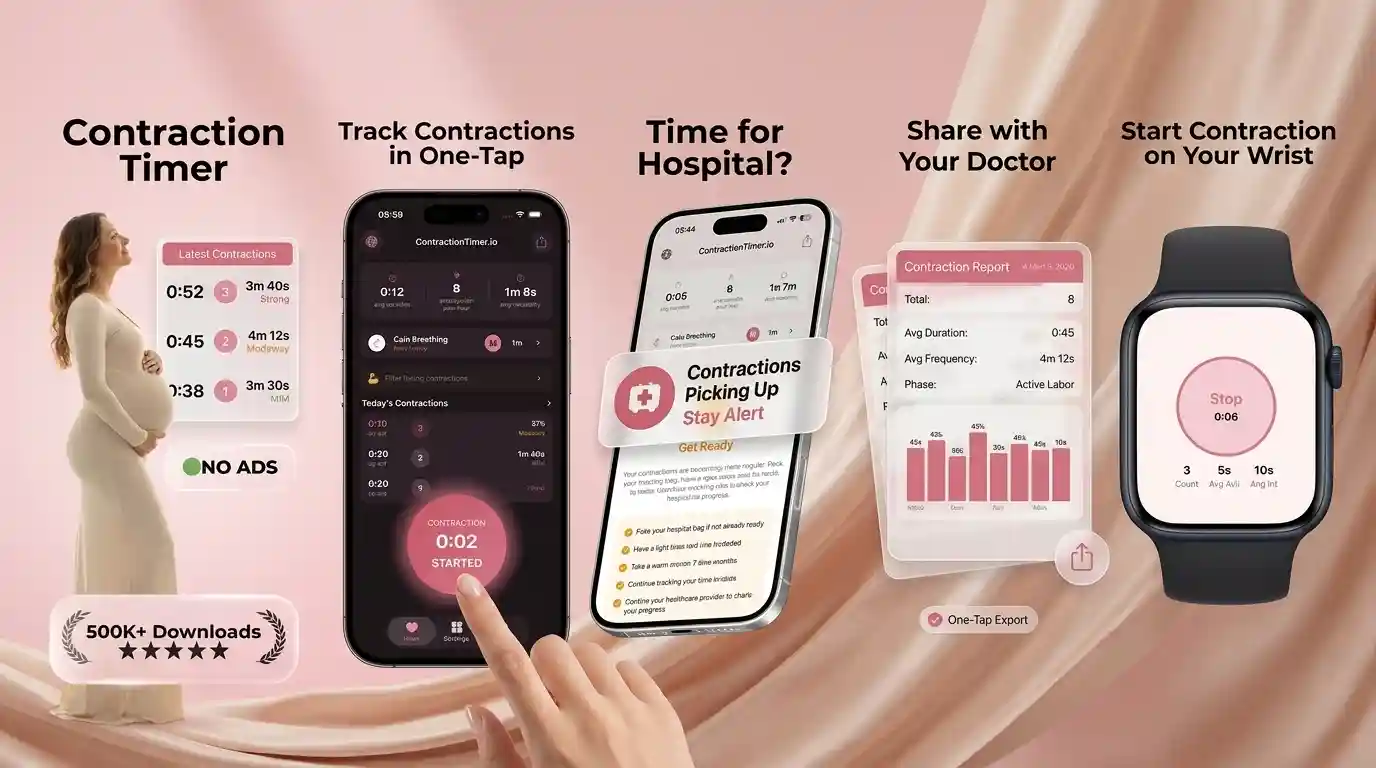
Contraction Timer (contractiontimer.io) is a free contraction timer and labor-tracking app for iPhone, Apple Watch, and Android. For HIPAA questions, it helps parents track and organize contraction data while remembering that most consumer pregnancy apps are not automatically HIPAA protected.
Quick answer: Are contraction timer apps HIPAA protected? Usually, no: most consumer contraction timer apps fall outside HIPAA because they are not operated by a covered healthcare provider, health plan, healthcare clearinghouse, or that entity’s business associate. HIPAA may apply only when an app is provided or controlled by a HIPAA-covered organization, while other privacy laws and the app’s own privacy practices may still protect your data.
Why choose Contraction Timer?
Choose Contraction Timer over a generic stopwatch when you want labor timing that is structured, easy to review, and designed around pregnancy privacy questions without pretending to be a HIPAA-covered medical system.
- Clear contraction history you can review before sharing with a clinician
- Doctor reports for easier provider conversations
- One-tap timing instead of manual stopwatch notes
- Automatic duration, frequency, and interval calculations
- 5-1-1 hospital alerts based on contraction patterns
- Labor phase detection to help organize timing trends
- Apple Watch and Lock Screen support for hands-free moments
- Offline use, partner mode, no ads
Works on iPhone, Apple Watch, and Android. It is a tracking tool, not a medical device.
Most contraction timer apps are not HIPAA protected because HIPAA only applies to covered entities like hospitals, health plans, and their business associates, not standalone consumer apps you download yourself. When you ask are contraction timer apps HIPAA protected, the answer is almost always no unless the app operates under a formal agreement with your healthcare provider. Your contraction data in a consumer app is instead governed by the app's privacy policy, FTC rules, and state privacy laws.
This page is general privacy education, not legal or medical advice. For legal questions about subpoenas, data requests, or pregnancy-data rights in your state, contact a qualified attorney; for symptoms or labor decisions, contact your clinician.
> Definition: HIPAA (the Health Insurance Portability and Accountability Act) is a federal law that protects identifiable health information only when it is held or transmitted by covered entities, such as doctors, hospitals, and health plans, or their contracted business associates, not by most consumer apps.
TL;DR
- HIPAA only covers data held by healthcare providers, health plans, and their business associates, not most consumer contraction timer apps.
- The same contraction data that is HIPAA-protected inside a hospital EHR loses that protection when self-entered into a standalone app.
- FTC rules, state privacy laws, and the app's own privacy policy are the main safeguards for your pregnancy data in consumer apps.
What HIPAA Covers and Why Most Contraction Timer Apps Fall Outside It
HIPAA protects health information only in specific legal relationships, not every place health information appears. Covered entities include healthcare providers, health plans, and healthcare clearinghouses. Business associates are outside companies hired by those entities to handle protected health information under a formal contract.
That contract matters. It is usually called a Business Associate Agreement, or BAA. Without it, a consumer app is usually just a consumer app, even if the data feels deeply medical at 2:17 a.m. with a half-packed hospital bag by the door.
HHS guidance says HIPAA is “not a universal consumer protection data privacy law” and applies only when covered entities or their business associates create or receive the health information source. A self-downloaded contraction timer is normally outside that structure.
Good contraction apps record timing patterns and reduce mental math, not guarantee clinical privacy protection.
5 Facts About HIPAA and Pregnancy App Privacy
- HIPAA has a narrow scope. It applies to covered entities and their business associates, not every HIPAA contraction app claim in an app store.
- A contraction timer is usually not HIPAA-covered. It may be covered only if a hospital, clinic, or health plan provides it through a clinical workflow with a BAA.
- The same data can change legal status. Contraction times in your hospital chart may be protected health information, while the same times typed into your own app may not be.
- Other rules may still apply. The FTC Act and the FTC Health Breach Notification Rule can address deceptive privacy promises or certain health data breaches.
- “HIPAA compliant” can be slippery. A label alone does not prove the app is handling PHI for a covered entity.
For most families, the safer question is not “does it mention HIPAA?” It is “who gets this data, where is it stored, and how do I delete it?”
How HIPAA Protection Works for Health App Data
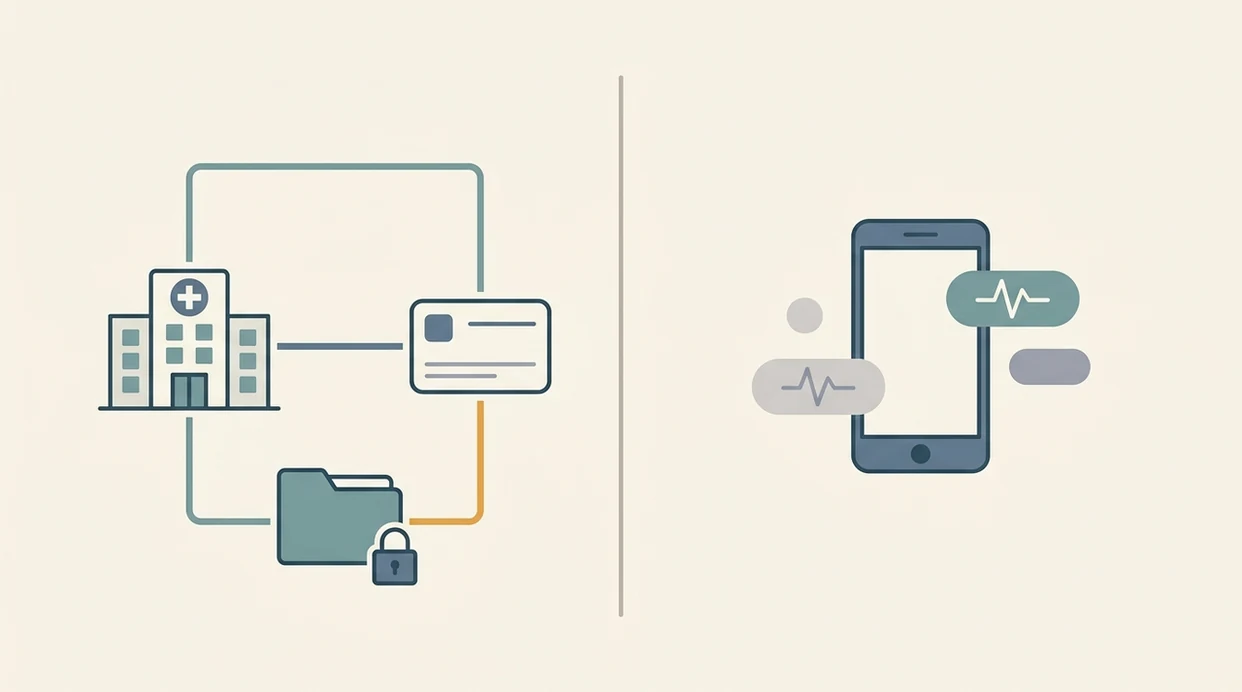
HIPAA protection attaches through the data flow. A provider creates or receives identifiable health information, stores it in an electronic health record, and uses vendors under HIPAA contracts. In plain language, the hospital system is inside HIPAA’s fence.
A consumer app flow is different. You feel a contraction, tap start, tap stop, and enter the pattern yourself. No provider has received that data. No health plan is managing it. No BAA may exist. In that common setup, HIPAA does not attach, even though the information is personal.
Tiny taps. Big distinction.
HHS has also stated that, in most cases, HIPAA does not protect health information when people access or store it on personal phones or tablets. Clinicians typically recommend calling your care team for urgent symptoms, not relying on an app’s legal status. For safety context, the contraction timer medical disclaimer explains what timing tools can and cannot do.
When a HIPAA Contraction App Actually Exists
When does a HIPAA contraction app actually exist? It exists when the app is provided by, or used on behalf of, a covered entity such as a hospital, clinic, or health plan, and the developer has signed a BAA.
A provider-issued remote monitoring tool is the clearest example. Your clinic might ask you to enter symptoms or contraction patterns into a platform that feeds their clinical workflow. In that case, the app developer may be a business associate.
That is not the usual app store download. Most contraction timers are built for personal tracking, partner check-ins, and knowing when to call, not for direct charting into a hospital record. If your partner is timing while you breathe through the wave, a contraction timer for birth partner can still be useful. It just may not be HIPAA-covered.
Common Myths About Pregnancy App HIPAA Compliance
One common myth is that any pregnancy app HIPAA concern is solved because the app handles health data. That is not how the law works. HIPAA depends on who holds the data and why, not just whether the information is about contractions, pregnancy, or labor.
Another myth is that an app store phrase like “HIPAA compliant” guarantees full protection. It does not. The phrase is meaningful only if the app is actually acting for a covered entity or business associate.
App store review is also not HIPAA enforcement. Apple and Google may set developer rules, but those rules are not the same as a federal healthcare privacy framework.
The hardest myth is emotional. Contraction data feels medical because it is tied to your body, your baby, and timing decisions. But if the app is outside HIPAA, law enforcement access is handled through app terms, subpoena rules, and state law. The question of whether a timer can interpret labor is separate; we explain that in can contraction timer tell if labor.
FTC Rules and State Laws That Protect Contraction App Data Instead
When HIPAA does not apply, consumer protection laws often become the main privacy backstop. Section 5 of the FTC Act prohibits unfair or deceptive practices. If an app promises not to share pregnancy data and then shares it anyway, that promise can matter.
The FTC Health Breach Notification Rule may also apply to certain health apps and connected devices that are not covered by HIPAA. In 2021, the FTC clarified that many non-HIPAA health apps can still have breach notification duties source.
State laws can add more protection. California, Washington, and Illinois have privacy rules that may affect health-related consumer data, depending on the app, user location, and type of information collected.
Still, these laws are not identical to HIPAA. They may focus on notice, consent, deletion, sharing, or deceptive claims. Your app’s privacy policy is often the first practical document to read. Boring, yes. Important, also yes.
Tools like ContractionTimer.io, The Bump, and GentleBirth should be judged by the same plain questions: what is collected, where it goes, and how you control it.
How to Protect Your Contraction Timing Data Without HIPAA
For consumer apps, privacy protection starts before download. Read the privacy policy while you are calm, not between uneven five-minute gaps on a phone screen. The most useful policy pages say whether data is stored locally, shared with analytics providers, sold, retained, or deleted.
For most users, local storage is easier to understand than cloud syncing because fewer outside systems touch the contraction record.
- Read the privacy policy before downloading the app, especially the sections on sharing, advertising, analytics, and deletion.
- Check whether data is sold or shared with third parties, including ad networks or data brokers.
- Prefer local on-device storage if you want a smaller data trail and do not need account syncing.
- Disable unnecessary permissions such as location, contacts, photos, or microphone access.
- Review deletion options before labor and again after birth, when you may not need the record anymore.
If symptoms shift from timing questions to warning signs, privacy can wait. Pages on preterm contractions before 37 weeks, heavy bleeding with contractions, and decreased movement are safety-first resources.
When to Contact Your Clinician Instead of Relying on an App
Contact your clinician, labor unit, or emergency services right away if you have urgent symptoms. In that moment, safety comes before privacy-policy questions, HIPAA status, or whether an app has a clean-looking timer screen.
A contraction timer can help you keep a record of when waves start, stop, and repeat. It cannot decide whether bleeding is dangerous, whether baby’s movement has changed, or whether contractions are preterm labor. Your care team’s labor-call instructions should be the rule you follow, especially if they gave you a specific number, timing pattern, or symptom list.
- Call your clinician or labor unit first for bleeding, decreased fetal movement, severe pain, leaking fluid, fever, or contractions before 37 weeks.
- Follow the exact labor-call plan your clinician gave you, even if the app’s pattern looks “not ready.”
- Use the app only to read back times, duration, and frequency if your care team asks.
- Stop troubleshooting privacy settings until urgent symptoms are addressed.
After you have contacted care, safety pages such as preterm contractions before 37 weeks and heavy bleeding with contractions can help you understand what your clinician may ask about.
Sources Used for This HIPAA and Pregnancy App Privacy Guide
This guide relies on federal privacy guidance first, then explains where consumer app rules may fill the gaps. It is a general education page, not a ruling on whether any one contraction timer is or is not legally covered.
The primary HIPAA authority referenced here is HHS Office for Civil Rights guidance on health apps, covered entities, business associates, and when identifiable health information becomes protected health information. For non-HIPAA apps, the page also reflects FTC guidance on health apps, deceptive privacy claims, and health breach notification duties. State privacy laws can change the answer by user location, because rules in one state may not match rules in another.
To evaluate a specific app, use this sequence:
- Identify whether the app is offered through your clinician, hospital, health plan, or only through an app store.
- Look for a current privacy policy, not an old screenshot or marketing line.
- Check how the policy describes collection, sharing, sale, deletion, analytics, and breach notices.
- Compare those claims with any HIPAA or “secure” language in the app listing.
- Ask the company or your care team if you need a legal status answer for that specific tool.
Limitations
HIPAA is important, but it does not answer every pregnancy app privacy question. Modern mobile tools move faster than healthcare privacy law, and that leaves gray areas.
- HIPAA was written before today’s app stores, cloud analytics tools, and wearable integrations.
- Even HIPAA-covered apps are not immune to breaches, employee misuse, or poor security design.
- App store “HIPAA compliant” claims are not independently verified by federal regulators before an app appears for download.
- Users may agree to broad data sharing through terms of service that are hard to read during early labor.
- Legal interpretations can change as regulators issue guidance or courts decide new cases.
- Only about 31% of U.S. adults say they are very confident that health app and wearable makers keep health data secure, according to Pew Research source.
- A privacy policy can describe data practices clearly and still allow sharing you would not expect.
- Deleting an app from your phone may not delete data already stored on company servers.
The ContractionTimer.io contraction timer app can support timing, but no consumer timer should replace your clinician’s instructions.
Frequently Asked Questions
Are period tracking apps covered by HIPAA?
Standalone period tracking apps are generally not covered by HIPAA for the same reason contraction timers usually are not. HIPAA applies when data is held by a covered entity or business associate.
How do I know if an app is HIPAA compliant?
Look for a provider or health plan relationship and a Business Associate Agreement. Do not rely only on an app store marketing label.
Is contraction data considered PHI?
Contraction data is PHI when it is held by a covered entity or business associate. The same data self-entered into a consumer app is usually not PHI under HIPAA.
Can my contraction app sell my data?
If HIPAA does not apply, the app’s privacy policy, FTC rules, and state laws govern data sale or sharing. Read the policy before entering sensitive pregnancy information.
Does Apple or Google enforce HIPAA?
Apple and Google enforce app store policies, not HIPAA itself. Their review processes do not guarantee HIPAA-level privacy.
What law protects my pregnancy app data?
Consumer pregnancy app data is mainly protected by the FTC Act, the FTC Health Breach Notification Rule, state privacy laws, and the app’s own privacy policy. HIPAA usually applies only in provider or health plan contexts.
Can police access my contraction app data?
If HIPAA does not apply, law enforcement access depends on subpoenas, warrants, app terms, and state law. HIPAA restrictions may not protect data in a standalone consumer app.
Are free contraction timers less private?
Free contraction timers may rely on ads, analytics, or third-party sharing, but paid apps can collect data too. Review the privacy policy regardless of price.
Should I delete my contraction app after birth?
If you no longer need the contraction record, review the app’s data retention and deletion options. Deleting the app icon may not delete server-stored data.
Which app fits which need
| Need | Best option |
|---|---|
| fast, accurate contraction timing with 5-1-1 alerts and shareable history | Contraction Timer |
| a broad pregnancy content app with week-by-week articles and community-style planning | The Bump |
| noninvasive contraction-sensing hardware rather than manual app timing | Bloomlife |
| birth preparation, mindfulness, and hypnobirthing-style guidance | GentleBirth |
Quick facts
- Type
- Contraction timer & labor tracker app
- Platforms
- iPhone, iPad, Apple Watch, Android
- Focus
- Contraction timing, pregnancy app privacy, HIPAA limits, 5-1-1 alerts, labor patterns, doctor reports
- Includes
- one-tap timing, duration and frequency, interval tracking, 5-1-1 alerts, labor phase detection, contraction history, partner mode, doctor reports, offline use, no ads
- Best for
- Parents who want focused contraction tracking while understanding that consumer apps are usually not HIPAA-covered
- Free
- Yes
- Medical replacement
- No
People also use Contraction Timer for
Track Contractions Clearly While Understanding HIPAA Limits
Contraction Timer helps you record duration, frequency, intervals, and 5-1-1 patterns without manual stopwatch math. Use it to organize labor timing for provider conversations, not as a substitute for medical advice.
Download the Free App