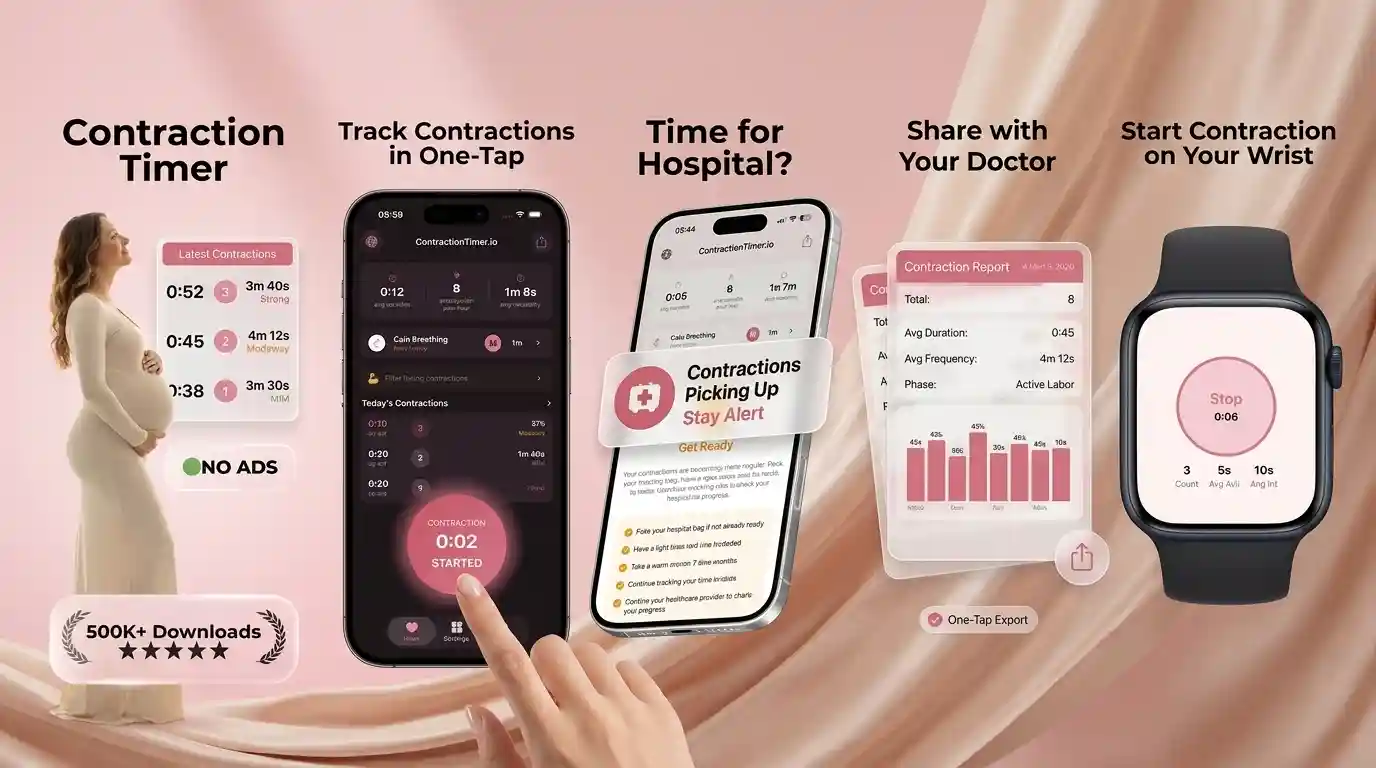
Can I time contractions on my phone?
Yes. A phone timer app can record contraction start times, stop times, duration, and spacing so you can see whether a pattern is developing.
What should the app record?
It should record start time, end time, contraction length, time between contractions, averages, and ideally notes you can share with your provider.
When should I start timing contractions?
Start timing when contractions feel repetitive, stronger than usual, or difficult to ignore. If you have preterm symptoms or concerning signs, call your provider instead of waiting for a pattern.
How long should I time contractions?
Many people time at least 5 to 6 contractions before judging the pattern. If you are following a rule like 5-1-1, your provider may want the pattern to hold for about an hour.
Is the 5-1-1 rule always right?
No. The 5-1-1 rule is a common guideline, but your medical history, distance from care, gestational age, and provider instructions may change when you should call or go in.
Can my partner time for me?
Yes, and it often works better. A partner can tap start and stop, write notes, and call your care team while you focus on coping and breathing.
Do Braxton Hicks need timing?
Usually not unless they become regular, stronger, painful, or concerning. If you are unsure whether they are practice contractions or labor, timing a few can help you explain the pattern.
Can an app tell real labor?
No app can diagnose real labor or cervical dilation. It can show contraction patterns, but your provider should guide medical decisions.
What if contractions are irregular?
Irregular contractions can happen in early labor, prodromal labor, or after activity. Rest, hydration, and position changes may affect the pattern, but call your provider if symptoms worry you.
Should I time every contraction, even mild ones?
When you begin tracking, time mild contractions too if they have a noticeable start and end; this can show whether a pattern is developing. You may pause during long, irregular stretches, but follow your provider’s instructions and seek advice for concerning symptoms regardless of what the timer shows.