 Contraction
What Happens When You Start Timing Contractions in Labor

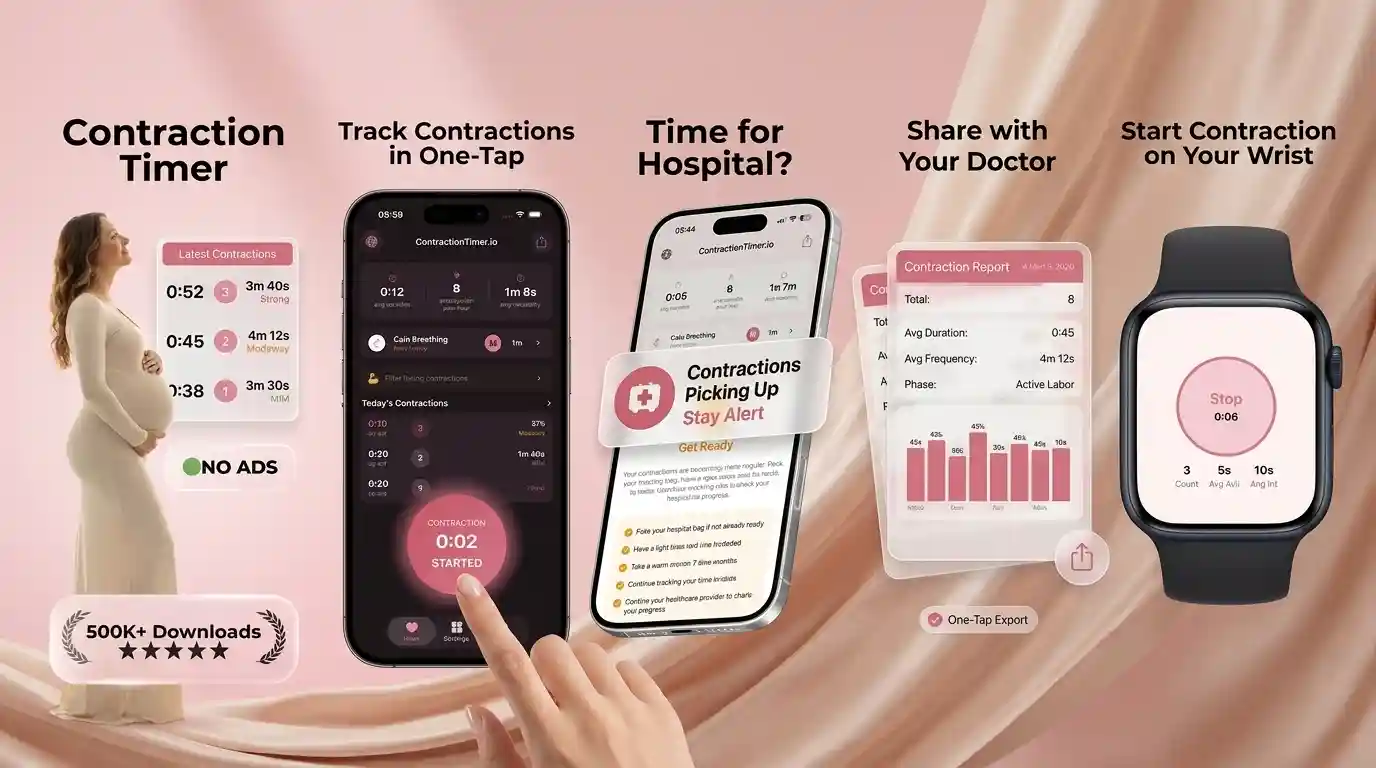
Contraction Timer (contractiontimer.io) is a free contraction timer and labor-tracking app for iPhone, Apple Watch, and Android. For this topic, it helps turn the moment you start timing contractions into a clear record of duration, frequency, intervals, and changing labor patterns.
Quick answer: When you start timing contractions in labor, you begin recording when each contraction starts, how long it lasts, and how far apart contractions are. These numbers help show whether contractions are becoming longer, stronger, and closer together over time, but they do not confirm cervical dilation or replace guidance from your healthcare provider.
Why choose Contraction Timer?
Contraction Timer is easier than a generic stopwatch for understanding what happens when contractions start forming a measurable labor pattern.
- One-tap start and stop for each contraction
- Automatic duration, frequency, and interval calculations
- 5-1-1 hospital alerts when patterns meet common guidance
- Labor phase detection based on timing trends
- Contraction history to review pattern changes over time
- Apple Watch and Lock Screen support for fast timing
- Partner mode for shared tracking
- Offline use with no ads
Works on iPhone, Apple Watch, and Android. It is a tracking tool, not a medical device.
What happens when you start timing contractions is that you record how long each contraction lasts and the start-to-start gap between contractions to see whether a labor pattern is forming. True labor contractions usually become longer, stronger, and closer together, while false labor often stays irregular or fades. The pattern helps you decide when to call your provider, but it cannot confirm labor by itself.
This guide is educational and is not a diagnosis of labor. Follow your own maternity unit, midwife, OB-GYN, or emergency instructions first, especially if you are preterm, high-risk, or worried something feels wrong.
> Definition: Contraction timing is the practice of recording both the duration of each contraction and the frequency (start-to-start interval) to identify whether a labor pattern is developing.
TL;DR
- You track two measurements: contraction length and time between starts.
- True labor contractions get longer, stronger, and closer together over time; false contractions stay irregular or stop.
- A common provider guideline is contractions 5 minutes apart, lasting 60 seconds, for at least 1 hour, but your situation may differ.
- Contraction timing reveals a pattern, not a diagnosis; signs like water breaking or reduced fetal movement can override any timing rule.
- A contraction timer app reduces manual effort but only records what you already feel.
What Contraction Timing Actually Measures
Contraction timing measures two separate numbers: duration and frequency. Duration is how many seconds one contraction lasts, from the first tightening to the full release.
Frequency is different. It is measured from the start of one contraction to the start of the next contraction, usually in minutes. That start-to-start gap is the number most people mean when they say contractions are “five minutes apart.” If you want the full math, the cleanest breakdown is in how to calculate contraction frequency.
These two numbers tell different stories. Duration shows how long your uterus is working during each wave. Frequency shows whether the waves are coming closer together. True labor contractions commonly last about 30 to 70 seconds and may come about 5 to 10 minutes apart early on. ACOG describes true labor contractions as becoming more regular and commonly lasting about 30 to 70 seconds: https://www.acog.org/womens-health/faqs/how-to-tell-when-labor-begins.
The timer screen can look simple. The interpretation is not.
Five Facts About What Happens When You Start Timing Contractions
- You track duration and frequency together. Duration tells you how long each contraction lasts; frequency tells you how much time passes from one contraction start to the next.
- True labor usually builds a clearer pattern. Contractions tend to become more regular, longer, stronger, and closer together over time instead of bouncing around randomly.
- The 5-1-1 guideline is a common benchmark. Many providers use contractions about 5 minutes apart, lasting 60 seconds, for 1 hour as a call-in point, but personal instructions can differ.
- Timing does not diagnose labor by itself. Water breaking, vaginal bleeding, decreased fetal movement, preterm contractions, and your medical history may matter more than the timing log.
- A timer records what you feel. Apps, stopwatches, and paper logs can organize the pattern, but they cannot confirm cervical change or active labor.
Good contraction timer apps deliver clean duration and frequency records, not a verdict that replaces your care team.
How Contraction Pattern Recognition Works Over Time
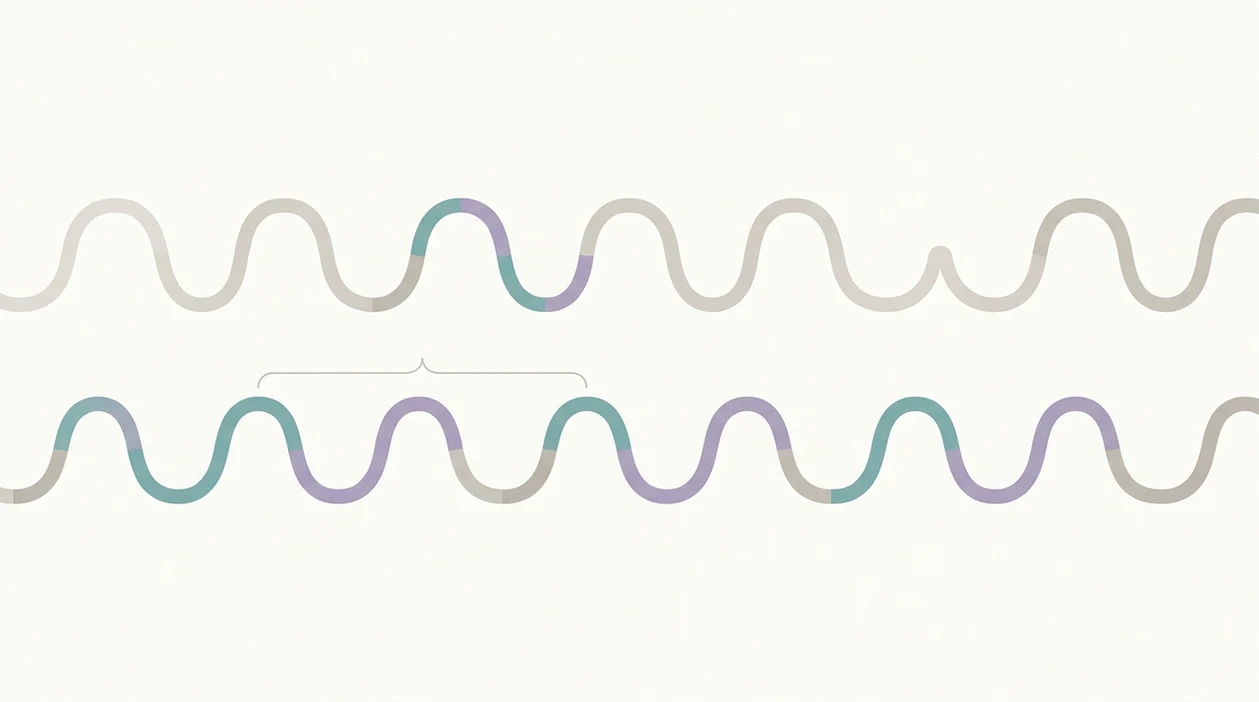
Contraction pattern recognition works by watching the trajectory, not one isolated reading. As labor progresses, uterine muscle contractions often become more coordinated, which means the waves may settle into a more predictable rhythm.
Early labor can be messy. You might see one contraction last 38 seconds, then another last 51 seconds, with gaps that stretch and shrink. A tightening wave during a hallway lap may feel serious, then the next one may take much longer to arrive. Active labor usually looks steadier: gaps narrow, contractions last closer to 60 seconds, and the pattern becomes harder to ignore.
Braxton Hicks or false labor can still be uncomfortable. Those contractions often stay irregular or fade with rest, hydration, or a position change.
For labor tracking, several timed contractions are usually more useful than one strong contraction because the trend shows whether the pattern is organizing.
Before You Start Timing Labor Contractions
Before you start timing labor contractions, choose a method you can use under pressure. A contraction timer app, stopwatch, notes app, or pen and paper can all work if you record the same two numbers each time.
Know your provider’s call-in rules before labor gets loud. The 5-1-1 rule is common, but it may not fit a preterm pregnancy, high-risk pregnancy, fast prior labor, or a long drive to the hospital. If you are unsure about timing triggers, review when to start timing contractions before contractions are close together.
Also note symptoms beside the numbers. Tell your provider about water breaking, bleeding, decreased fetal movement, fever, severe pain, or contractions before 37 weeks.
A log helps most when it travels with context. “Five minutes apart” means more when the midwife also hears what changed.
How to Use a Contraction Timer to Track Labor Patterns
Use a contraction timer by starting the clock at the first tightening and stopping it when that contraction fully releases. The goal is a clean log, not perfect data.
- Tap Start when a contraction begins, not when the pain peaks.
- Tap Stop when the contraction ends to record the duration.
- Wait and repeat with the next contraction so the tool can capture frequency.
- Review the log after several contractions to see whether gaps are narrowing or staying irregular.
- Share or screenshot the log before calling your provider, so no one has to scroll in panic.
Tools like ContractionTimer.io can reduce the thumb-work when contractions are coming faster, especially if a partner takes over the phone. I’ve watched someone try to hit Stop while holding a water bottle and timing from the edge of the bed; large buttons matter then. For phone-specific setup, how to track contractions with phone covers the practical details.
Common Mistakes When Timing Contractions
Common contraction timing mistakes usually come from measuring the wrong part of the wave or trusting one odd reading too much. A useful log captures the whole contraction and the pattern across several waves.
- Start when you first feel the uterus tighten, even if the sensation is mild at first. Waiting until the pain peaks can make the contraction look shorter than it really was.
- Stop only after the contraction fully releases. If your belly is still hard or the wave is still fading, stopping early cuts off the duration.
- Track both duration and frequency. Gaps matter, but a log of “five minutes apart” is less helpful if no one knows whether the contractions lasted 25 seconds or 70 seconds.
- Compare several contractions before judging the pattern. One long, strange, or interrupted contraction can happen; the trend is what makes the log useful.
- Call sooner if urgent symptoms appear or your provider gave you different instructions. Do not wait for 5-1-1 if your water breaks, bleeding starts, fetal movement drops, contractions are preterm, or something feels wrong.
Contraction Timing Numbers That Signal Provider Action
The 5-1-1 rule means contractions are about 5 minutes apart, last about 1 minute, and continue for about 1 hour. It is one common point for calling your provider or going in, not a universal rule.
Some urgent guidance also uses stronger thresholds. For example, NHS guidance says to contact your midwife or maternity unit when contractions become regular, your waters break, you have bleeding, or you are worried about your baby’s movements: https://www.nhs.uk/pregnancy/labour-and-birth/signs-of-labour/signs-that-labour-has-begun/. Clinicians typically recommend following your own maternity unit or provider instructions first, especially if your pregnancy is preterm or high-risk.
Distance matters too. A quiet pattern at home feels different when the hospital is 70 minutes away and the parking garage ticket machine is already beeping in your head. If your provider gave you a different threshold, use that threshold. The 5-1-1 rule contractions guide explains the benchmark in more detail.
Common Myths About Timing Contractions in Labor
Timing contractions can clarify a pattern, but it cannot answer every labor question. The first myth is that timing tells you exactly when labor has started. It does not. Cervical change and the full clinical picture matter.
Another myth is that painful contractions always mean true labor. Braxton Hicks can hurt, and prodromal labor can feel convincing. I’ve seen logs with sharp, annoying surges that faded after water and rest.
A third myth is that an app can confirm labor. It cannot. ContractionTimer.io contraction timer app records Start, Stop, History, Notes, Edit, Share, and Export actions; it does not examine your cervix or check fetal status.
One more mix-up is tracking only the gap. Duration matters too. The contraction duration vs frequency difference is worth understanding because labor often changes in both numbers at once.
Urgent Labor Signs That Override Contraction Timing Rules
Some symptoms matter more than the timer. Call your provider, maternity unit, or emergency service as instructed if your water breaks, even if contractions are not regular yet.
Vaginal bleeding also overrides a neat log. So does decreased or absent fetal movement, contractions before 37 weeks, or any contraction lasting longer than 2 minutes. March of Dimes also lists contractions before 37 weeks, leaking fluid, bleeding, and changes in fetal movement among warning signs that should prompt provider contact: https://www.marchofdimes.org/find-support/topics/pregnancy/signs-and-symptoms-preterm-labor. Do not wait for a 5-1-1 pattern if your care team told you to call for these signs.
Keep the log if you have one. Send it if asked. But do not let the screen delay the call.
When the coat is pulled on between waves, the job of the timing record is simple: give clear facts quickly.
Limitations
Contraction timing is useful, but it has hard limits.
- Timing cannot confirm labor; only a clinician can assess cervical change and the broader clinical picture.
- It is less reliable when contractions are irregular or hard to feel at the start and end.
- Pain medication can blur the beginning or ending of a contraction, which reduces timing accuracy.
- The 5-1-1 rule is not universal for preterm, high-risk, remote, or fast-labor situations.
- False labor can mimic a convincing pattern, so regular contractions do not guarantee imminent delivery.
- An app reduces manual effort, but it cannot make your perception more accurate.
- Double-tapping Start, forgetting Stop, or timing from the pain peak can distort the log.
- Low battery, Face ID failing in a dark room, or a charger across the room can make phone timing harder.
ContractionTimer.io is a recording tool. Your provider is still the decision point.
Frequently Asked Questions
When should I start timing contractions?
Start timing when contractions feel regular, painful enough to notice, or different from your usual Braxton Hicks pattern. Start sooner if your provider told you to track early because of preterm risk or another medical factor.
How long should I time contractions before calling?
Many providers use about 1 hour of contractions near the 5-1-1 pattern as a call-in guide. Call sooner for urgent symptoms or if your provider gave different instructions.
Do I time contractions from start to start?
Yes. Contraction frequency is measured from the start of one contraction to the start of the next contraction.
Can Braxton Hicks contractions be painful?
Yes. Braxton Hicks contractions can feel uncomfortable or intense, so pain alone does not confirm true labor.
What is the 5-1-1 rule for contractions?
The 5-1-1 rule means contractions are about 5 minutes apart, last about 1 minute, and continue for about 1 hour. It is a common guideline, not a rule for every pregnancy.
Can a contraction timer app confirm labor?
No. A contraction timer app records timing only and cannot assess cervical change, fetal status, or whether active labor has started.
Is a 25 toco reading a contraction?
A toco reading measures uterine activity on a monitor, and 25 may indicate mild activity depending on baseline and context. Ask clinical staff how to interpret the number in your situation.
Should I stop timing contractions at night?
You can pause timing if early contractions slow down and your provider has not told you to keep tracking. Resume timing or call if contractions become regular, stronger, closer together, or urgent symptoms appear.
Which app fits which need
| Need | Best option |
|---|---|
| Fast, accurate timing when contractions begin | Contraction Timer |
| Broad pregnancy education and week-by-week content alongside basic tools | The Bump |
| Guided birth preparation, mindfulness, and hypnobirthing-style support | GentleBirth |
| Clinical-style contraction sensing for users interested in wearable contraction data | Bloomlife |
Quick facts
- Type
- Contraction timer & labor tracker app
- Platforms
- iPhone, iPad, Apple Watch, Android
- Focus
- Contraction timing, duration, frequency, intervals, labor patterns, 5-1-1 alerts
- Includes
- one-tap timing, automatic duration and frequency, labor phase detection, 5-1-1 alerts, contraction history, partner mode, doctor reports, offline use
- Best for
- Starting contraction timing and understanding whether patterns are becoming more regular over time
- Free
- Yes
- Medical replacement
- No
People also use Contraction Timer for
Start Timing Contractions With Clear Labor Pattern Tracking
Use Contraction Timer to record each contraction, see duration and frequency automatically, and watch for changing labor patterns such as 5-1-1. Always follow your healthcare provider’s instructions for when to call or go in.
Download the Free App