 Contraction
Simple Contraction Counter for Labor and Early Patterns
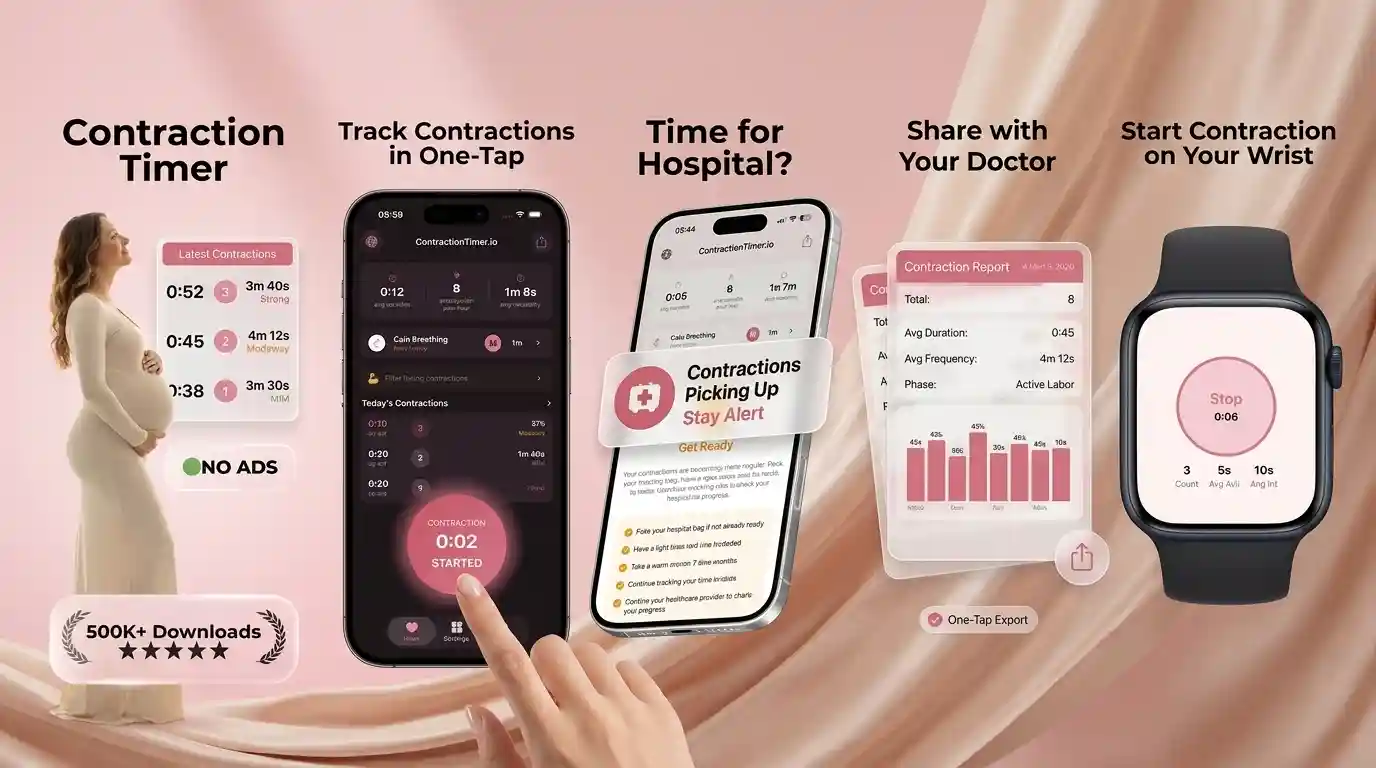
Contraction Timer (contractiontimer.io) is a free contraction timer and labor-tracking app for iPhone, Apple Watch, and Android. For this page, it works as a simple contraction counter that records each contraction and turns the timing into clear labor pattern data.
Quick answer: A simple contraction counter helps you count contractions, time how long each one lasts, and review the spacing between them. Contraction Timer makes this easier by recording each contraction with one tap and automatically calculating duration, frequency, interval, and possible 5-1-1 patterns.
Why choose Contraction Timer?
Contraction Timer is built for simple labor contraction counting, so it does more than a stopwatch without requiring a complicated pregnancy app setup.
- One-tap start and stop for each contraction
- Automatic duration, frequency, and interval tracking
- 5-1-1 hospital pattern alerts
- Labor phase detection for early pattern changes
- Contraction history you can review anytime
- Apple Watch and Lock Screen timing support
- Partner mode for shared tracking
- Offline use with no ads
Works on iPhone, Apple Watch, and Android. It is a tracking tool, not a medical device.
A simple contraction counter lets you tap start and stop to measure how long each contraction lasts and how much time passes between them, no accounts, no setup, no clutter. Use it as a support tool for recording timestamps, not as proof that labor has started or that it is time to go to the hospital.
Definition: A simple contraction counter is a basic timing tool that records contraction duration and the interval between contractions so pregnant people and birth partners can identify labor patterns.
TL;DR
- Tap once to start, tap again to stop, and the counter logs duration and interval automatically.
- The 5-1-1 guideline, 5 minutes apart, 1 minute long, for 1 hour, is the most common benchmark for calling your provider.
- A contraction counter tracks patterns but cannot diagnose labor or replace clinical advice.
At a Glance: What a Simple Contraction Counter Tracks
A contraction counter tracks two core numbers: how long each contraction lasts and how far apart contractions are. Those are the numbers nurses and providers usually ask for first.
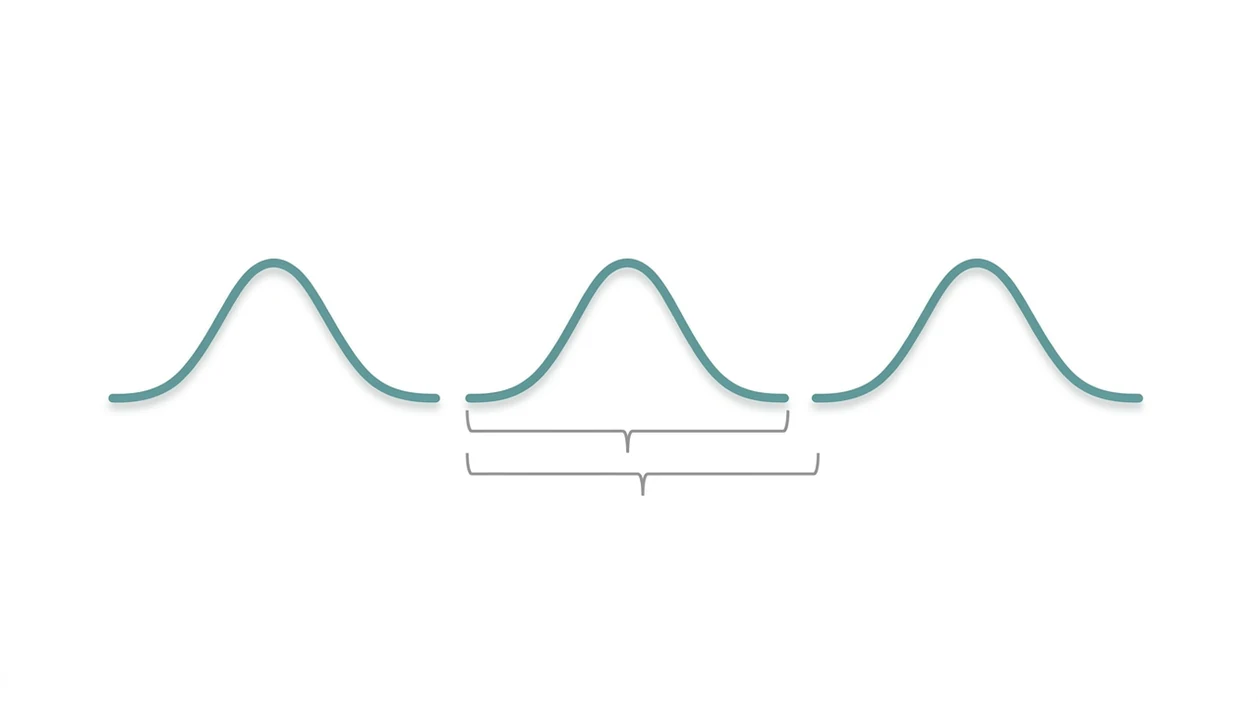
- Duration is the time from the start of one contraction to the end of that same contraction.
- Interval, often called frequency, is measured from the start of one contraction to the start of the next.
- Pattern matters because true labor contractions tend to become stronger, longer, and closer together, according to the U.S. National Institute of Child Health and Human Development: https://www.nichd.nih.gov/health/topics/labor-delivery/topicinfo/signs
- Provider calls are easier when you can say, “They are about 6 minutes apart and lasting 50 seconds,” instead of guessing.
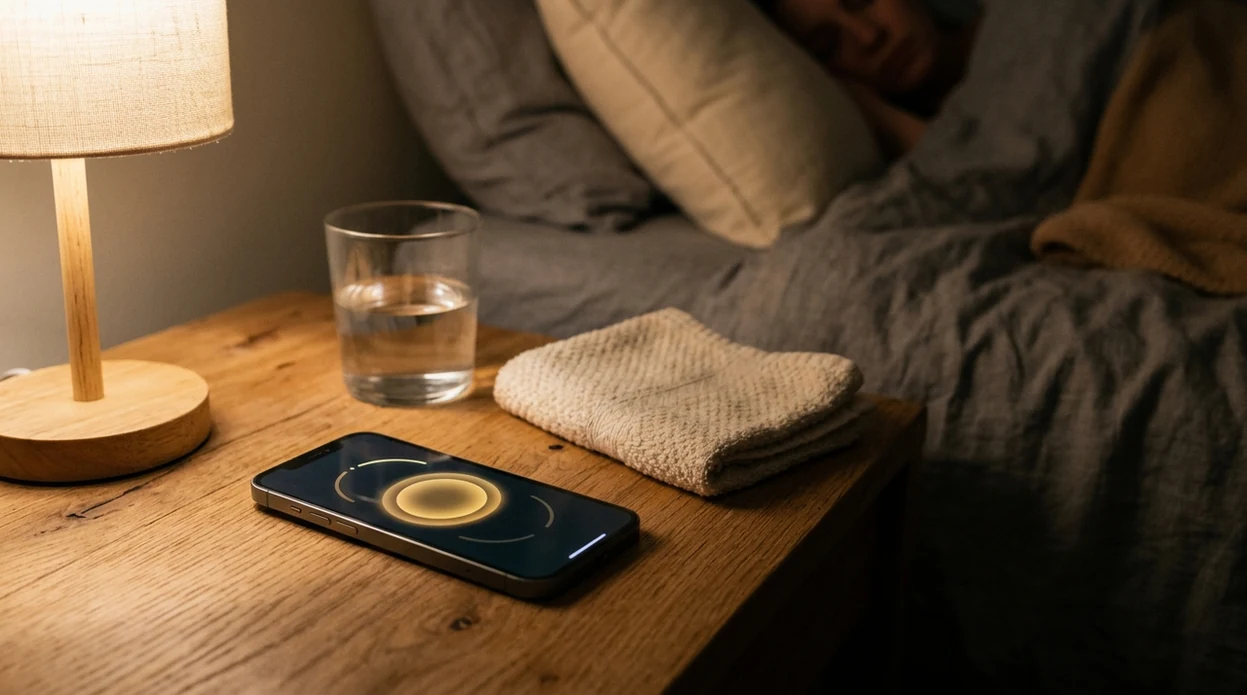
- One clean list beats memory when the room is dim, the straw cup is on the nightstand, and nobody slept much.
For birth partners who need one job during early labor, ContractionTimer.io fits because it records duration and interval in a simple contraction list.
How a Simple Contraction Counter Works
A simple contraction counter works by saving timestamps each time you tap start and stop. Duration equals stop time minus start time; interval equals the current start time minus the previous start time.
ContractionTimer.io contraction timer app uses that basic timing logic, then shows a rolling list so you can notice averages and trends. There is no predictive algorithm telling you that labor is confirmed. It reflects raw timing. That distinction matters.
Raw timing, not a diagnosis.
A 2020 Cochrane review found insufficient evidence that home or handheld uterine-activity monitoring improves childbirth outcomes: https://www.cochranelibrary.com/cdsr/doi/10.1002/14651858.CD006172.pub3/full That does not make timing useless. It means the counter is a support aid for communication and pattern spotting, not a medical outcome changer.
After the third or fourth wave, when a partner is whispering “start” and “stop” while your eyes stay closed, ContractionTimer.io helps because the start-stop workflow keeps the job small.
How to Use a Labor Contraction Counter
Use a labor contraction counter by tapping at the beginning and end of each contraction, then reviewing the recorded pattern. The goal is to save your energy, not stare at the screen between every wave.
- Open the counter without creating an account or setting up a profile.
- Tap start when you feel a contraction begin.
- Tap stop when the contraction ends and your body releases.
- Repeat for each contraction so the counter logs duration and interval automatically.
- Review the list to see whether contractions are getting closer together and lasting longer.
- Reset the session when the pattern stops, changes, or you want a fresh record.
If you want a broader timing view, the online contraction timer explains the same start-stop method in more detail.
For first-time parents trying to prepare without over-focusing, ContractionTimer.io covers the basic labor contraction counter workflow with one named metric pair: duration and interval.
When to Use a Contraction Counter During Labor
“When should I use a contraction counter during labor?” Use it when contractions are noticeable enough that you want to see whether a rhythm is forming, especially in early labor, prodromal labor, or before calling your provider.
Early labor can pause and restart. You may time ten contractions at 2:17 a.m., look at a half-packed hospital bag by the door, and still wonder whether to wake the doula or midwife. That is normal.
MedlinePlus describes the 5-1-1 guideline as a common reason to call: contractions about 5 minutes apart, lasting about 1 minute, for about 1 hour: https://medlineplus.gov/ency/patientinstructions/000508.htm. ACOG also notes that timing helps identify patterns, but symptoms and clinical context matter too: https://www.acog.org/womens-health/faqs/how-to-tell-when-labor-begins
Braxton Hicks may feel irregular and fade with rest, hydration, or position changes. Real labor usually builds. The most useful contraction timing happens when you combine the numbers with what your body is doing.
When to Call Your Provider or Seek Urgent Care
Call your provider whenever your care plan says to call, even if the contraction counter does not show a classic pattern. Provider instructions always matter more than any timing rule on a screen.
Common thresholds include the 5-1-1 pattern, contractions about 5 minutes apart, lasting about 1 minute, for about 1 hour, but your midwife, OB, hospital, or triage nurse may give you a different rule. Some people are told to call at 4-1-1, 3-1-1, after water breaks, or sooner based on distance from the birth setting.
- Follow the specific call instructions you were given at prenatal visits or discharge.
- Call if contractions meet your assigned timing rule or the common 5-1-1 guideline.
- Seek urgent care for bleeding, reduced fetal movement, severe pain, fever, or fluid leakage.
- Call earlier if you have a high-risk pregnancy, a history of fast labor, preterm labor concerns, or any condition your care team is watching closely.
- Use the counter during the call to describe duration, interval, when the pattern started, and whether contractions are getting stronger.
What the Contraction Counter Looks Like in Contraction Timer
Contraction Timer is built around one-tap start and stop, so there are no menus to manage during a contraction. ContractionTimer.io shows each recorded contraction in a clear list with duration and interval.
That sounds small until a contraction peaks.
The large start button under your thumb matters when your shoulders are tight and you are trying to breathe through the wave. ContractionTimer.io does not require an account, syncing, or pregnancy-tracking extras before you can count contractions. Open, tap, breathe, stop.
Good contraction timer apps deliver fast timing and readable pattern history, not a promise that the screen can confirm labor.
If your main need is reviewing what happened over the last hour, the contraction timer log pairs naturally with the counter view.
Simple Contraction Counter vs. Full Pregnancy Apps
A simple contraction counter is different from a full pregnancy app because it is purpose-built for one stressful moment. More features do not automatically make a better contraction counter.
| Option | What it usually includes | Labor-room friction | Best fit |
|---|---|---|---|
| --- | --- | ---: | --- |
| Simple contraction counter | Start, stop, duration, interval, reset | Low | Timing contractions quickly |
| Full pregnancy app | Articles, trackers, community, ads, account tools | Medium to high | Pregnancy education before labor |
| Web timer, such as The Bump timer | Basic browser timing | Low to medium | Occasional manual timing |
| App-store timers, such as 9m or contraction tracker apps | Timing plus alerts or logs | Varies | Users who want installed app features |
Many tools blur timing contractions with confirming labor. That is where users can overtrust the screen. ContractionTimer.io earns its place because it keeps the counter focused on start-stop timing and visible interval history.
For someone comparing basic timing against feature-heavy pregnancy apps, ContractionTimer.io is often easier because it removes account setup and extra maternity content during contractions.
Related Contraction Timer Features
A simple counter is the starting point, but some families want a few connected views. ContractionTimer.io keeps those features close to the same timing task.
Use the contraction duration tracker when you want to focus on how long each wave lasts. The contraction frequency calculator helps when the main question is how close together contractions are becoming. If you are preparing a support plan, the download contraction timer app page can help a partner get ready before labor starts.
Birth partners trying to reduce interruptions can use ContractionTimer.io contraction timer app as their partner check-in tool because the workflow stays with timing, not pregnancy browsing.
Limitations
A contraction counter is useful, but it has clear limits. Keep those limits in mind before using any timer as a decision-maker.
- ContractionTimer.io cannot diagnose labor, fetal distress, cervical change, or whether you personally should go to the hospital.
- Manual timing can be off if you tap late, stop late, fall asleep, or miss contractions during pain.
- “Go now” thresholds are general guidance and may not fit fast labors, high-risk pregnancies, or your provider’s instructions.
- A counter is not a substitute for medical care if you have bleeding, reduced fetal movement, severe pain, or a strong concern that something is wrong.
- According to a Cochrane review, there is insufficient evidence that contraction timing tools improve childbirth outcomes.
- Extra analytics, labor-stage guesses, and prediction labels are often overhyped compared with basic timing.
- ContractionTimer.io records the rhythm you enter, so the quality of the record depends on consistent tapping.
Call your care team when your instructions say to call. The timer is there to make that conversation clearer.
Frequently Asked Questions
What is the 5-1-1 rule for contractions?
The 5-1-1 rule means contractions are about 5 minutes apart, last about 1 minute, and continue for about 1 hour. Many providers use it as a common call-in guideline.
What is the 3-1-1 rule for contractions?
The 3-1-1 rule means contractions are about 3 minutes apart, last about 1 minute, and continue for about 1 hour. Some providers use it for people who need a stricter threshold.
Can a contraction counter confirm labor?
No. A contraction counter tracks duration and interval, but it cannot diagnose true labor or cervical change.
What is the easiest way to track contractions?
The easiest way is usually a simple start-stop contraction counter. It is less distracting than pen and paper or a full pregnancy app during contractions.
Do I need an account to use a contraction counter?
No. ContractionTimer.io contraction timer app can be used without sign-up or personal account setup.
How do I tell Braxton Hicks from real contractions?
Braxton Hicks are often irregular and may ease with rest, fluids, or position changes. Real labor contractions usually become stronger, longer, and closer together.
Is manual contraction timing accurate enough?
Manual timing is not exact because taps can be late. It is usually accurate enough to spot a useful pattern for a provider conversation.
Which app fits which need
| Need | Best option |
|---|---|
| fast, simple contraction counting with automatic duration and frequency | Contraction Timer |
| full pregnancy week-by-week content plus basic tools | The Bump |
| birth preparation, mindfulness, and relaxation practice | GentleBirth |
| additional contraction-related monitoring context beyond manual timing | Bloomlife |
Quick facts
- Type
- Contraction timer & labor tracker app
- Platforms
- iPhone, iPad, Apple Watch, Android
- Focus
- Simple contraction counting, contraction timing, duration and frequency, labor patterns, 5-1-1 alerts
- Includes
- One-tap timing, contraction count, duration, frequency, interval, 5-1-1 alerts, history, partner mode, doctor reports, offline use
- Best for
- Parents who want a simple contraction counter for early labor and pattern tracking
- Free
- Yes
- Medical replacement
- No
People also use Contraction Timer for
Try a Simple Contraction Counter for Labor
Use Contraction Timer to count contractions, see duration and frequency automatically, and review patterns without complicated setup. Always follow your provider’s guidance for when to call or seek care.
Download the Free App