
No Account Contraction Timer For Private Labor Logs



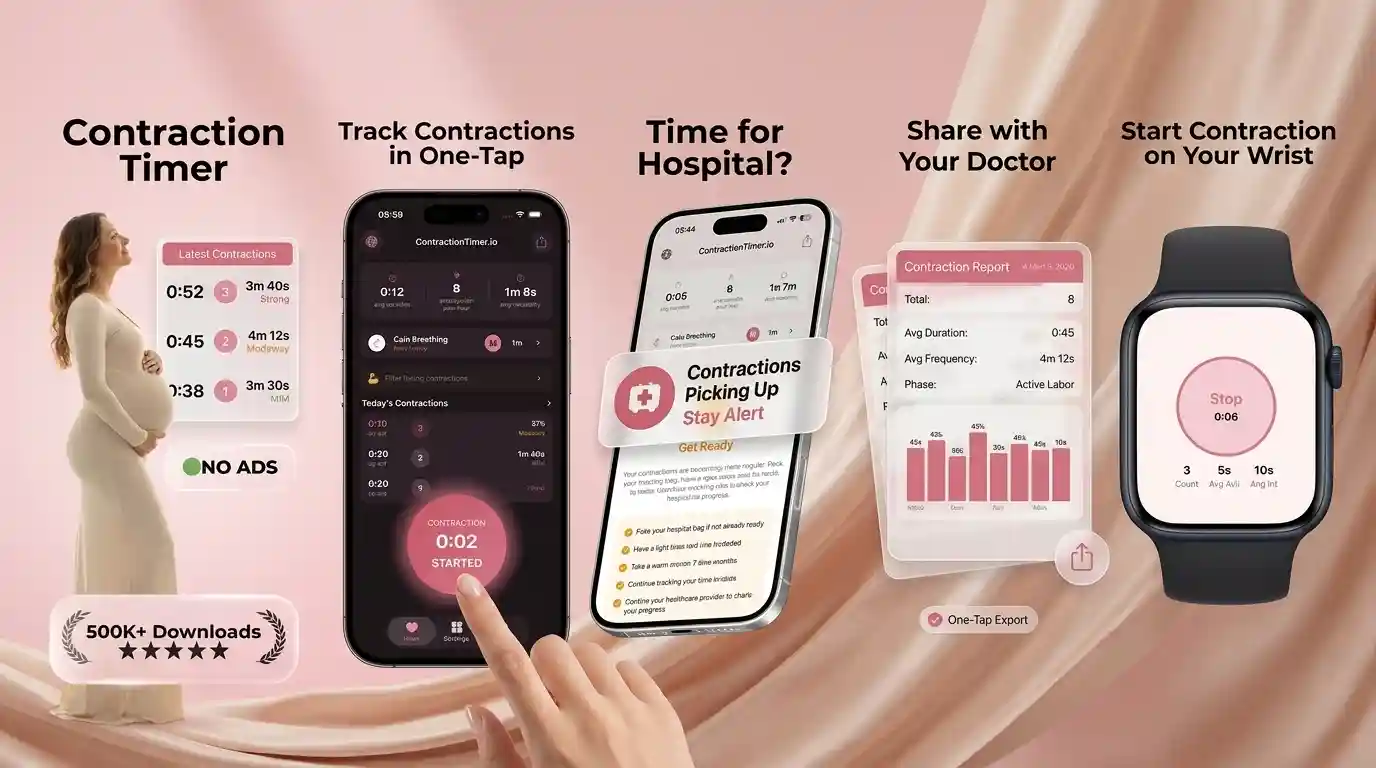
A no account contraction timer lets you tap start and stop to track contraction duration, frequency, and patterns without creating a login, sharing an email address, or syncing personal pregnancy data to the cloud. It stores everything locally on your device so your labor information stays private and immediately accessible.
Definition: A no account contraction timer is a contraction tracking tool, app or web-based, that records contraction length, spacing, and patterns on-device without requiring signup, login, or personal data collection.
TL;DR
- No signup, no email, no social login, just tap to time contractions privately on your device
- Local-only storage means your pregnancy data never leaves your phone or browser session
- Health-app privacy concerns are real because some apps can collect or share sensitive data outside traditional medical settings, so account-free timing can reduce exposure (FTC).
- Timing alone cannot diagnose true labor or complications, always confirm patterns with your provider
- Watch for the 3-5-1 pattern, contractions every 3 to 5 minutes, lasting about 60 seconds, for 1 hour, as a cue to call your care team
What a No Account Contraction Timer Covers
A no account contraction timer records contraction starts, stops, duration, and spacing without asking who you are. You tap once when the wave begins, tap again when it fades, and the timer calculates the rest.
That sounds small until it is 2:17 a.m., the hospital bag is half-packed by the door, and nobody wants to create another password. A private contraction timer should not require an email address, phone number, or social login. The log stays on your phone or in an anonymous browser session, instead of being tied to a cloud profile.
That distinction matters. The FTC warns that health apps may collect, use, or share sensitive health information in ways users do not expect, which makes local, no-account timing a practical privacy choice (FTC). Local timing does one job: it helps you notice the rhythm, not build a pregnancy data profile.
Good contraction timer apps deliver duration, frequency, and trend clarity, not identity-based tracking or medical certainty.
Five Facts About Private Contraction Timers
- Accuracy comes from taps, not accounts. A contraction timer without login can be just as accurate as a logged-in timer if the start and stop taps are precise.
- Hospital timing still matters. Per CDC birth data, 98.4% of U.S. births in 2022 occurred in hospitals, so timing tools often help families decide when to call or go in (CDC NCHS 2022 birth data).
- Pregnancy apps are already common. Many pregnant people use mobile tools during pregnancy, but exact usage varies by study population, country, and survey design.
- The 3-5-1 pattern is a common call cue. Many care teams want to hear when contractions are every 3 to 5 minutes, last about 60 seconds, and continue for an hour. Your own instructions come first.
- Preterm contractions need a provider. About 10% of U.S. babies are born before 37 weeks, so new contractions before then should prompt medical contact, not quiet app-watching (CDC).
The car keys sometimes land beside the timer before anyone says, “Is this it?”
Specific Privacy Guarantees of a Contraction Timer Without Login
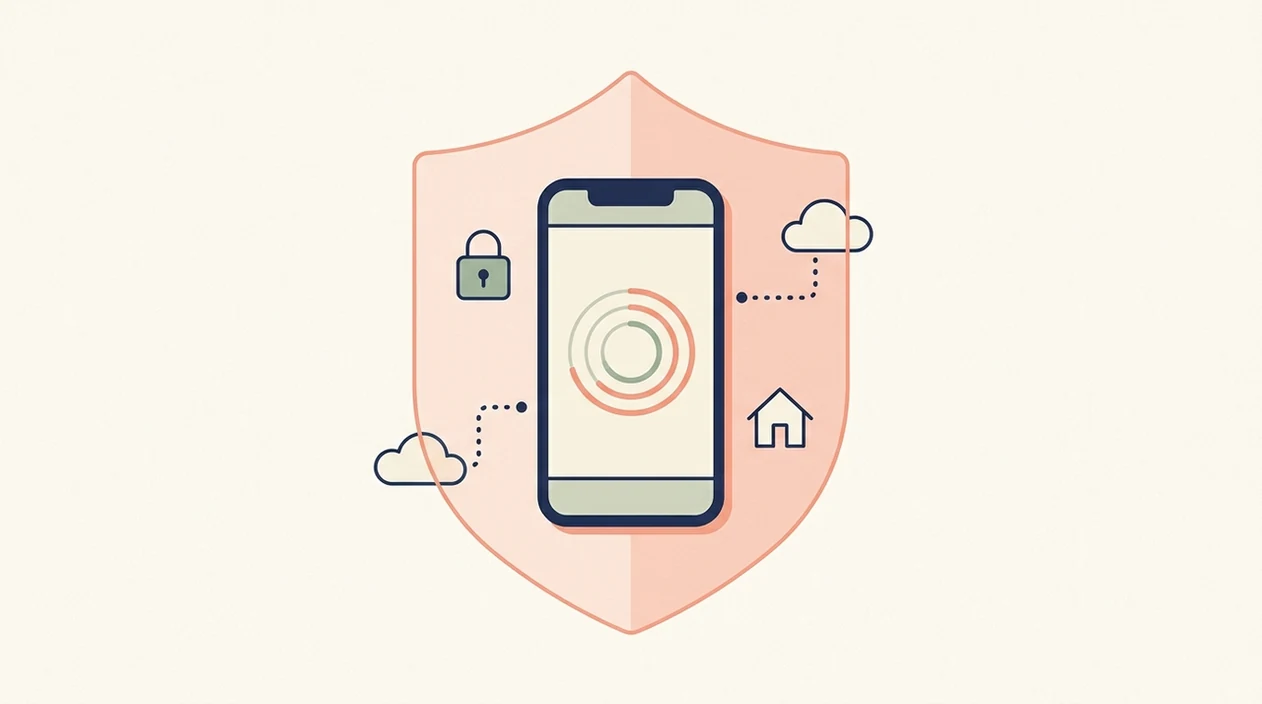
A contraction timer without login should collect no email address, phone number, username, or social account connection. If it needs those details before you can time a contraction, it is not truly account-free.
Local-Only Storage vs. Cloud-Synced Data
Local-only storage keeps contraction entries on the device or browser you used. Cloud-synced storage sends data to a server so it can appear on other devices, but that requires more data handling. Local-only is often better for privacy because there is less to transmit, store, or connect to your identity.
Check the privacy policy anyway. Some no-login tools still use cookies, analytics, or crash reporting. No account does not always mean no data at all.
Tools like ContractionTimer.io can fit this privacy-first workflow when the priority is fast timing without a signup step. If you want a browser option, an online contraction timer is usually the simplest place to start.
How a No Account Contraction Timer Works
A no account contraction timer works by saving timestamps locally. Tap start, and the tool records the exact start time. Tap stop, and it subtracts start from stop to calculate contraction duration.
The interval is calculated from the start of one contraction to the start of the next. That is the number many nurses ask for during a call: “How far apart are they?” The timer may compare recent entries against a pattern such as 3-5-1, but it is still pattern detection, not diagnosis.
Under the hood, web timers often use browser localStorage or device memory. In plain language, the log stays in the browser space on that device unless the tool says otherwise. There is no personalization engine or identity layer. Accuracy is timer logic plus human input.
Once loaded, many local timers can keep running without internet. That helps if the Wi-Fi drops during hallway laps.
Medical Boundaries for a Private Contraction Timer
A private contraction timer cannot tell you whether labor is true labor, false labor, Braxton Hicks, or prodromal labor. It can show a pattern, but it cannot check the cervix, baby’s position, fetal heart rate, or overall well-being.
Clinicians typically recommend using contraction timing as one communication tool, then confirming next steps with your care team. Generic “go to hospital” prompts should never override the instructions you were given by your midwife, OB, triage nurse, or birth center.
If there is heavy bleeding, decreased fetal movement, severe pain, fever, or a feeling that something is wrong, stop timing and seek care. Before 37 weeks, new regular contractions deserve immediate medical contact because about 10% of U.S. births are preterm.
For most families, a timer is often easier than mental math because it preserves the details while you breathe through the wave.
Common Myths About Contraction Timers Without Login
One myth is that no-account timers are less accurate. They are not automatically weaker. The timer does not need your email address to calculate 58 seconds.
Another myth is that a “go to hospital” message means you can skip calling. Don’t. A nurse may ask about spacing, bleeding, fetal movement, water breaking, and your medical history. The timer only answers one piece of that.
A third myth is that no-login means zero data collection. Some tools still use analytics or cookies, so the privacy policy matters. Boring, but important.
Finally, a contraction timer cannot guarantee an unmedicated birth, prevent complications, or make labor progress. It is a record-keeping tool. If contractions are strong enough to stop conversation, then vanish after lying down for 40 minutes, the log may help you describe that pattern clearly.
The contraction frequency calculator can help explain spacing if the numbers start blurring together.
Contraction Timer Support and Local Data Reset
Local data is easy to remove, which is useful for privacy and risky for record-keeping. Clearing browser data, deleting app cache, switching devices, or using private browsing can erase the contraction log.
No account also means no password reset and usually no recovery email. The data is temporary by design. If you want a record for your provider, take screenshots or export the log before clearing anything.
Simple backup habit: screenshot before you reset.
For questions about how a specific timer stores or clears entries, use its contact page or in-app help. If you need a fuller record format, a contraction timer log may be easier to review during a provider call.
Sources and Medical Review Standards
This page separates privacy claims from labor-safety guidance so each type of statement can be checked against the right source. Privacy language is based on FTC consumer guidance about health apps, while labor timing, preterm birth, and hospital-birth context are checked against CDC materials, ACOG patient guidance, and peer-reviewed obstetric and digital-health literature where available.
Medical safety wording is reviewed by a clinically trained maternal-health reviewer before publication and rechecked during content updates; this version was last checked in 2026. The review focuses on whether app prompts are framed as general education, not diagnosis or instructions to delay care.
- Check privacy statements against consumer-protection and health-app privacy sources, keeping them separate from labor recommendations.
- Compare timing language against obstetric guidance, including common call cues such as contraction spacing and duration.
- Flag preterm-labor language separately, because contractions before 37 weeks carry different safety advice than term labor.
- Defer to your own provider every time: midwife, OB, triage nurse, or birth center instructions override general timing rules, app alerts, and on-screen prompts.
Limitations
A no account timer protects privacy by keeping things simple, but that simplicity has tradeoffs.
- No backup or cross-device sync means clearing your browser, losing your phone, or deleting app data may erase the full history.
- No account usually means your partner cannot see the same live log on another phone.
- No-login timers do not connect to medical records, doula dashboards, or hospital triage systems.
- The timer cannot assess cervical dilation, baby’s position, fetal heart rate, or whether labor is progressing safely.
- Late taps, missed taps, or timing Braxton Hicks can create misleading patterns.
- Offline use depends on whether the timer was already loaded and built to keep working locally.
- Even the most private timer cannot replace urgent medical evaluation for bleeding, decreased fetal movement, severe pain, or a strong worry that something is wrong.
If you prefer an installed option before labor starts, you can download contraction timer app while you still have calm hands and a charger nearby.
Frequently Asked Questions
Do contraction timer apps really work?
Yes. Tap-based contraction timer apps can accurately record duration and spacing, but they cannot diagnose labor or complications.
Is a no-login timer less accurate?
No. Accuracy depends on tap timing and timer logic, not whether you created an account.
Can I use it offline?
Yes, many local-only timers work offline once loaded on your device. Check the tool before labor if offline access matters.
What happens if I clear my browser?
Clearing browser data or cache can erase a local-only contraction log. Screenshot or export entries first if you want a record.
Is it safe to time preterm contractions?
Contractions before 37 weeks should prompt immediate medical contact. Do not rely on app-only monitoring for possible preterm labor.
Can I share logs with my partner?
Without an account, live syncing is usually unavailable. You can share screenshots or an exported log if the timer supports export.
Does a private timer collect any data?
Some private timers still use analytics or cookies. Read the privacy policy, even when no login is required.
How do I tell Braxton Hicks apart?
A timer cannot confirm Braxton Hicks versus true labor. Your provider can interpret the pattern with your symptoms and pregnancy history.
When should I start timing contractions?
Start timing when contractions become noticeable, repeat, or seem to develop a pattern. Contact your maternity team promptly for contractions before 37 weeks, heavy bleeding, fluid leakage, reduced fetal movement, severe pain, or any symptom your care plan identifies as urgent.
What Contraction Details to Report to Your Maternity Team
A clear labor log can make a phone call to your midwife, obstetrician, or labor and delivery unit more useful. Note when regular contractions began, how long each contraction lasts, and the interval from the start of one contraction to the start of the next. For example: “For the past hour, contractions have lasted 45-60 seconds and started 4-6 minutes apart.” Mention whether the pattern is becoming stronger, longer, or closer together.
- Report possible warning signs separately, including vaginal bleeding, fluid leakage, severe or constant pain, fever, or reduced fetal movement.
- State your current week of pregnancy, especially if you are under 37 weeks.
- Explain whether rest, hydration, movement, or changing position affected the pattern.
- Follow your care team’s instructions rather than waiting for a particular timing rule or app alert.
Labor timing notes
Timing alone does not confirm active labor; clinicians consider pattern, duration, intensity, and cervical change. True labor generally becomes regular and closer together, with contractions lasting 60-90 seconds, while early-labor contractions may last 30-45 seconds and remain irregular. Follow your individual care plan, and contact maternity care promptly for labor signs before 37 weeks, waters breaking, heavy bleeding, or severe constant pain.
| Frequency | Every 5 minutes or more often |
|---|---|
| Duration | Longer than 2 minutes |
| High frequency | 6 or more in 10 minutes |
Source: NHS stages of labour and birth