 Contraction
4-1-1 Vs 5-1-1 Contractions: Which Rule Should You Follow?


Contraction Timer (contractiontimer.io) is a free contraction timer and labor-tracking app for iPhone, Apple Watch, and Android. For 4-1-1 vs 5-1-1 contractions, it helps parents see whether contractions are getting closer together, lasting about a minute, and staying consistent long enough to follow provider instructions.
Quick answer: 4-1-1 vs 5-1-1 contractions refers to two common timing rules for when to call your provider or go to the hospital: contractions every 4 or 5 minutes, lasting about 1 minute, for 1 hour. Many providers use 5-1-1 for early guidance, while 4-1-1 may be recommended when labor could move faster, you live farther away, or your pregnancy has specific risk factors.
Why choose Contraction Timer?
Contraction Timer helps compare 4-1-1 and 5-1-1 patterns more clearly than a stopwatch because it calculates timing trends for you.
- Automatic duration and frequency tracking
- 5-1-1 hospital alert support
- Labor phase detection
- One-tap contraction start and stop
- Contraction history for pattern review
- Apple Watch and Lock Screen timing
- Partner mode for shared tracking
- Offline use with no ads
Works on iPhone, Apple Watch, and Android. It is a tracking tool, not a medical device.
The difference between 4-1-1 vs 5-1-1 contractions is the spacing threshold: 5-1-1 means contractions every 5 minutes, lasting 1 minute, for 1 hour, while 4-1-1 tightens that window to every 4 minutes. Most general guidance starts with 5-1-1, but your provider may assign 4-1-1 or a different rule based on parity, distance to hospital, and risk factors. ContractionTimer.io contraction timer app helps you record the pattern clearly, but neither rule confirms true labor on its own; cervical change is what matters.
Definition: The 4-1-1 and 5-1-1 contraction rules are timing shortcuts that measure how far apart contractions are, how long each one lasts, and how long the pattern has been sustained, helping pregnant people decide when to call their provider or head to the hospital.
TL;DR
- 5-1-1 is the more commonly taught rule; 4-1-1 is a stricter threshold some providers prefer for first-time parents or those who live close to the hospital.
- Contraction timing alone cannot confirm labor. Regular contractions plus cervical dilation is the clinical definition.
- Skip both rules and call immediately if you have water breaking, bleeding, decreased fetal movement, or are under 37 weeks.
At-a-Glance: 4-1-1 Vs 5-1-1 Contraction Rules Compared
The 4-1-1 and 5-1-1 rules use the same contraction length and same 1-hour pattern window. The only number that changes is spacing.
| Rule | Spacing | Duration | Sustained period | Who may hear this rule | Strictness level |
|---|---|---|---|---|---|
| --- | ---: | ---: | ---: | --- | --- |
| 5-1-1 | About every 5 minutes | 1 minute each | 1 hour | Many first-time parents, lower-risk pregnancies, people close to care | Standard starting point |
| 4-1-1 | About every 4 minutes | 1 minute each | 1 hour | Some first-time parents, second+ births, fast-labor history, provider-specific plans | Tighter threshold |
Neither rule is a universal medical standard. One hospital may teach the 511 labor rule at childbirth class, while a midwife may write 4-1-1 on the discharge sheet.
When triage asks for the pattern, give two numbers separately: duration, meaning how long each contraction lasts, and frequency, meaning the start of one contraction to the start of the next. A timestamped log is more useful than a guess from memory.
Small numbers feel big at 2 a.m.
5 Must-Know Facts About 411 and 511 Contractions
These five facts are the safest way to understand 411 contractions and 511 contractions without treating either shortcut like a diagnosis.
- 5-1-1 is the default guideline in many U.S. maternity units. 4-1-1 is a tighter variant, not a completely different labor theory.
- Timing rules are shortcuts, not diagnoses. ACOG says the active phase of labor is generally not considered to begin until about 6 cm dilation, so a timer pattern alone cannot confirm labor (https://www.acog.org/clinical/clinical-guidance/committee-opinion/articles/2019/02/approaches-to-limit-intervention-during-labor-and-birth).
- Contractions that ease with rest, hydration, or position changes are more likely Braxton Hicks. They can still feel strong enough to make you open the timer.
- Water breaking, bleeding, or reduced fetal movement overrides the clock. Call your provider or go in even if contractions are not 5 minutes apart.
- A contraction timer app tracks patterns, not the cervix. ContractionTimer.io can show duration, frequency, and the 1-hour trend, but it cannot assess dilation or fetal risk.
Partner trying to hit Stop with a thumb while holding a water bottle? That is exactly where simple buttons beat mental math.
Where the 5-1-1 Labor Rule Wins
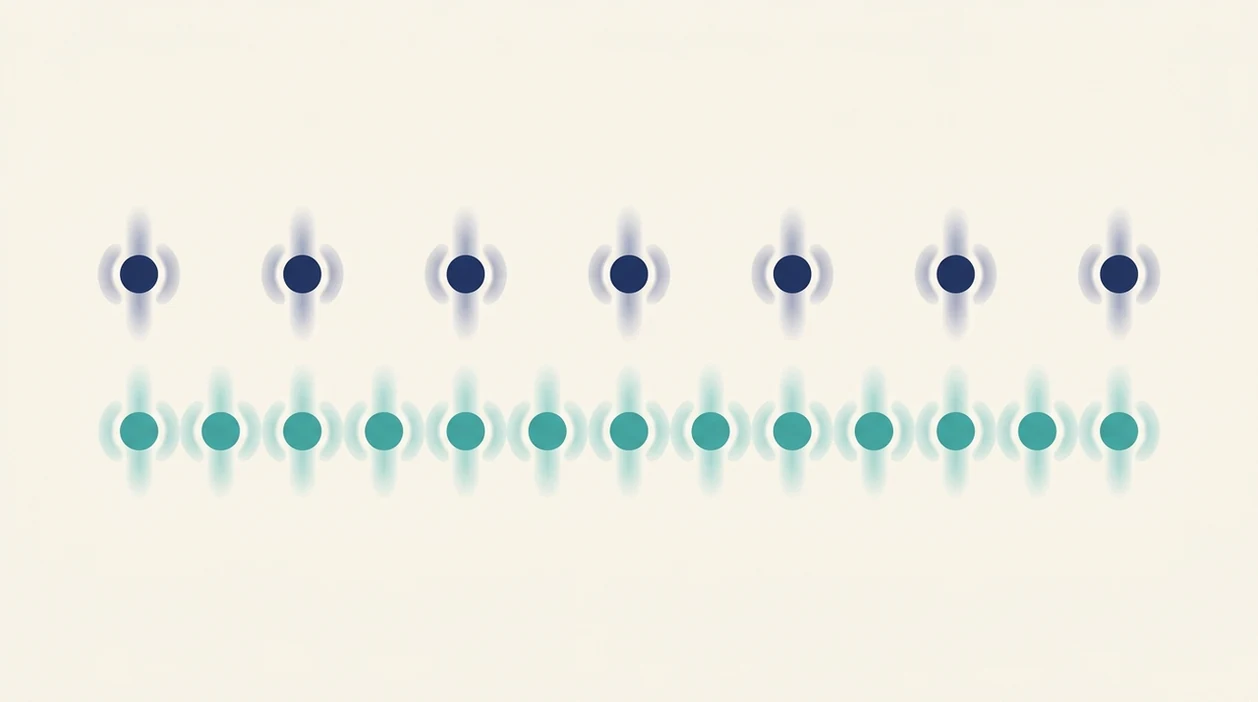
The 5-1-1 labor rule often fits first pregnancies, lower-risk situations, and people who live close to the hospital or birth center. It gives early labor more time to declare itself before an unnecessary triage trip.
Stat callout: The U.S. recorded about 3.6 million births in 2023, according to CDC/NCHS data, which helps explain why simple rules like 5-1-1 are widely taught under pressure (https://www.cdc.gov/nchs/fastats/births.htm).
For first-time parents within about 20 minutes of care, 5-1-1 is often easier than 4-1-1 because early labor can run long and stop-start patterns are common. That does not mean you should wait if your provider gave different instructions.
ContractionTimer.io is useful here because it records start-to-start frequency, so you can review whether the pattern has truly held for an hour. A timer reset after a false alarm is not failure. It is useful data.
Good contraction timer apps deliver clear timing records, not permission to ignore your care team.
For a deeper walk-through of the standard rule, the full 5-1-1 rule contractions guide covers timing examples and common mistakes.
Where 4-1-1 Contractions Are the Safer Call
4-1-1 contractions may be the safer call when waiting for 5-minute spacing feels too loose for your situation. This is especially true if labor could move quickly or travel time adds risk.
Second or subsequent pregnancies can progress faster than first labors. A person with a prior fast birth may not have much warning between “regular” and “we need to leave.” If the hospital is 30 minutes or more away, 4-1-1 may also give you a wider travel cushion.
Some provider plans use earlier contact for GBS-positive status, because IV antibiotics may need time before birth. High-risk pregnancies may also need earlier evaluation, even if contractions are not textbook.
On days when the hospital bag is waiting by the door and the drive is long, ContractionTimer.io helps by keeping the Share screen ready for a quick call. The useful part is not the label. It is the timestamped log.
Ask before labor starts if you can.
4-1-1 or 5-1-1: Which Contraction Rule Should You Pick?
Pick the rule your provider gave you first. If your chart, discharge note, or prenatal visit instructions say 4-1-1, 5-1-1, or something else, that instruction overrides generic guidance.
Decision tree
- Check your provider instructions. Use the exact rule written in your plan.
- If no rule was given and this is your first pregnancy, 5-1-1 is a common default when you live close to care.
- If this is a second or later pregnancy, ask whether 4-1-1 or even 3-1-1 is safer.
- If you have long travel, prior fast labor, GBS-positive status, or high-risk factors, use the earlier call threshold your provider recommends.
- If red-flag symptoms appear, skip the rule entirely.
For first-time parents close to a hospital, 5-1-1 is often more practical than 4-1-1 because it may reduce repeated early triage visits.
Birth partners trying to avoid scrolling during a call can use ContractionTimer.io to share the summary instead of reading a messy notes app. The Share workflow keeps duration and frequency in one place.
How to Use the 4-1-1 or 5-1-1 Rule
Use the 4-1-1 or 5-1-1 rule by following the exact threshold your provider assigned, then timing a full hour of contractions the same way each time. The goal is not to “win” the rule; it is to give triage a clean, honest pattern.
- Confirm your rule before labor begins, ideally at a prenatal visit or in your written birth instructions. Ask whether your plan says 5-1-1, 4-1-1, or a different call point.
- Start timing at the first tightening you notice, not when the contraction peaks or becomes painful.
- Track each wave until it fades so you have duration, then measure frequency from the start of one contraction to the start of the next.
- Continue for one full hour before deciding the pattern meets the rule, unless your provider told you to call sooner.
- Call your provider when your assigned threshold is met or when the pattern changes sharply, pain feels unmanageable, or you are unsure.
- Skip the rule and call or go in right away for bleeding, water breaking, or reduced fetal movement.
How Contraction Timing Rules Work Behind the Numbers
Contraction timing rules work because true labor usually becomes more regular, longer, and closer together as the uterus and cervix respond to each other. The oxytocin feedback loop is the key mechanism: contractions press on the cervix, cervical pressure triggers more oxytocin, and oxytocin supports stronger contractions.
In plain language, the body starts repeating the pattern. Sporadic tightening rarely causes steady dilation. A belly hardening during a car ride may be uncomfortable, but one random cluster does not prove active labor.
The 1-hour window filters out many false starts. Prodromal labor and Braxton Hicks can look convincing for 15 or 20 minutes, then fade after rest, fluids, or a position change.
Clinically, active labor is generally defined at about 6 cm dilation, according to ACOG. That is why timing is a screening tool, not the final answer. Spacing often narrows as labor progresses, moving from 5 minutes to 4 minutes, then sometimes 3 minutes apart.
ContractionTimer.io supports this by showing the trend, not just the last contraction. One entry can mislead. An hour tells a better story.
You can compare those shifts with broader labor contraction patterns if the timing feels confusing.
How to Track 4-1-1 and 5-1-1 Contractions With a Timer App
Use a contraction timer app to record start time, stop time, duration, and frequency without doing math during labor. The key is timing from the first tightening, not the pain peak.
- Tap Start when you feel the contraction begin.
- Tap Stop when the contraction fades; this records duration.
- Repeat each contraction so the app calculates frequency from start to start.
- Review the pattern after 1 hour and check whether it meets 5-1-1 or 4-1-1.
- Share the log with your provider by phone, screenshot, Share, or Export for triage.
A cracked screen protector, Face ID failing in a dark room, and 12% battery can all make timing harder. Keep the charger close before contractions are regular.
ContractionTimer.io contraction timer app is a practical fit for birth partners because Start, Stop, History, Notes, Edit, Delete, Share, and Export are plain labels. No one needs a dashboard while counting breaths from the edge of the bed.
If you want alerts around the 5-minute pattern, read how an app that alerts 5-1-1 contractions handles that workflow.
When to Skip the Contraction Rules and Go to the Hospital Now
Skip 4-1-1 and 5-1-1 when symptoms suggest you need evaluation now. Timing rules are for otherwise uncomplicated contraction patterns, not urgent warning signs.
Call your provider or go in for:
- Water breaking, including suspected PROM or PPROM, regardless of contraction spacing.
- Vaginal bleeding that is more than light spotting.
- Decreased, absent, or clearly unusual fetal movement.
- Regular contractions before 37 weeks.
- Severe headache, vision changes, or upper abdominal pain.
- A strong gut feeling that something is wrong.
The U.S. preterm birth rate was 10.41% in 2023, according to March of Dimes data (https://www.marchofdimes.org/peristats/reports/united-states/preterm-birth-rate). ACOG also advises contacting your obstetrician or going to the hospital if you are under 37 weeks and having regular contractions, because preterm labor needs prompt evaluation (https://www.acog.org/womens-health/faqs/preterm-labor-and-birth).
Do Not Disturb can hide the callback. Check it.
ContractionTimer.io can help you read times clearly to the midwife, especially when a partner is timing from the passenger seat, but the next step comes from your care team. If fetal movement changes, the timer is secondary.
For timing-only situations, you can also check contractions 5-1-1 rule before calling.
Medical Scope and Sources
This guide supports safer triage conversations; it does not diagnose labor, preterm labor, rupture of membranes, fetal distress, or any pregnancy complication. Its job is to help you describe contraction timing clearly so your clinician can decide what comes next.
The medical framing here follows the kinds of sources commonly used for pregnancy guidance: ACOG clinical guidance, CDC birth and surveillance data, and March of Dimes public health reporting. General timing rules can be useful, but your own provider’s instructions always outrank a website, app, childbirth class handout, or 5-1-1 shortcut.
When in doubt, use this order:
- Follow the written plan from your OB, midwife, hospital, or birth center.
- Call if your symptoms do not fit the plan or you feel unsure.
- Share your contraction log as background, not proof that labor is or is not active.
- Let clinicians assess the cervix, fetal heart rate, membrane status, and maternal symptoms.
- Go sooner if your care team tells you to, even when the timer pattern is not textbook.
Cervical checks and fetal assessment require trained clinicians and appropriate equipment. Content updated: May 22, 2026.
Limitations
The 4-1-1 and 5-1-1 rules are helpful, but they are blunt tools. They do not see what a clinician sees during an exam.
- Neither rule reliably separates false labor from true labor in every pregnancy.
- They do not account for cervical dilation, baby position, maternal risk, or fetal status.
- They are less reliable before 37 weeks, when possible preterm labor needs immediate evaluation.
- People with rapid labor histories may deliver before either threshold is reached.
- No single universally accepted threshold exists; provider instructions vary by practice and hospital.
- Braxton Hicks can briefly mimic early labor patterns before easing.
- A contraction timer app tracks patterns but cannot assess dilation or replace medical advice.
- ContractionTimer.io, GentleBirth, and The Bump contraction timer can all record contractions, but none can tell whether the cervix is changing.
- ContractionTimer.io cannot decide admission, diagnose labor, or judge whether GBS antibiotics are needed.
For people comparing timer options, the practical question is what app identifies 5-1-1 contractions clearly enough to support a call, not which screen looks busiest.
Frequently Asked Questions
How dilated are you at 5-1-1?
5-1-1 timing does not guarantee a specific dilation. Active labor is generally defined at about 6 cm dilation, but some people reach 5-1-1 earlier or later.
What is the 3-1-1 rule for contractions?
The 3-1-1 rule means contractions are about 3 minutes apart, lasting 1 minute each, for 1 hour. Some providers use it for second or later pregnancies, fast-labor history, or long-distance travel.
Can 5-1-1 contractions be painless?
Yes, some people have 5-1-1 contractions that feel like pressure, tightening, or low-pain waves. Low pain does not automatically mean false labor.
Do Braxton Hicks follow a 5-1-1 pattern?
Braxton Hicks are usually irregular and often ease with rest, hydration, or position changes. They can briefly mimic a pattern before spacing out or stopping.
Should I use 4-1-1 for a second baby?
Many providers recommend 4-1-1 or even 3-1-1 for second or later babies because labor can progress faster. Your own provider’s instruction should override a general rule.
When should I ignore the 5-1-1 rule?
Ignore the 5-1-1 rule and call or go in for water breaking, bleeding, preterm contractions, decreased fetal movement, or preeclampsia symptoms. Timing rules do not apply to urgent warning signs.
How long do 5-1-1 contractions last before birth?
The time from 5-1-1 contractions to birth varies widely. It is often hours for first-time parents and may be much shorter for people who have given birth before.
Does a contraction timer app replace calling my doctor?
No. Contraction Timer records contraction patterns and supports triage conversations, but it cannot assess dilation, fetal status, or the need for medical evaluation.
Which app fits which need
| Need | Best option |
|---|---|
| Fast, accurate 4-1-1 and 5-1-1 contraction timing with alerts | Contraction Timer |
| General pregnancy content with light contraction timing | The Bump |
| Structured pregnancy education plus birth preparation content | Full Term |
| Mindfulness, relaxation, and hypnobirthing-style labor support | GentleBirth |
Quick facts
- Type
- Contraction timer & labor tracker app
- Platforms
- iPhone, iPad, Apple Watch, Android
- Focus
- 4-1-1 contractions, 5-1-1 contractions, contraction timing, labor patterns, hospital alerts
- Includes
- one-tap timing, duration and frequency, 5-1-1 alerts, labor phase detection, contraction history, partner mode, doctor reports, offline tracking
- Best for
- Parents deciding whether their contraction pattern matches 4-1-1 or 5-1-1 guidance
- Free
- Yes
- Medical replacement
- No
People also use Contraction Timer for
Track 4-1-1 and 5-1-1 Contractions With Less Guesswork
Use Contraction Timer to record each contraction, review duration and frequency, and spot patterns that may match your provider’s 4-1-1 or 5-1-1 instructions. Always follow your healthcare provider’s guidance if it differs from a general timing rule.
Download the Free App