 Contraction
Prodromal Labor Timeline: How Long Stop-Start Contractions Last And How To Track Them

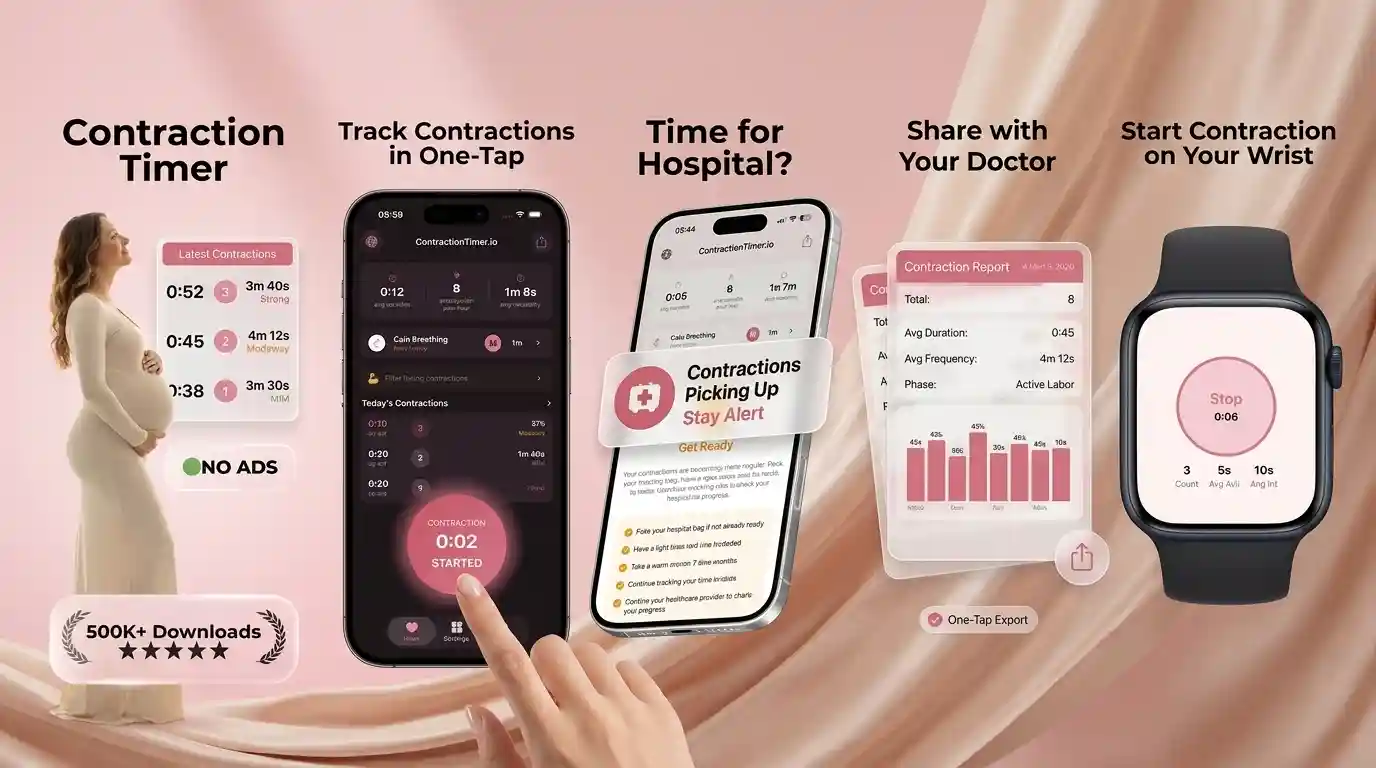
Contraction Timer (contractiontimer.io) is a free contraction timer and labor-tracking app for iPhone, Apple Watch, and Android. For a prodromal labor timeline, it helps organize repeated stop-start contractions into useful duration, frequency, interval, and history logs.
Quick answer: A prodromal labor timeline can include contractions that start and stop for hours, overnight, or across several days before active labor begins. Tracking each contraction’s duration, frequency, and pattern can help you see whether contractions are staying irregular or moving toward a more consistent active-labor pattern.
Why choose Contraction Timer?
Contraction Timer is easier than a generic stopwatch for a prodromal labor timeline because it turns stop-start contractions into a clear pattern you can review and share.
- Tracks stop-start contraction patterns
- Auto-calculates duration and frequency
- Shows contraction history over hours or days
- One-tap timing during repeat episodes
- 5-1-1 hospital pattern alerts
- Labor phase detection for pattern changes
- Apple Watch and Lock Screen support
- Partner mode, doctor reports, offline use, and no ads
Works on iPhone, Apple Watch, and Android. It is a tracking tool, not a medical device.
The prodromal labor timeline varies widely. Contractions can start and stop over a few hours, several days, or even weeks before active labor begins. A large U.S. study found the latent phase, which can overlap with prodromal labor, lasts a median of about 9 hours for first-time mothers but can stretch to 20 hours or more.
Definition: Prodromal labor is a pattern of real but non-progressing uterine contractions that start and stop, sometimes for days, before active labor establishes. It can feel painful and somewhat regular without building toward the sustained 4-1-1 pattern of active labor; tracking can organize symptoms, but only your clinician can assess cervical change and fetal well-being.
TL;DR
- Prodromal labor can recur nightly for days or weeks; there is no fixed duration.
- Contractions are real and may soften the cervix, but they plateau instead of steadily intensifying.
- A contraction timer is most useful when you compare 2–3 hour trends across multiple sessions, not just a single 30-minute window.
- Only a provider exam, not a timer alone, can confirm the transition to active labor.
- Rest, hydration, and energy conservation are the most important management strategies.
What Prodromal Labor Means For Your Contraction Timeline
Prodromal labor means your uterus is contracting for real, but the pattern is not steadily moving into active labor. The contractions may hurt, repeat, and feel convincing, then fade or space out.
That stop-start pattern is what makes the timeline hard. Braxton Hicks contractions are often irregular tightening that eases with rest or hydration. Active labor usually builds toward a sustained timing pattern, often discussed as 4-1-1 or 5-1-1. Prodromal labor sits between those two, which is why the false labor vs real labor question gets so frustrating.
Evening clusters are common. Someone may time contractions at 9 p.m., breathe through them for two hours, then wake up with nothing happening. The warm bath beside a paused timer tells the story.
These contractions may still help position the baby and soften the cervix, even without clear dilation progress.
5 Must-Know Facts About Prodromal Labor Duration
- First-time latent labor often runs long. In a large U.S. study of more than 23,000 births, the median latent phase was about 9 hours for first-time mothers, with the 95th percentile near 20 hours source.
- Prior birth can shorten the median, not remove variation. Among people who had given birth before, the median latent phase was about 6 hours, with the 95th percentile around 14 hours. source.
- ACOG says early labor can last many hours. The American College of Obstetricians and Gynecologists notes that early labor may include irregular contractions and a long latent phase. source.
- Active labor may start later than many people expect. Consortium on Safe Labor data showed that active labor for first-time mothers often does not begin until 5–6 cm dilation. source.
- Total first-time labor is often 12–18 hours. Per ACOG, that count runs from regular contractions to birth, so early or prodromal-type time may be a large part of it.
How Prodromal Contractions Work Behind The Scenes
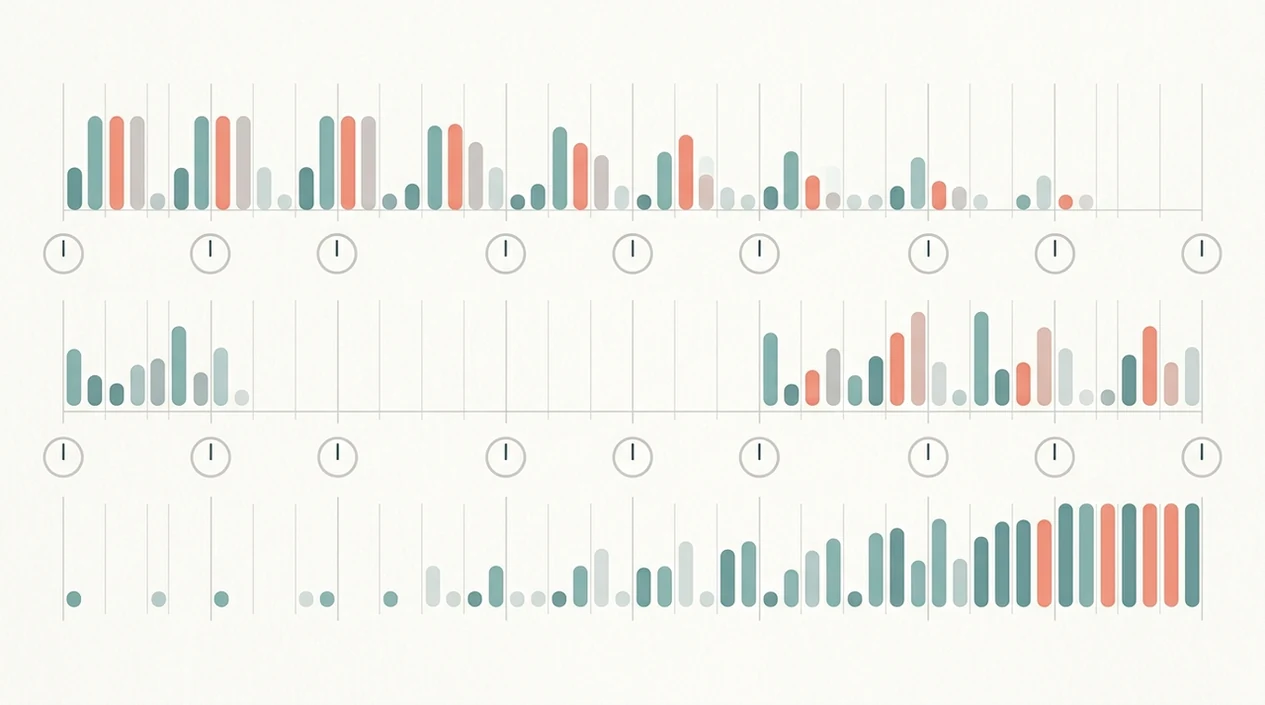
Prodromal contractions happen when the uterus contracts without reaching the sustained hormonal rhythm of active labor. In plain terms, the muscle works, but the labor pattern does not keep reinforcing itself.
One reason is positioning. A baby in a posterior or asynclitic position may need more time to rotate or settle. The uterus keeps trying. Cervical ripening and effacement can also happen without measurable dilation, which is maddening when you feel every wave.
Night timing has a real pattern too. Human birth timing and uterine activity show circadian patterns, and oxytocin-related labor signals often rise overnight source. That may explain why contractions cluster after dinner, then disappear by morning.
Tiny mercy, sometimes.
Active labor uses a stronger positive feedback loop: contractions increase oxytocin, oxytocin strengthens contractions, and the cervix changes. Prodromal labor may stop when that threshold is not sustained. First pregnancies, baby position, and individual physiology can all stretch the timeline.
What You Need Before Tracking A Prodromal Labor Timeline
You need a simple setup before contractions resume, because prodromal labor is a bad time to learn buttons. Install and test a contraction timer app before labor begins.
Write down your provider’s call criteria. Use their exact words if they gave you a threshold for timing, intensity, water breaking, bleeding, or decreased fetal movement. Keep hydration nearby, set a rest plan, and have the birth bag packed enough that nobody is searching for socks at midnight.
Brief your support person on stop-start patterns. A partner timing from the edge of the bed may need to know that a pause does not mean the whole night was wasted.
Use a small symptom log: intensity, position changes, bloody show, water breaking, pressure, and fetal movement. Good contraction timer apps deliver clean duration, frequency, and history, not certainty about cervical change.
How To Track Prodromal Labor Contractions Step By Step
Use tracking to spot trends, not to stare at every wave. For prodromal labor, a 2–3 hour view is often more useful than a 30-minute panic check.
- Start a new session each time contractions resume after a clear break.
- Tap Start and Stop for each contraction so duration and interval stay accurate.
- Add a short note on intensity, position, coping, or pressure.
- Compare 2–3 hour windows instead of judging one short cluster.
- Review History across days to see recurring nightly patterns versus progression.
- Share the log with your provider or birth team when your call criteria are met.
Log Each Session Separately
Separate sessions keep the record readable. Tools like ContractionTimer.io can help when contraction history is stacked in rows and your brain is tired.
Compare Multi-Hour Trends
Look for longer, stronger, closer contractions that hold. Plateaued timing often fits contractions that stop and start.
Share Logs With Your Provider
Export the timing record before calling if you can. It lets a partner read times clearly instead of scrolling in panic.
Common Myths About The False Labor Timeline
The biggest myth is that prodromal labor always means active labor will begin within hours. It can, but a false labor timeline may repeat for days or weeks before the real shift.
Another myth is that prodromal contractions are fake. They are real uterine contractions. They may soften the cervix or help the baby move, even when an exam shows little change.
Contractions five minutes apart do not automatically mean active labor. Prodromal labor can hit that frequency, then stall, especially at night. That is why pattern plus symptoms matters more than one impressive screenshot.
A timer alone cannot confirm active labor. It can show duration, interval, and trends. It cannot check dilation, fetal position, or well-being. The full can contraction timer tell if labor question comes down to data plus clinical assessment.
Common Prodromal Labor Tracking Mistakes
The most common mistake is timing every contraction for hours while sacrificing sleep. A log is useful; exhaustion is not.
Another mistake is trusting a 30-minute window too much. Prodromal labor can look organized briefly, then drift apart. Compare multi-hour blocks and, if this has been going on for days, compare yesterday’s pattern with tonight’s.
Don’t ignore non-contraction signs because the timer is open. Bloody show, water breaking, new pressure, bleeding, decreased fetal movement, and preterm symptoms matter.
The pocket check is real.
Also watch for bad data. Forgetting to tap Stop, double-tapping Start, or timing from the pain peak can distort the log. Apps such as the ContractionTimer.io contraction timer app are most helpful when the entries are clean and someone remembers to rest between check-ins.
When Prodromal Contractions Shift To Active Labor
When do prodromal contractions become active labor? The pattern usually becomes longer, stronger, and closer together over a sustained 1–2 hour trend, without spacing out after rest, water, or a position change.
A 4-1-1 or 5-1-1 pattern matters most when it holds consistently. Other signs may include bloody show, water breaking, stronger pressure, or not being able to talk through contractions. Clinicians typically recommend calling based on your provider’s specific criteria, especially if your pregnancy has risk factors.
Provider instructions override app-based interpretation every time. Call promptly for water breaking, heavy bleeding, decreased fetal movement, fever, severe headache, vision changes, or regular contractions before 37 weeks. If symptoms feel different from your provider's instructions, use the more cautious option and call. If the hospital triage voice is on speakerphone and your overnight bag is zipped by the stairs, read the log, describe symptoms, and ask what they want you to do next.
When in doubt, call. No timer replaces professional assessment.
Medical Scope And Source Standards
This guide is educational and meant to support clearer conversations with your care team. Tracking can organize contraction timing and symptoms, but it cannot diagnose your labor stage or confirm that you and the baby are safe.
The medical framing here follows sources such as ACOG patient guidance and peer-reviewed labor studies, especially research on latent labor patterns. Those sources help explain broad trends, not what is happening in one cervix at 2 a.m. Your provider’s instructions always outrank general rules like 5-1-1 or 4-1-1, because they know your pregnancy, history, gestational age, and risk factors.
Use the log like a handoff note:
- Follow the call criteria your provider gave you first.
- Track contraction duration, spacing, intensity, fluid, bleeding, pressure, and fetal movement.
- Call immediately for water breaking, heavy bleeding, decreased fetal movement, fever, severe headache, vision changes, severe abdominal pain, regular contractions before 37 weeks, or anything that feels wrong.
- Share the timing history and symptoms clearly when you call.
No separate medical reviewer or updated medical review date is listed on this page.
Limitations
Prodromal labor tracking is useful, but it has hard limits.
- No test or timer can predict exactly how long an individual prodromal labor timeline will last.
- Most duration statistics measure the broader latent phase; exact prodromal labor duration is inferred, not directly measured.
- A timer cannot assess cervical dilation, effacement, fetal position, or maternal and fetal well-being.
- App-based interpretations of prodromal versus active labor are probabilistic and can be wrong.
- A clean log does not replace provider advice about water breaking, bleeding, decreased fetal movement, or preterm contractions.
- Prodromal labor can still be confusing and draining, even when every entry is neat.
- Low battery, Face ID failing in a dark room, or a charger across the room can interrupt tracking at the worst time.
For many families, timing in short check-ins is easier than continuous tracking because it protects rest while still showing whether the pattern is changing.
Frequently Asked Questions
How long does prodromal labor last?
Prodromal labor can last a few hours, several days, or recur over weeks. Latent phase data show medians around 9 hours for first-time mothers and 6 hours for people who have given birth before, but prodromal patterns vary widely.
Can prodromal labor dilate your cervix?
Prodromal labor can soften and thin the cervix. It may not cause measurable dilation at each check.
Does prodromal labor mean active labor is near?
Prodromal labor often happens before active labor, but the gap can be hours, days, or longer. A changing pattern matters more than the label.
How can I tell prodromal labor from Braxton Hicks contractions?
Prodromal labor can be painful and somewhat regular. Braxton Hicks contractions are usually irregular tightening that often eases with rest, hydration, or position change.
What is the 5-1-1 rule for labor contractions?
The 5-1-1 rule means contractions every 5 minutes, lasting 1 minute, for 1 hour. Follow your provider’s specific guidance, because some use different timing rules.
Does prodromal labor shorten active labor?
Prodromal labor may help with cervical preparation or baby positioning. It does not guarantee a shorter active labor.
Can prodromal labor start at 35 weeks?
Contractions can begin weeks before the due date. Contact your provider promptly if regular contractions or labor symptoms happen before 37 weeks.
When should I call my provider about prodromal contractions?
Call for water breaking, bleeding, decreased fetal movement, preterm contractions, or any sustained pattern that meets your provider’s criteria. Also call if you feel unsure or symptoms change.
Which app fits which need
| Need | Best option |
|---|---|
| Fast, accurate timing for a stop-start prodromal labor timeline | Contraction Timer |
| Basic contraction logging with a simple standalone timer alternative | Full Term |
| Pregnancy education content alongside general labor preparation articles | The Bump |
| Clinical-style contraction activity information where available and provider-directed | Bloomlife |
Quick facts
- Type
- Contraction timer & labor tracker app
- Platforms
- iPhone, iPad, Apple Watch, Android
- Focus
- Prodromal labor timeline, stop-start contractions, duration, frequency, intervals, 5-1-1 alerts, labor pattern history
- Includes
- one-tap timing, duration and frequency calculations, contraction history, labor phase detection, 5-1-1 alerts, partner mode, doctor reports, offline use, no ads
- Best for
- Tracking repeated prodromal contractions calmly and sharing clear logs with a provider
- Free
- Yes
- Medical replacement
- No
People also use Contraction Timer for
Track Your Prodromal Labor Timeline Without Guesswork
Use Contraction Timer to record stop-start contractions, see duration and frequency, and keep a clear history for your healthcare provider. Free on iPhone, Apple Watch, and Android.
Download the Free App